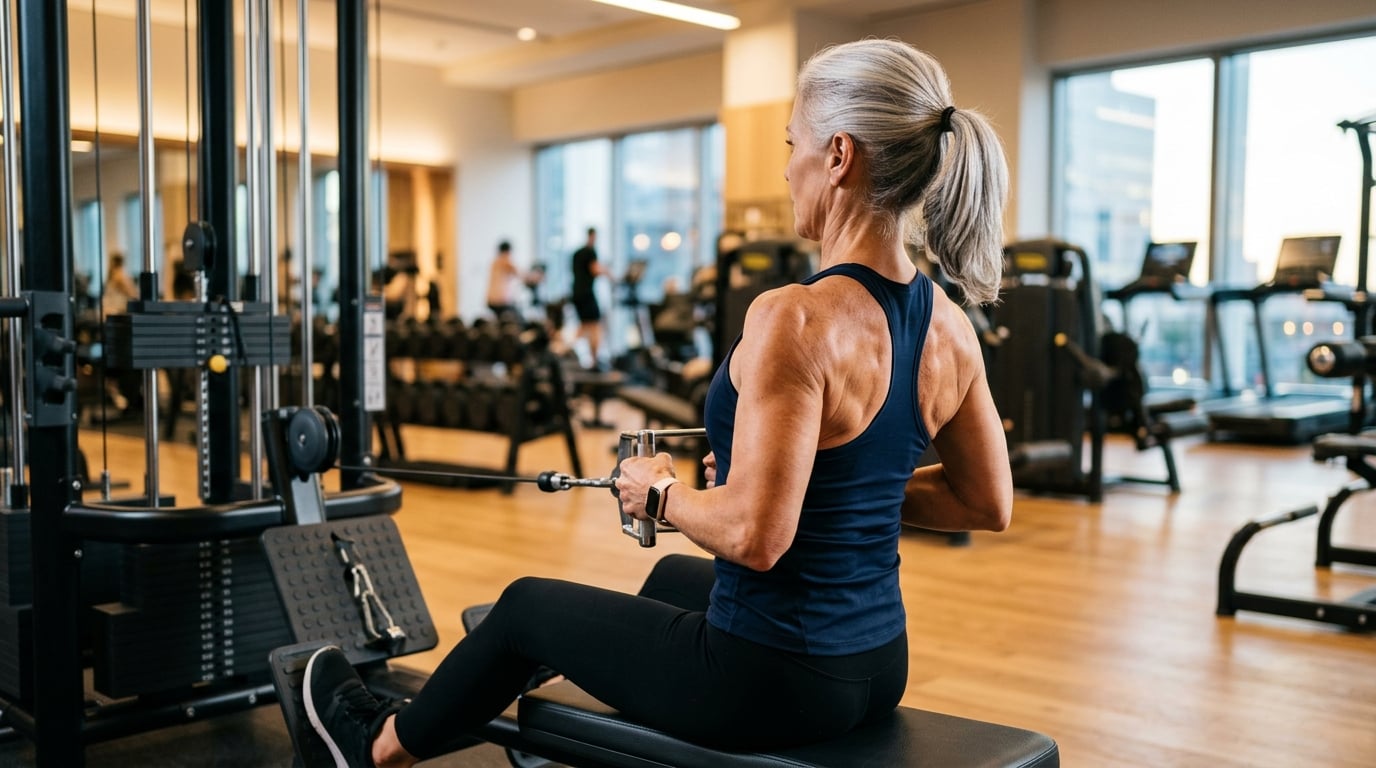
Strong back. Strong you. Stronger life. That's not just a catchy phrase — it's the truth. A strong back does more than look good. It improves posture, supports your spine, reduces the risk of back pain, and helps you stay strong and independent as you age.
One of the best things about building back muscles? You can start at any age. Whether you're new to the gym or returning after a break, these four exercises are among the best compound movements for developing real upper back strength, improving grip, and building the kind of functional fitness that makes everyday life easier.
Why Back Muscles Matter After 50
Your back muscles are involved in virtually every upper body movement you make:
- Posture — strong back muscles pull your shoulders back and keep your spine aligned, counteracting the forward-rounding posture that comes from years of desk work, driving, and phone use
- Spine support — the muscles along your spine (erector spinae) and between your shoulder blades (rhomboids, mid-traps) act as a natural brace, protecting against disc issues and back pain
- Bone health — resistance training targeting the back promotes bone density in the spine and shoulders, two areas vulnerable to osteoporosis
- Confidence — a strong, defined back gives you better posture and a more confident presence
- Daily independence — pulling open heavy doors, carrying shopping bags, lifting grandchildren, reaching overhead — it all requires back strength
1. Lat Pulldown
The lat pulldown builds a wider, stronger back, improves posture, and makes everyday pulling movements easier. It's one of the most effective exercises for targeting the latissimus dorsi — the largest muscle in your back.
How to do it:
- Sit at the lat pulldown machine with your thighs secured under the pads
- Grip the bar slightly wider than shoulder-width with an overhand grip
- Sit tall, chest lifted, and engage your core
- Pull the bar down toward your upper chest, squeezing your shoulder blades together at the bottom
- Control the bar back up slowly — don't let it yank your arms up
- Complete 10–12 repetitions for 3 sets
Why it works: The lat pulldown targets your lats, rear deltoids, and biceps simultaneously. It mimics the motion of a pull-up but allows you to adjust the weight to your current strength level, making it accessible for all fitness levels.
Tip: Focus on pulling with your elbows, not your hands. Imagine driving your elbows down toward your hips — this ensures your back muscles do the work, not just your arms.
2. Seated Cable Row
The seated cable row targets the middle back, strengthens the shoulder blades, and helps reduce rounded shoulders — one of the most common posture issues for women over 50.
How to do it:
- Sit at the cable row machine with your feet on the footplate and knees slightly bent
- Grip the handle with both hands, arms extended
- Sit tall with your chest lifted — don't round your lower back
- Pull the handle toward your midsection, squeezing your shoulder blades together at the end
- Slowly extend your arms back to the starting position
- Complete 10–12 repetitions for 3 sets
Why it works: This exercise specifically targets the rhomboids and mid-trapezius — the muscles between your shoulder blades that are essential for maintaining upright posture. Strengthening these muscles directly counteracts the forward-shoulder slouch that many of us develop.
Tip: Keep your torso upright throughout — don't lean back to pull the weight. The movement should come from your arms and shoulder blades, not momentum.
3. Dumbbell Bent-Over Row
Get your FREE 7-Day Beginner Workout Plan
A gentle, progressive week of strength, cardio, flexibility and balance — designed just for women over 50. Pop in your details and I'll send it straight away. 💪
The bent-over row builds overall back strength while engaging your core and improving balance — making it one of the most functional back exercises you can do.
How to do it:
- Hold a dumbbell in each hand, feet hip-width apart
- Hinge forward at the hips until your torso is roughly 45 degrees to the floor
- Let your arms hang straight down, palms facing each other
- Pull both dumbbells up toward your ribcage, squeezing your shoulder blades together at the top
- Lower the dumbbells slowly and with control
- Complete 10–12 repetitions for 3 sets
Why it works: The bent-over row is a compound movement that works your lats, rhomboids, rear delts, biceps, and core simultaneously. The hinge position also challenges your hamstrings and lower back, making it a true full-body exercise. Because you're working against gravity in a bent position, it builds the kind of practical strength you need for everyday tasks like picking things up off the floor.
Tip: Start light and focus on form. Keep your back flat (not rounded), core braced, and neck neutral. If you feel it mostly in your arms, try a lighter weight and focus on initiating the pull from your back.
4. Assisted Pull-Ups (or Assisted Chin-Ups)
Pull-ups are one of the best compound exercises for developing upper back strength, improving grip strength, and building overall upper body pulling power. The assisted version makes this exercise accessible to everyone.
How to do it:
- Set the assisted pull-up machine to a weight that allows you to complete the reps with good form (more weight on the machine = more assistance)
- Grip the overhead bar with hands slightly wider than shoulder-width (overhand for pull-ups, underhand for chin-ups)
- Place your knees or feet on the assistance platform
- Pull yourself up until your chin is at or above the bar
- Lower yourself slowly — don't just drop down
- Complete 6–10 repetitions for 3 sets
Why it works: The assisted pull-up is one of the best exercises for developing the lats, biceps, and forearms while also challenging your core stability. It builds the foundation for eventually performing unassisted pull-ups — a fantastic fitness milestone at any age. The chin-up variation (underhand grip) places more emphasis on the biceps and is often easier as a starting point.
Progression: As you get stronger, gradually reduce the assistance weight. Even small reductions add up over time!
Why It Matters
A strong back does more than look good — it improves posture, supports your spine, reduces the risk of back pain, and helps you stay strong and independent as you age. One of the best things about building back muscles is that you can start at any age.
These four exercises cover all the major pulling patterns your back needs:
- Vertical pull (lat pulldown + pull-ups) — builds width and overhead reach
- Horizontal pull (cable row + bent-over row) — builds thickness and posture strength
Together, they create a balanced, comprehensive back workout that will have you standing taller, moving easier, and feeling stronger in just a few weeks.
Your Back Workout Plan
Do this routine 2 times per week with at least 2 rest days between sessions:
- Warm up: 5 minutes of light cardio + arm circles and band pull-aparts
- Circuit: Lat Pulldown → Seated Cable Row → Dumbbell Bent-Over Row → Assisted Pull-Ups
- Sets/Reps: 3 sets of 10–12 reps each (6–10 for pull-ups)
- Rest: 60–90 seconds between sets
- Total time: 25–30 minutes
Move today. Get stronger. Live your best life. 💪
Get your FREE 7-Day Beginner Workout Plan
A gentle, progressive week of strength, cardio, flexibility and balance — designed just for women over 50. Pop in your details and I'll send it straight away. 💪