Your back is the unsung hero of your entire body. It holds you upright, supports your spine, powers your posture, and drives virtually every pulling, reaching, and carrying movement you make. Yet it's one of the most neglected muscle groups in women over 50 — and one of the most problematic.
Lower back pain is the leading cause of disability worldwide, and women over 50 are disproportionately affected. Add in the forward-rounded posture that comes from years of desk work, driving, and phone use, and you've got a recipe for chronic pain, stiffness, and reduced quality of life.
The good news? A stronger back changes everything. These five exercises target your entire back — upper, middle, and lower — building the strength and stability you need to stand tall, move freely, and live without pain.
1. Seated Rows
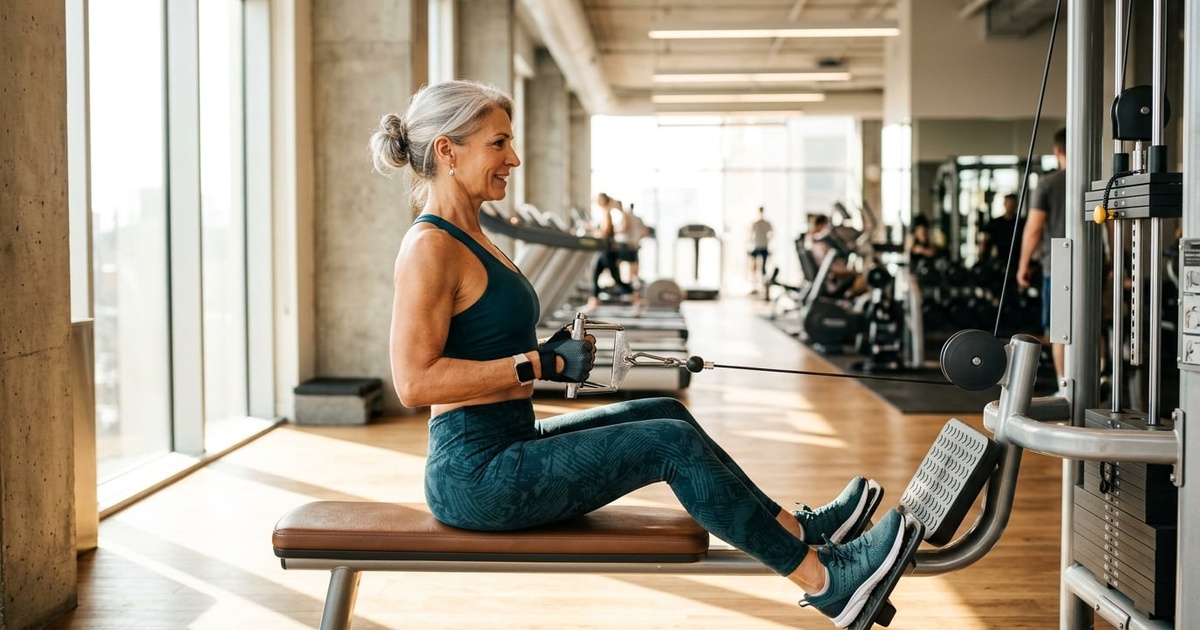
The seated row is the best overall back exercise you can do. It targets your lats, rhomboids, middle traps, and rear deltoids — essentially the entire back of your upper body. It's also incredibly safe because you're seated and supported, making it ideal for beginners.
How to Do Them
- With a resistance band: Sit on the floor with legs extended. Loop the band around your feet and hold both ends
- With a cable machine: Sit at the machine with feet on the platform, knees slightly bent
- Pull the handles toward your lower ribs, squeezing your shoulder blades together at the end
- Keep your chest up and avoid leaning backward — the movement comes from your arms and back, not your body swaying
- Slowly extend your arms back to the start (3 seconds on the return)
Why They Matter After 50
Seated rows strengthen the muscles that pull your shoulders back and hold your spine upright. Every time you pick up a bag, open a door, pull weeds in the garden, or carry a grandchild, you're using these muscles. Weak back muscles force your spine to absorb loads it wasn't designed for, leading to disc problems, nerve pain, and chronic stiffness.
Programming
- Beginner: Light resistance band or 5–10 kg cable, 3 sets of 12–15 reps
- Intermediate: Medium resistance band or 12–18 kg cable, 3 sets of 10–12 reps
- Advanced: Heavy resistance band or 20+ kg cable, 4 sets of 8–10 reps
Pro tip: Think about driving your elbows backward, not just pulling with your hands. This mental cue ensures your back muscles do the work rather than your biceps.
2. Lat Pulldowns
Lat pulldowns target the latissimus dorsi — the large, wing-shaped muscles that run from your armpits to your waist. These are the muscles responsible for pulling movements and they play a massive role in posture, spinal support, and upper body strength.
How to Do Them
- Sit at a lat pulldown machine with thighs secured under the pad
- Grip the bar slightly wider than shoulder-width apart with palms facing away
- Pull the bar down to your upper chest, leading with your elbows
- Squeeze your shoulder blades together at the bottom
- Slowly return the bar to the top with control
At Home Alternative
No machine? Use a resistance band draped over a door or secured to a high anchor point. Kneel or stand and pull the band down in the same motion. Straight-arm pulldowns with a band also work brilliantly.
Why They Matter After 50
Your lats are essential for reaching overhead, pulling things toward you, and stabilising your torso during walking and movement. Weak lats contribute to shoulder impingement, rounded posture, and lower back overcompensation. Strengthening them dramatically improves your ability to move and reach without pain.
Programming
- Beginner: 10–15 kg, 3 sets of 12–15 reps
- Intermediate: 18–25 kg, 3 sets of 10–12 reps
- Advanced: 28–35 kg, 4 sets of 8–10 reps
Pro tip: Lean back very slightly (about 10 degrees) and focus on pulling with your back, not your arms. If you can feel it in your biceps more than your back, the weight is probably too heavy.
3. Reverse Flyes
Reverse flyes isolate the rear deltoids and rhomboids — the small but critical muscles between your shoulder blades that control posture and shoulder health. These muscles are chronically weak in most women over 50 due to years of forward-focused activities.
How to Do Them
- Stand with feet hip-width apart, holding a light dumbbell in each hand
- Hinge forward at the hips until your torso is roughly 45 degrees to the floor
- Let the dumbbells hang directly below your shoulders, palms facing each other
- With a slight bend in your elbows, raise both arms out to the sides until they're level with your shoulders
- Squeeze your shoulder blades together at the top, then lower slowly
Why They Matter After 50
Reverse flyes directly combat the forward-rounded posture that develops from decades of sitting, driving, and using phones. They strengthen the muscles that pull your shoulder blades together and open up your chest, creating a taller, more confident posture. They also protect the rotator cuff by balancing the muscles around your shoulder joint.
Programming
- Beginner: 1–2 kg dumbbells, 3 sets of 12–15 reps
- Intermediate: 3–4 kg dumbbells, 3 sets of 12–15 reps
- Advanced: 5–6 kg dumbbells, 3 sets of 10–12 reps
Pro tip: Use very light weights. These are small muscles, and using too much weight recruits your traps and takes the tension off the muscles you're actually trying to target. If your shoulders are shrugging, go lighter.
4. Superman Hold
Get your FREE 7-Day Beginner Workout Plan
A gentle, progressive week of strength, cardio, flexibility and balance — designed just for women over 50. Pop in your details and I'll send it straight away. 💪
The Superman hold is one of the best lower back and spinal erector exercises you can do — and it requires zero equipment. It strengthens the muscles that run along either side of your spine, which are absolutely essential for preventing lower back pain.
How to Do It
- Lie face down on the floor (or a mat) with arms extended straight above your head
- Simultaneously lift your arms, chest, and legs a few centimetres off the floor
- Squeeze your glutes and lower back muscles at the top
- Hold for 3–5 seconds, then lower everything back down
- That's one rep
Why It Matters After 50
Your spinal erectors are the muscles that keep you upright all day long. When they're weak, your lower back fatigues quickly, leading to pain, stiffness, and that "hunched" posture that accelerates with age. Superman holds also strengthen your glutes and upper back simultaneously, making them an incredibly efficient exercise for overall posterior chain health.
Programming
- Beginner: Lift arms and legs separately (arms only, then legs only), 3 sets of 8 reps with 3-second hold
- Intermediate: Full Superman hold, 3 sets of 10 reps with 3–5 second hold
- Advanced: 3 sets of 12 reps with 5-second hold, or add a light ankle weight
Pro tip: Don't try to lift too high — a few centimetres is plenty. The goal is controlled activation, not range of motion. If you feel compression in your lower back, you're lifting too high.
5. Band Pull-Aparts
Band pull-aparts are the simplest yet most effective posture exercise in existence. They target your rear delts, rhomboids, and middle traps — all the muscles responsible for pulling your shoulders back and opening up your chest.
How to Do Them
- Hold a resistance band in front of you at shoulder height, hands about shoulder-width apart
- With straight arms (or a very slight bend), pull the band apart by squeezing your shoulder blades together
- The band should touch or nearly touch your chest at the end of the movement
- Slowly return to the start position with control
Why They Matter After 50
Band pull-aparts are the antidote to modern life. Phone use, computer work, driving, reading — everything pushes your shoulders forward. Pull-aparts reverse this pattern by strengthening the muscles that pull your shoulders back. They're gentle enough to do every single day and effective enough to create visible posture changes within weeks.
Programming
- Beginner: Light resistance band, 3 sets of 15–20 reps
- Intermediate: Medium resistance band, 3 sets of 15–20 reps
- Advanced: Heavy resistance band, 3 sets of 15–20 reps (or add a 2-second pause at full stretch)
Pro tip: Do these every single day, even on rest days. They're low-intensity enough to be done daily and they'll transform your posture faster than any other single exercise. Keep a band on your desk or next to the couch.
Your 20-Minute Stronger Back Workout
Here's a complete back workout you can do 2 times per week. You'll need dumbbells, a resistance band, and access to a cable machine (or just use bands for everything).
| Exercise | Sets | Reps / Time | Rest |
|---|---|---|---|
| Seated Rows | 3 | 10–12 reps | 60 sec |
| Lat Pulldowns | 3 | 10–12 reps | 60 sec |
| Reverse Flyes | 3 | 12–15 reps | 45 sec |
| Superman Hold | 3 | 10 reps (3–5 sec hold) | 45 sec |
| Band Pull-Aparts | 3 | 15–20 reps | 30 sec |
Warm-up: 3–5 minutes of arm circles, band pull-aparts (light), cat-cow stretches, and gentle thoracic rotations.
Cool-down: Child's pose (30 seconds), cat-cow stretch (30 seconds), cross-body shoulder stretch (30 seconds each side), and gentle spinal twist lying on your back.
Why Back Strength Is Non-Negotiable After 50
- Posture: A strong back is the foundation of good posture — it literally holds you upright
- Pain prevention: 80% of adults will experience back pain at some point, and strengthening back muscles is the #1 way to prevent and manage it
- Spine health: Strong muscles around the spine reduce pressure on discs and joints, slowing age-related degeneration
- Independence: Carrying, pulling, lifting, reaching — all powered by your back muscles
- Bone density: Resistance training for the back stimulates bone growth in the spine, reducing osteoporosis risk
- Confidence: Standing tall with shoulders back instantly makes you look and feel 10 years younger
Final Thoughts
Your back is the foundation that everything else is built on. Neglect it, and pain, poor posture, and reduced mobility follow. Strengthen it, and you'll stand taller, move better, and feel more confident in everything you do.
Start with the beginner modifications. Be consistent. Just 20 minutes, twice a week, will transform your back strength, posture, and quality of life. Your spine will thank you. 💪
Get your FREE 7-Day Beginner Workout Plan
A gentle, progressive week of strength, cardio, flexibility and balance — designed just for women over 50. Pop in your details and I'll send it straight away. 💪