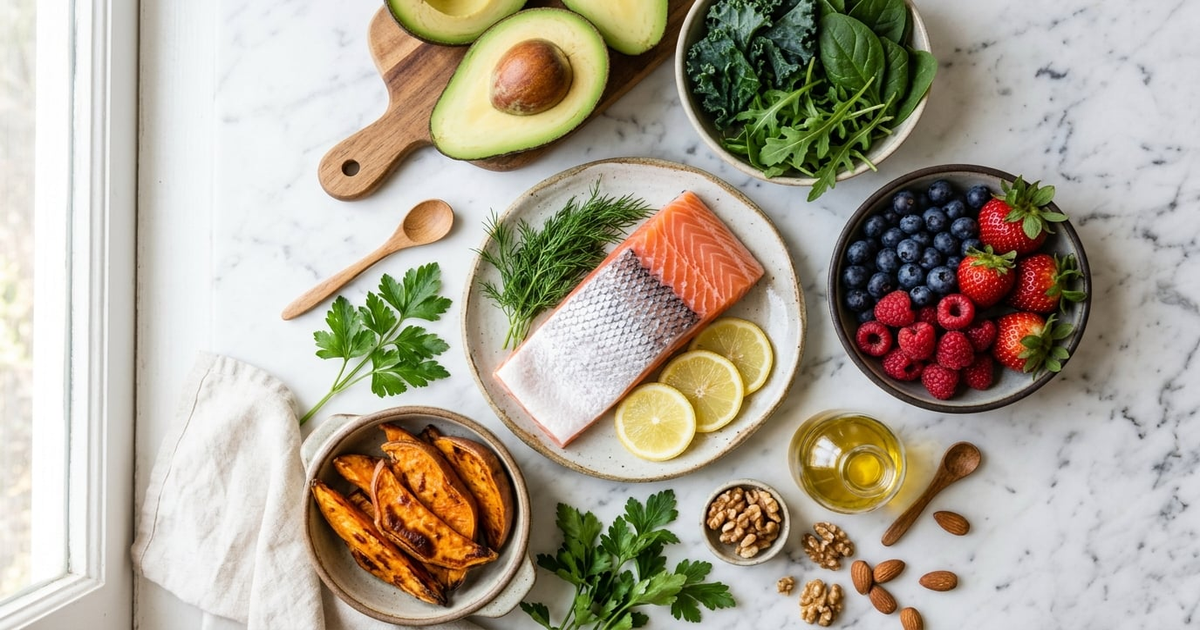
Here's something most skincare ads won't tell you: the most powerful anti-ageing treatment isn't in a bottle — it's on your plate. While serums and creams work on the surface, the foods you eat every day influence your skin at a cellular level, affecting collagen production, hydration, elasticity, and how quickly your skin ages.
After 50, skin changes accelerate. Declining oestrogen levels reduce collagen production by up to 30% in the first five years of menopause. Skin becomes thinner, drier, less elastic, and more prone to wrinkles, age spots, and irritation. But research consistently shows that women who eat nutrient-dense, antioxidant-rich diets have measurably younger-looking skin than those who don't — regardless of their skincare routine.
A landmark study in the American Journal of Clinical Nutrition found that higher intakes of vitamin C, omega-3 fatty acids, and certain antioxidants were associated with fewer wrinkles, less dryness, and better skin texture in women over 40. The message is clear: if you want to glow after 50, start from the inside out.
Here are the five best foods for healthy, radiant skin after 50.
1. Fatty Fish (Salmon, Sardines, Mackerel)
If you could eat just one food for better skin after 50, fatty fish would be it. Salmon, sardines, and mackerel are loaded with omega-3 fatty acids — the essential fats your skin desperately needs but can't produce on its own.
Omega-3s benefit your skin in multiple ways:
- Maintain the skin's lipid barrier — this is the protective outer layer that locks in moisture and keeps irritants out. A strong lipid barrier means plumper, more hydrated skin
- Reduce inflammation — chronic inflammation accelerates skin ageing, causes redness, and worsens conditions like rosacea and eczema. Omega-3s are potent anti-inflammatory agents
- Protect against UV damage — studies show that omega-3s can reduce the skin's sensitivity to sunburn and help prevent sun-induced collagen breakdown
- Support collagen production — omega-3s help regulate the enzymes that break down collagen, slowing the process that leads to wrinkles and sagging
Fatty fish is also an excellent source of high-quality protein (essential for skin repair), vitamin D (which supports skin cell growth), and selenium (a powerful antioxidant that protects skin from oxidative damage).
How much: Aim for 2–3 servings of fatty fish per week. A serving is about 150 grams (roughly the size of your palm). Wild-caught salmon is ideal, but tinned sardines and mackerel are equally nutritious and more affordable.
2. Avocado
Avocados are a skin superfood. They're packed with healthy monounsaturated fats, vitamins, and antioxidants that nourish your skin from the inside out.
A fascinating 2022 study published in the Journal of Cosmetic Dermatology found that women who ate one avocado daily for eight weeks had significantly improved skin elasticity and firmness compared to those who didn't — with no other dietary changes. The researchers attributed this to avocado's unique combination of fats and antioxidants.
What makes avocado so good for skin:
- Monounsaturated fats — keep the skin's lipid barrier strong and supple, reducing dryness and flakiness
- Vitamin E — one of the most important antioxidants for skin. Vitamin E protects skin cells from oxidative damage caused by UV exposure and pollution, and works synergistically with vitamin C
- Vitamin C — essential for collagen synthesis. Without adequate vitamin C, your body literally cannot produce new collagen. One avocado provides roughly 17% of your daily vitamin C needs
- Lutein and zeaxanthin — carotenoids that protect skin from UV damage and improve skin tone
- Biotin — supports healthy skin cell production and helps prevent dryness
How much: Half to one avocado per day is ideal. Add it to toast, salads, smoothies, or simply enjoy it with a squeeze of lemon and a pinch of salt. The healthy fats also help your body absorb fat-soluble vitamins (A, D, E, K) from other foods you eat with it.
3. Berries (Blueberries, Strawberries, Raspberries)
Berries are antioxidant powerhouses — and antioxidants are your skin's best defence against ageing. Every day, your skin is exposed to free radicals from UV light, pollution, stress, and even normal metabolism. These free radicals damage collagen, elastin, and skin cells, accelerating the visible signs of ageing.
Berries — particularly blueberries — contain some of the highest concentrations of antioxidants of any food. Their deep, vibrant colours come from anthocyanins, flavonoids that are extraordinarily effective at neutralising free radicals.
Key skin benefits of berries:
- Anthocyanins — protect collagen from degradation and improve blood flow to the skin, giving it a healthier, more radiant appearance
- Vitamin C — berries are one of the richest dietary sources. One cup of strawberries provides more than 100% of your daily vitamin C needs — essential for collagen production
- Ellagic acid (found in strawberries and raspberries) — research shows it can help prevent collagen destruction from UV damage and reduce the appearance of wrinkles
- Resveratrol (found in blueberries) — may slow the ageing process at a cellular level by activating longevity genes called sirtuins
How much: Aim for 1–2 cups of mixed berries daily. Fresh or frozen are equally nutritious. Add them to yoghurt, oats, smoothies, or eat them as a snack. Frozen berries are picked at peak ripeness and are often more nutrient-dense (and affordable) than fresh.
4. Sweet Potato
Get your FREE 7-Day Beginner Workout Plan
A gentle, progressive week of strength, cardio, flexibility and balance — designed just for women over 50. Pop in your details and I'll send it straight away. 💪
Sweet potatoes are one of the best sources of beta-carotene — the orange pigment that your body converts into vitamin A, a nutrient that's absolutely critical for healthy skin.
Vitamin A (retinol) is the gold standard ingredient in anti-ageing skincare products. But you can also supply your skin with this powerful nutrient from the inside by eating beta-carotene-rich foods. Your body converts only what it needs, so there's no risk of toxicity from dietary sources.
How beta-carotene and vitamin A support skin after 50:
- Natural sun protection — beta-carotene accumulates in the skin and acts as a natural sunblock. Studies show that regular consumption can reduce sunburn sensitivity by up to 40% over several weeks
- Cell turnover — vitamin A accelerates the rate at which old skin cells are replaced by new ones, leading to smoother, fresher-looking skin
- Collagen support — vitamin A stimulates collagen production and inhibits the enzymes (matrix metalloproteinases) that break collagen down
- Even skin tone — helps fade age spots and hyperpigmentation by regulating melanin production
- Antioxidant protection — beta-carotene neutralises free radicals that cause oxidative stress and premature ageing
One medium sweet potato provides over 400% of your daily vitamin A needs — making it one of the most efficient ways to nourish your skin through food.
How much: Include sweet potato 3–4 times per week. Roast it, mash it, add it to soups, or bake sweet potato wedges as a side dish. Eating it with a small amount of fat (like olive oil or butter) dramatically increases beta-carotene absorption.
5. Walnuts
Walnuts are the only nut that provides a significant amount of omega-3 fatty acids (in the form of alpha-linolenic acid, or ALA). This makes them uniquely beneficial for skin health, especially if you don't eat fish regularly.
But walnuts offer much more than just omega-3s:
- Omega-3 and omega-6 balance — walnuts contain both essential fatty acids in a ratio that helps reduce inflammation rather than promote it. Most Western diets are heavily skewed toward omega-6 (pro-inflammatory), so walnuts help restore balance
- Vitamin E — walnuts contain gamma-tocopherol, a form of vitamin E that's particularly effective at protecting cell membranes from oxidative damage
- Zinc — essential for wound healing, skin barrier function, and fighting inflammation. Zinc deficiency is linked to dry, flaky skin and slow healing
- Copper — supports the production of melanin (which protects skin from UV damage) and is a cofactor in collagen and elastin synthesis
- Polyphenols — walnut skins contain powerful antioxidants that reduce oxidative stress and protect skin cells
A study in the journal Nutrients found that regular walnut consumption was associated with better skin hydration, improved elasticity, and reduced wrinkle depth in women over 45.
How much: A small handful (about 30 grams or 7–8 walnuts) daily is enough to reap the skin benefits. Add them to salads, oats, yoghurt, or eat them as an afternoon snack. Store walnuts in the fridge or freezer to keep their delicate omega-3 fats fresh.
Bonus Tips for Glowing Skin After 50
While these five foods form the foundation of a skin-healthy diet, a few additional habits will amplify your results:
- Stay hydrated — aim for 2–2.5 litres of water daily. Hydrated skin looks plumper, smoother, and more radiant
- Limit sugar — excess sugar triggers a process called glycation, which damages collagen and elastin fibres, leading to wrinkles and sagging
- Eat the rainbow — different coloured fruits and vegetables provide different antioxidants. The more variety, the more comprehensive your skin protection
- Don't fear healthy fats — your skin needs fat to stay supple. Include olive oil, avocado, nuts, and fatty fish daily
- Protect from the sun — UV exposure is responsible for up to 80% of visible skin ageing. Wear SPF 50 daily, even in winter
The Bottom Line
Beautiful skin after 50 isn't about expensive products — it's about nourishing your body with the right foods every day. Fatty fish, avocado, berries, sweet potato, and walnuts provide the essential fatty acids, antioxidants, vitamins, and minerals your skin needs to stay hydrated, firm, and radiant.
The best part? These foods don't just benefit your skin — they support your heart, brain, bones, gut, and overall health too. It's a true win-win.
Start today. Add one of these foods to your next meal and commit to including all five in your weekly routine. Your skin — and your whole body — will thank you. 💛
Get your FREE 7-Day Beginner Workout Plan
A gentle, progressive week of strength, cardio, flexibility and balance — designed just for women over 50. Pop in your details and I'll send it straight away. 💪