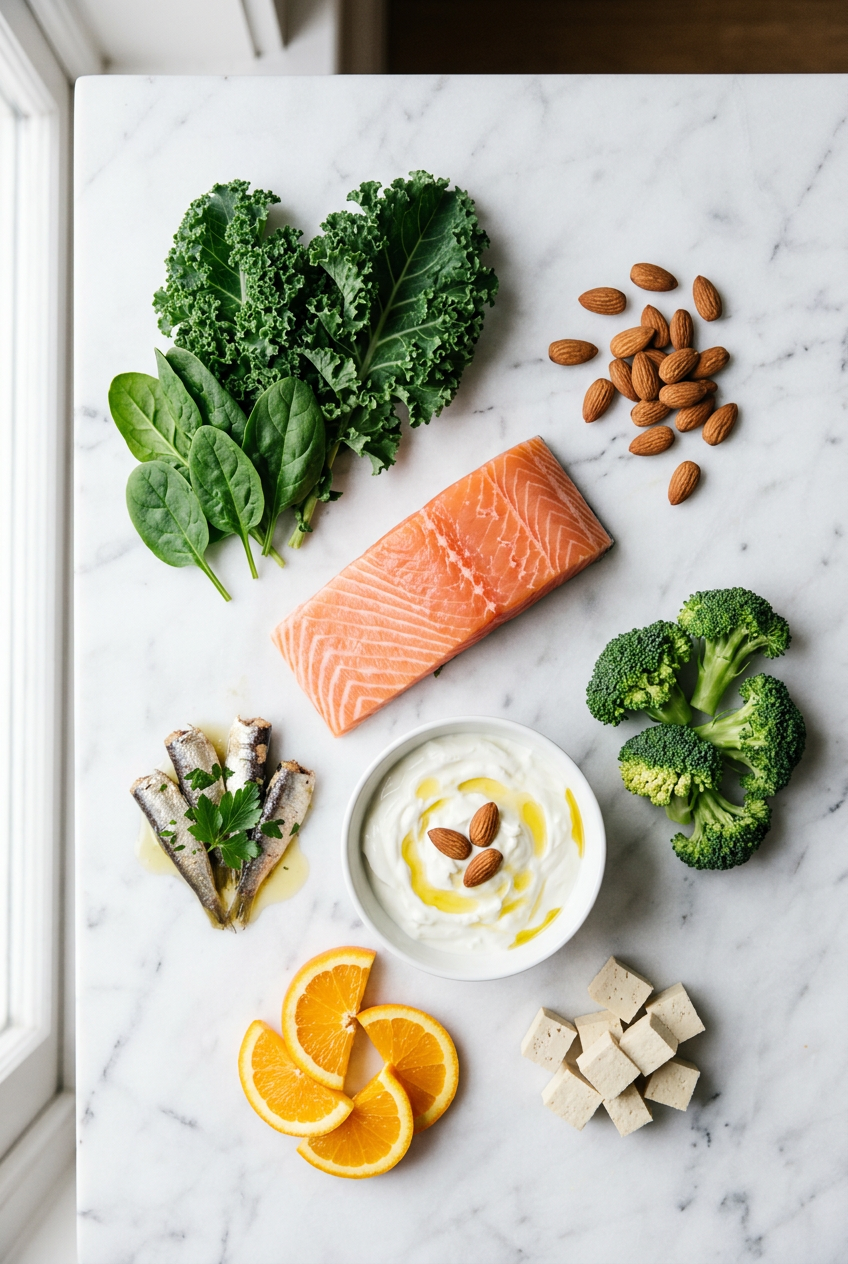
If you're a woman over 50, your bones need your attention — and the good news is that what you eat can make a real, measurable difference. 💛
After menopause, the drop in oestrogen accelerates bone loss significantly. Women can lose up to 20% of their bone density in the five to seven years following menopause, which is why osteoporosis affects roughly one in three women over 50. But here's the thing most people don't realise: bone is living tissue that's constantly being broken down and rebuilt — and the foods you eat provide the raw materials for that rebuilding process.
You don't need to overhaul your entire diet. Adding more of these five bone-building food groups to your everyday meals can genuinely help protect your skeleton for decades to come.
1. Fatty Fish — Salmon, Sardines & Mackerel
Fatty fish is a bone-health powerhouse because it delivers two things your bones desperately need: vitamin D and omega-3 fatty acids.
Vitamin D is essential for calcium absorption — without enough of it, your body can only absorb about 10–15% of dietary calcium instead of the usual 30–40%. That's a massive difference. And omega-3s help reduce the chronic inflammation that accelerates bone breakdown.
Best Choices
- Salmon (especially wild-caught) — one of the richest food sources of vitamin D
- Sardines — bonus: the tiny edible bones are packed with calcium
- Mackerel — affordable and rich in both vitamin D and omega-3s
- Tinned fish counts too — sardines and salmon with bones are budget-friendly bone boosters
How much: Aim for 2–3 serves of fatty fish per week (a serve is about 100–150g). A tin of sardines on wholegrain toast makes a perfect quick lunch.
2. Dark Leafy Greens — Kale, Bok Choy & Silverbeet
Dark leafy greens are some of the best non-dairy sources of calcium — and they come loaded with vitamin K, which is just as important for bone health as calcium itself. Vitamin K activates the proteins that bind calcium into your bones, so without enough K, calcium just floats around without doing its job.
Best Choices
- Kale — 100g cooked provides about 150mg of highly absorbable calcium
- Bok choy — excellent calcium absorption rate (better than spinach)
- Silverbeet (Swiss chard) — rich in magnesium, another bone essential
- Broccoli — not technically a leaf, but brilliant for calcium and vitamin K
A note on spinach: While spinach is nutritious, it's high in oxalates which bind to calcium and reduce absorption. For bone health specifically, kale, bok choy and broccoli are much better choices.
How much: At least one generous serve of dark greens daily. Sauté kale with garlic as a side dish, add bok choy to stir-fries, or blend silverbeet into soups.
3. Dairy & Calcium-Rich Alternatives
Dairy remains one of the most efficient ways to get calcium — and your calcium needs actually increase after 50. Women over 50 need around 1,300mg of calcium daily (up from 1,000mg), which is genuinely hard to hit without being intentional about it.
Best Choices
- Greek yoghurt — 200g provides about 250mg calcium plus gut-friendly probiotics
- Hard cheeses (parmesan, cheddar) — very calcium-dense
- Milk — a glass provides about 300mg calcium
- Calcium-fortified plant milks — soy, almond and oat milk (shake the carton! calcium settles at the bottom)
- Tofu set with calcium — check the label for calcium sulphate or calcium chloride
How much: Aim for 2–3 calcium-rich serves daily. A yoghurt at breakfast, a slice of cheese at lunch, and a glass of milk or fortified plant milk gets you most of the way there.
4. Nuts, Seeds & Legumes — The Magnesium Connection
Get your FREE 7-Day Beginner Workout Plan
A gentle, progressive week of strength, cardio, flexibility and balance — designed just for women over 50. Pop in your details and I'll send it straight away. 💪
Most women focus on calcium for bone health and completely overlook magnesium — but roughly 60% of your body's magnesium is stored in your bones. Magnesium helps convert vitamin D into its active form (which you need for calcium absorption) and directly stimulates the hormone calcitonin, which draws calcium into bones and keeps it out of soft tissues.
Best Choices
- Almonds — one of the richest food sources of magnesium (also contain calcium)
- Pumpkin seeds (pepitas) — just 30g provides about 150mg magnesium
- Sesame seeds & tahini — surprisingly high in calcium
- Lentils & chickpeas — magnesium plus plant protein for bone-building
- Brazil nuts — also provide selenium, which supports bone metabolism
How much: A small handful of nuts daily (about 30g), plus legumes 3–4 times per week. Sprinkle pepitas on salads, snack on almonds, and add chickpeas or lentils to soups, curries and salads.
5. Eggs & Fortified Foods — Your Vitamin D Safety Net
Even if you eat fish regularly, getting enough vitamin D from food alone is genuinely difficult — especially in winter or if you spend most of your time indoors. That's where eggs and fortified foods become your safety net.
Best Choices
- Eggs — the yolk contains vitamin D, vitamin K2 and protein (don't skip the yolk!)
- Fortified cereals — check labels for added vitamin D and calcium
- Fortified orange juice — some brands add both calcium and vitamin D
- Mushrooms exposed to sunlight — one of the only plant sources of vitamin D
How much: 1–2 eggs daily is perfectly healthy and provides a useful vitamin D boost. Choose fortified foods where you can, especially in the cooler months.
Foods That Weaken Bones (What to Reduce)
Just as important as what you eat more of is knowing what quietly works against your bones:
- Excess salt — causes your body to excrete calcium through urine. Watch processed foods, takeaway and salty snacks
- Too much caffeine — more than 3 cups of coffee daily can reduce calcium absorption slightly. Balance with calcium-rich foods
- Fizzy drinks (especially cola) — the phosphoric acid may interfere with calcium balance
- Excess alcohol — more than 1–2 standard drinks daily impairs bone-building cells
- Very high-fibre supplements taken at the same time as calcium-rich foods can reduce absorption. Space them out
A Simple Bone-Boosting Day on Your Plate
| Meal | What to Eat | Bone Nutrients |
|---|---|---|
| Breakfast | Greek yoghurt with berries, pepitas and a drizzle of honey | Calcium, magnesium, antioxidants |
| Snack | Small handful of almonds + an orange | Magnesium, calcium, vitamin C |
| Lunch | Sardines on sourdough with a kale & broccoli salad | Calcium, vitamin D, vitamin K |
| Snack | 2 boiled eggs | Vitamin D, vitamin K2, protein |
| Dinner | Baked salmon with bok choy stir-fry and brown rice | Vitamin D, omega-3, calcium, magnesium |
The Bottom Line
Your bones are not a lost cause after 50 — far from it. Every meal is a chance to give your skeleton the nutrients it needs to stay strong and resilient. Focus on fatty fish for vitamin D, dark greens for calcium and vitamin K, dairy or fortified alternatives for calcium, nuts and seeds for magnesium, and eggs for that vitamin D safety net.
Pair these foods with regular weight-bearing exercise (walking, strength training, dancing) and you're giving your bones the best possible chance of staying strong for decades. You've absolutely got this, lovely. 🦴💪💛
Get your FREE 7-Day Beginner Workout Plan
A gentle, progressive week of strength, cardio, flexibility and balance — designed just for women over 50. Pop in your details and I'll send it straight away. 💪