Why Pelvic Floor Strength Matters After 50
Your pelvic floor is a hammock of muscles that supports your bladder, uterus, and bowel. After 50, hormonal changes — particularly the drop in oestrogen during and after menopause — can weaken these muscles significantly. The result? Bladder leaks when you laugh, sneeze, or exercise. Pelvic organ prolapse. Reduced core stability. And a big hit to your confidence.
But here's the good news: pelvic floor muscles respond brilliantly to exercise at any age. With consistent practice, most women notice improvements within 6–8 weeks. These five exercises are safe, effective, and can be done at home without any equipment.
1. Kegel Exercises
Kegels are the gold standard for pelvic floor strengthening — and for good reason. They directly target the muscles you need most.
How to Do Them
- Sit comfortably or lie on your back with knees bent
- Imagine you're trying to stop the flow of urine mid-stream (but don't actually practice this while urinating)
- Squeeze and lift those muscles, holding for 5–10 seconds
- Release slowly and rest for 5 seconds
- Repeat 10–15 times, 3 sets per day
Why They Work
Kegels isolate the pelvic floor muscles without engaging surrounding muscle groups. Research shows that women who do regular Kegels can reduce urinary incontinence by up to 70%. The key is consistency — treat them like brushing your teeth.
Pro tip: Make sure you're not holding your breath or squeezing your thighs, buttocks, or abs. The movement should feel internal and subtle.
2. Glute Bridges
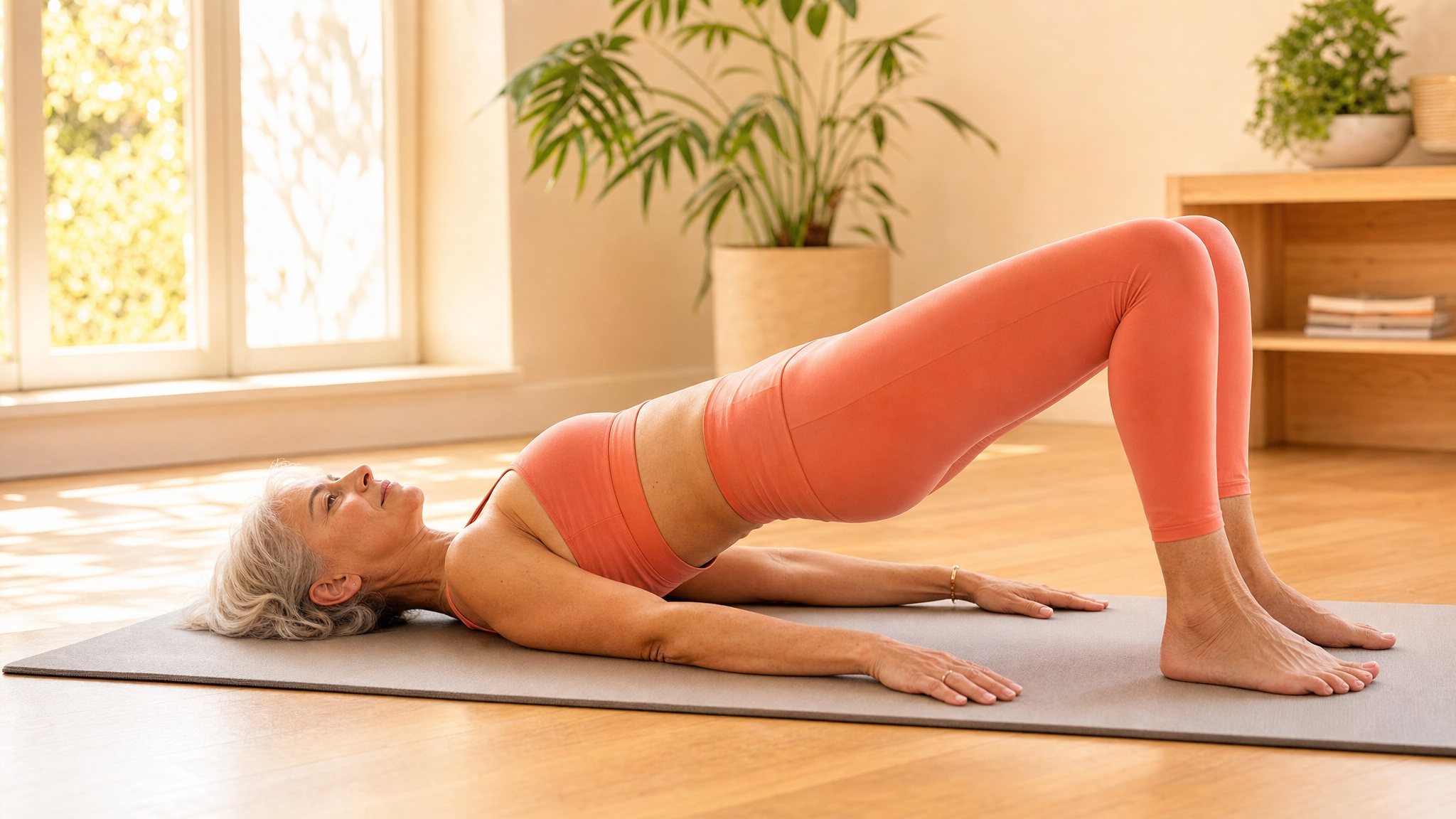
Bridges are a powerhouse exercise that strengthens your glutes, hamstrings, AND pelvic floor simultaneously. They're also brilliant for lower back support.
How to Do Them
- Lie on your back with knees bent, feet hip-width apart and flat on the floor
- As you exhale, engage your pelvic floor (like a Kegel) and squeeze your glutes
- Slowly lift your hips towards the ceiling until your body forms a straight line from shoulders to knees
- Hold at the top for 3–5 seconds, keeping your pelvic floor engaged
- Lower slowly back down, releasing the pelvic floor as you go
- Repeat 12–15 times for 3 sets
Why They Work
Bridges teach your pelvic floor to activate alongside your glutes and core — which is exactly how these muscles work in real life. Lifting shopping bags, climbing stairs, getting out of a chair — they all require this coordinated effort.
3. Clamshells
Clamshells target your hip abductors and deep rotators while indirectly engaging the pelvic floor. They're particularly helpful for women who experience hip tightness alongside pelvic floor weakness.
How to Do Them
- Lie on your side with knees bent at about 45 degrees, feet together
- Keep your feet touching and slowly open your top knee like a clamshell
- Engage your pelvic floor as you lift
- Hold at the top for 2–3 seconds
- Lower slowly back down
- Repeat 15 times on each side for 2–3 sets
Why They Work
Your hip muscles and pelvic floor are closely connected — when one group is weak, the other often compensates (and not in a good way). Clamshells help restore the balance, improving pelvic stability and reducing the strain on your pelvic floor during everyday movements.
4. Bird Dog
Get your FREE 7-Day Beginner Workout Plan
A gentle, progressive week of strength, cardio, flexibility and balance — designed just for women over 50. Pop in your details and I'll send it straight away. 💪
This whole-body stabilisation exercise challenges your core, back, and pelvic floor to work together. It's also fantastic for improving balance and coordination.
How to Do Them
- Start on all fours with wrists under shoulders and knees under hips
- Engage your pelvic floor and draw your belly button gently towards your spine
- Slowly extend your right arm forward and left leg back simultaneously
- Keep your hips level — don't let them rotate
- Hold for 3–5 seconds
- Return to start and repeat on the opposite side
- Alternate for 10 reps per side, 2–3 sets
Why They Work
Bird dogs train your pelvic floor to maintain engagement during movement — which is far more functional than isolated exercises alone. Your pelvic floor doesn't just need to be strong; it needs to be responsive during daily activities like reaching, bending, and walking.
5. Happy Baby Stretch
While the other exercises build strength, the happy baby stretch promotes flexibility and relaxation in the pelvic floor. A healthy pelvic floor needs to be able to both contract AND release — many women focus only on tightening and forget to stretch.
How to Do It
- Lie on your back and bring your knees towards your chest
- Grab the outsides of your feet with both hands
- Open your knees wider than your torso
- Gently pull your feet down towards the floor beside your ribs
- Rock gently side to side if it feels good
- Hold for 30–60 seconds, breathing deeply
Why It Works
This stretch gently opens the hips and releases tension in the pelvic floor muscles. If your pelvic floor is too tight (which is surprisingly common), it can actually cause similar symptoms to weakness — including pain and urgency. Regular stretching helps restore a healthy balance between strength and flexibility.
How to Build a Pelvic Floor Routine
You don't need to spend hours on pelvic floor exercises. Here's a simple daily routine that takes about 10–15 minutes:
- Morning: 3 sets of 10 Kegels while having your morning cuppa
- Lunchtime: 3 sets of bridges + 2 sets of clamshells (each side)
- Evening: 2 sets of bird dogs + 60-second happy baby stretch
Start with fewer reps if needed and build up gradually. The most important thing is consistency — daily practice for 8–12 weeks will deliver noticeable results.
Signs You Should See a Pelvic Floor Physiotherapist
While these exercises are safe for most women, it's worth seeing a specialist if you experience:
- Frequent bladder leaks that don't improve after 6–8 weeks of exercises
- Pain during these exercises or during intimacy
- A sensation of heaviness or dragging in your pelvis
- Difficulty fully emptying your bladder or bowel
A pelvic floor physiotherapist can assess your specific situation and create a tailored program. There's absolutely no shame in seeking help — it's one of the smartest things you can do for your long-term health.
The Bottom Line
Pelvic floor exercises aren't glamorous, but they're arguably some of the most important exercises you can do after 50. A strong pelvic floor means better bladder control, improved core stability, enhanced intimacy, and the confidence to exercise, laugh, and sneeze without worry.
Start today. Your future self will thank you. 💪
Get your FREE 7-Day Beginner Workout Plan
A gentle, progressive week of strength, cardio, flexibility and balance — designed just for women over 50. Pop in your details and I'll send it straight away. 💪