If you're over 50 and wondering which exercises deserve a spot in your weekly routine, you're not alone. With so much conflicting advice out there, it's easy to feel overwhelmed. The truth? You don't need a complicated programme or hours at the gym. You need the right movements — ones that build functional strength, protect your bones, and keep your body moving well for decades to come.
Here are five exercises every woman over 50 should be doing — and why they matter more than ever at this stage of life.
1. Squats — The Queen of Functional Movement
Squats aren't just a gym exercise — they're a life skill. Every time you sit down and stand up, you're doing a squat. Strengthening this movement pattern helps you maintain independence, protects your knees (when done correctly), and builds the glute and quad muscles that support your lower back.
How to do them safely
- Stand with feet hip-width apart, toes slightly turned out
- Push your hips back as if sitting into a chair
- Keep your chest lifted and weight in your heels
- Lower as far as comfortable — even a partial squat counts
- Press through your heels to stand back up
Modification: Use a chair behind you for confidence. Sit down gently, then stand back up without using your hands. That's a perfect beginner squat.
2. Deadlifts — Protect Your Back and Build Posterior Strength
The deadlift is one of the most practical exercises you can do. It teaches you to hinge at the hips and lift things safely — whether that's a grandchild, a bag of groceries, or a suitcase. It strengthens your hamstrings, glutes, and entire back chain, which is critical for posture and spinal health after 50.
Getting started
- Start with a light dumbbell or kettlebell
- Stand with feet hip-width apart, soft bend in the knees
- Hinge forward at the hips, keeping your back flat
- Lower the weight along your legs until you feel a stretch in your hamstrings
- Squeeze your glutes to stand back up
Focus on the hip hinge, not how low you go. A Romanian deadlift (slightly bent knees, weight slides down your thighs) is a brilliant starting point.
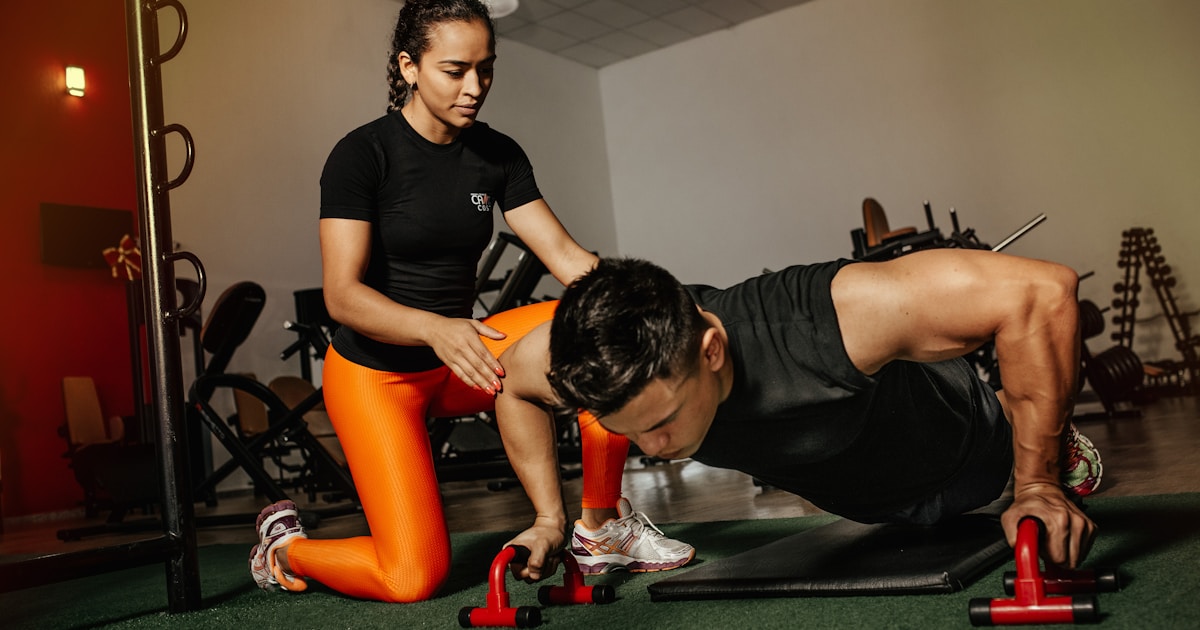
3. Push-Ups — Upper Body Strength That Transfers to Real Life
Push-ups build chest, shoulder, and arm strength while engaging your core. They're also a fantastic indicator of overall fitness. Research published in the Journal of the American Medical Association found that push-up capacity is strongly associated with cardiovascular health.
Progressions for every level
- Wall push-ups: Stand arm's length from a wall, hands shoulder-width apart. Lean in and push back.
- Incline push-ups: Use a kitchen bench or sturdy table. The lower the surface, the harder it gets.
- Knee push-ups: On the floor with knees down. Keep your body in a straight line from knees to shoulders.
- Full push-ups: When you're ready — and there's no rush to get here.
Start where you are. Even 5 wall push-ups a day is a meaningful beginning.
4. Resistance Band Rows — Combat the Forward Slouch
Get your FREE 7-Day Beginner Workout Plan
A gentle, progressive week of strength, cardio, flexibility and balance — designed just for women over 50. Pop in your details and I'll send it straight away. 💪
If you spend time at a desk, driving, or scrolling your phone (and who doesn't?), your upper back and shoulders are likely tight and weak. Resistance band rows strengthen the muscles between your shoulder blades, open up your chest, and dramatically improve posture.
How to perform them
- Anchor a resistance band at chest height (a door handle works perfectly)
- Hold one end in each hand with arms extended
- Pull the band towards your chest, squeezing your shoulder blades together
- Slowly release back to the starting position
- Aim for 12-15 repetitions, 2-3 sets
Resistance bands are inexpensive, portable, and joint-friendly — making them an ideal tool for women over 50.
5. Balance Work — The Exercise You Didn't Know You Needed
Balance isn't glamorous, but it might be the most important exercise on this list. Falls are the leading cause of injury in adults over 65, and balance begins to decline in your 50s. The good news? Balance is highly trainable, and even small improvements make a big difference.
Simple balance exercises to try
- Single-leg stand: Stand on one leg for 30 seconds. Switch sides. Hold a chair if needed.
- Heel-to-toe walk: Walk in a straight line, placing your heel directly in front of your opposite toe.
- Tandem stance: Stand with one foot directly in front of the other, hold for 30 seconds.
- Eyes-closed balance: Once you're confident, try any of the above with your eyes closed for an extra challenge.
Practise balance daily — even while brushing your teeth or waiting for the kettle to boil.
How to Put It All Together
You don't need to do all five exercises every day. Here's a simple weekly structure:
- Monday & Thursday: Squats + Deadlifts + Balance work (20-30 minutes)
- Tuesday & Friday: Push-ups + Rows + Balance work (20-30 minutes)
- Wednesday, Saturday & Sunday: Walk, stretch, or do gentle yoga
Start with 2 sets of 10-12 reps for each strength exercise. As you get stronger, add a third set or increase resistance. The key is consistency over intensity.
Why These Five?
These exercises were chosen because they:
- Target the muscle groups that matter most after 50 (glutes, back, core, legs)
- Improve bone density through weight-bearing and resistance work
- Enhance balance and reduce fall risk
- Require minimal equipment
- Can be modified for any fitness level
- Support daily functional movements (sitting, lifting, reaching, walking)
A Note on Getting Started
If you're new to exercise or returning after a long break, start gently. There's no shame in beginning with chair squats, wall push-ups, and simply standing on one leg. Progress happens faster than you'd think — and every rep is an investment in your future self.
Your body at 50+ is capable of incredible things. These five exercises are the foundation for proving that to yourself, one workout at a time. 💪
Get your FREE 7-Day Beginner Workout Plan
A gentle, progressive week of strength, cardio, flexibility and balance — designed just for women over 50. Pop in your details and I'll send it straight away. 💪