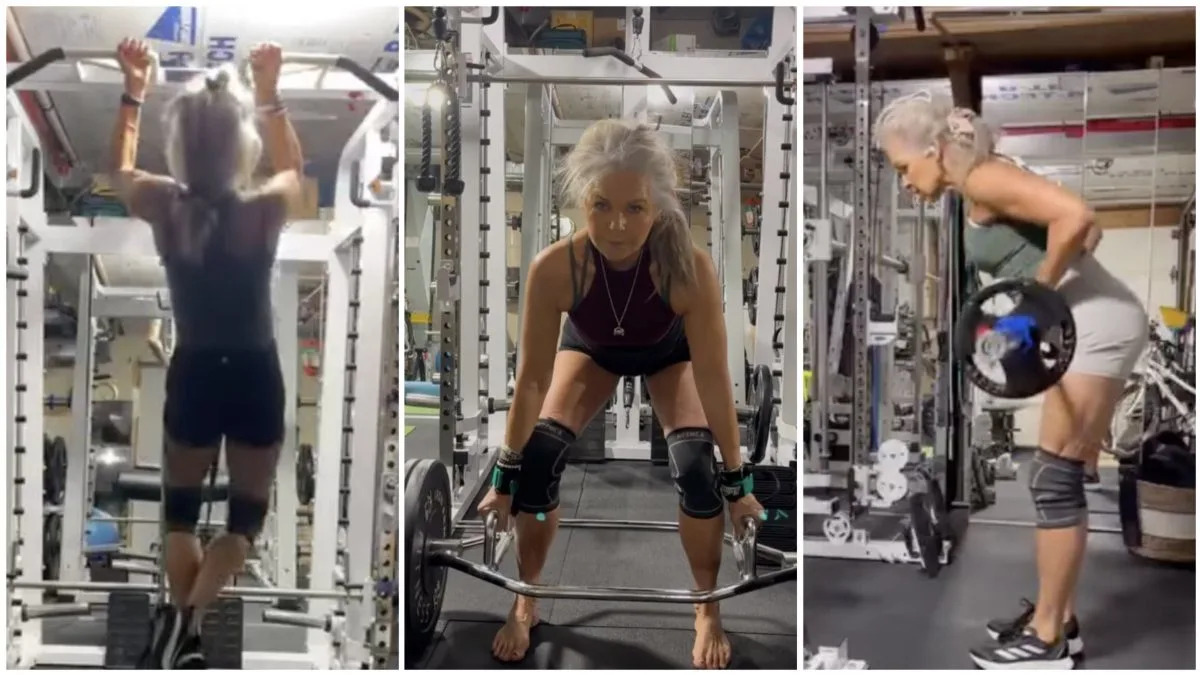
As we age, maintaining muscle strength isn't just about looking fit — it's about staying independent, mobile, and pain-free. After 50, we naturally lose muscle mass at a rate of about 1–2% per year (a process called sarcopenia), which means the muscles you train now will directly determine your quality of life in the decades ahead.
But here's the good news: it's never too late to start. And you don't need to train every single muscle equally. Some muscle groups matter more than others when it comes to mobility, balance, and injury prevention as you age.
Here are the 5 most important muscles every woman over 50 should be training — and exactly how to do it.
1. Glutes (Gluteus Maximus)
Your glutes are the powerhouse of your body. They're the largest muscle group and they control nearly every movement you make — from walking and climbing stairs to simply getting up from a chair.
Why It Matters After 50
Weak glutes are one of the biggest contributors to lower back pain, hip problems, and falls in women over 50. When your glutes aren't firing properly, other muscles (like your lower back) have to compensate, leading to pain and injury.
Strong glutes also help protect your hip joints — which is especially important as we age and bone density decreases.
Best Exercises
- Hip Thrusts — The gold standard for glute activation. Start with bodyweight, progress to a barbell or resistance band.
- Glute Bridges — A gentler alternative to hip thrusts, perfect for beginners.
- Squats — Focus on sitting back into the movement to engage the glutes.
- Step-Ups — Use a sturdy bench or step. Great for single-leg strength.
- Lateral Band Walks — Targets the gluteus medius, essential for hip stability.
2. Quadriceps
Your quads (the muscles at the front of your thighs) are essential for every standing movement you make. They're the muscles that help you stand up from sitting, climb stairs, walk confidently, and maintain your balance.
Why It Matters After 50
Quad weakness is directly linked to an increased risk of falls and loss of independence. Research shows that strong quads are one of the best predictors of mobility and balance in older adults. They also play a critical role in protecting your knee joints — if your quads are weak, your knees take the strain.
Best Exercises
- Squats — The king of lower body exercises. Use a chair behind you for confidence if needed.
- Leg Press — A great machine option that's easy on the back.
- Lunges — Forward, reverse, or walking. Start with bodyweight.
- Step-Ups — Functional and easy to adjust difficulty.
- Sit to Stands — Simply standing up from a chair without using your hands. Brilliant for daily strength.
3. Back (Lats & Upper Back)
Your back muscles — particularly the latissimus dorsi (lats) and the muscles of your upper back — are the foundation of good posture. They support your spine, help you stand tall, and are involved in every pulling movement you make.
Why It Matters After 50
Poor posture is one of the most visible signs of ageing, and it's almost always caused by weak back muscles. A strong back improves posture, reduces back pain, supports your spine, and helps with everyday activities like carrying groceries, lifting grandchildren, and reaching for things overhead.
Weak upper back muscles also contribute to that rounded-shoulder look that can make you appear older than you are.
Best Exercises
- Lat Pulldowns — Excellent for building back width and strength.
- Seated Rows — Targets the middle back for better posture.
- Bent-Over Rows — Use dumbbells or a barbell. Focus on squeezing the shoulder blades.
- Face Pulls — A game-changer for upper back and rear deltoids.
- Resistance Band Rows — Perfect for home workouts and beginners.
4. Core (Abdominals & Obliques)
Get your FREE 7-Day Beginner Workout Plan
A gentle, progressive week of strength, cardio, flexibility and balance — designed just for women over 50. Pop in your details and I'll send it straight away. 💪
Your core isn't just your "abs" — it's the entire cylinder of muscles that wraps around your midsection, including your abdominals, obliques, and deep stabilising muscles. Think of it as your body's natural back brace.
Why It Matters After 50
A strong core supports your spine, improves balance, and helps prevent falls and injuries. It's involved in virtually everything you do — from bending down to tie your shoes to carrying shopping bags. Core weakness is a major contributor to lower back pain, which affects a huge percentage of women over 50.
A strong core also helps you maintain good posture and move with confidence throughout the day.
Best Exercises
- Planks — Start with 15–20 seconds and build up. Modified planks (on knees) are perfectly fine.
- Dead Bugs — One of the safest and most effective core exercises for all levels.
- Russian Twists — Great for oblique strength. Use bodyweight or a light weight.
- Pallof Press — An anti-rotation exercise that builds real-world core stability.
- Bird Dogs — Perfect for core stability and balance combined.
5. Calves (Gastrocnemius & Soleus)
Your calves might seem like a small, insignificant muscle group — but they're absolutely critical for balance, walking, and fall prevention as you age.
Why It Matters After 50
Your calf muscles are responsible for every step you take. They power your push-off when walking, help you maintain balance on uneven surfaces, and play a vital role in circulation (they're often called your "second heart" because they help pump blood back up to your heart).
Weak calves lead to shuffling feet, poor balance, and increased fall risk — all things we want to avoid after 50.
Best Exercises
- Calf Raises (Standing) — Hold onto a wall or chair for balance. Slow and controlled.
- Seated Calf Raises — Targets the soleus muscle, which is important for endurance.
- Farmer's Walk — Carry dumbbells and walk. Works calves, grip, and core simultaneously.
- Single-Leg Calf Raises — Progress to these once you've built a base of strength.
- Stair Calf Raises — Stand on the edge of a step for a deeper range of motion.
How Often Should You Train These Muscles?
For women over 50, the sweet spot is 2–3 strength training sessions per week, with at least one rest day between sessions. You don't need to train all five muscle groups in every session — you can split them up:
- Day 1: Glutes, Quads, and Calves (lower body focus)
- Day 2: Back and Core (upper body and stability focus)
- Day 3: Full body or repeat your weaker areas
Start with 2–3 sets of 10–12 reps for each exercise. Use a weight that challenges you by the last 2–3 reps but still allows you to maintain good form.
Strong Muscles = Better Mobility, Less Pain, More Independence
Here's what happens when you consistently train these five muscle groups:
- ✅ Better mobility — You move more freely and with less stiffness
- ✅ Less pain — Stronger muscles mean less strain on your joints and spine
- ✅ More independence — You can carry your own groceries, get up from the floor, and travel with confidence
- ✅ Better quality of life — You feel stronger, more energetic, and more capable every single day
- ✅ Reduced fall risk — Strong glutes, quads, core, and calves are your best defence against falls
You Can Do This
It's never too late to get stronger. Small steps today lead to a stronger, healthier tomorrow. You don't need to be a gym veteran or lift heavy weights to see incredible benefits.
Start where you are. Use what you have. Do what you can. And remember: strong today means independent tomorrow. Live life on your terms.
Your body is capable of amazing things — it just needs you to show up and give it a reason to grow. 💪
Get your FREE 7-Day Beginner Workout Plan
A gentle, progressive week of strength, cardio, flexibility and balance — designed just for women over 50. Pop in your details and I'll send it straight away. 💪