If you've noticed that aches, pains, stiffness, and fatigue have become your new normal after 50, chronic inflammation could be the hidden culprit. Unlike acute inflammation — the kind that heals a cut or fights an infection — chronic, low-grade inflammation simmers quietly in your body for months or years, driving virtually every age-related disease.
Research from the Nature Medicine journal has coined the term "inflammageing" — the intersection of inflammation and ageing. Scientists now believe that chronic inflammation is the single biggest driver of heart disease, type 2 diabetes, arthritis, Alzheimer's, certain cancers, and accelerated ageing.
The good news? You can reduce chronic inflammation dramatically with simple daily changes. No expensive supplements, no extreme diets — just five evidence-based strategies that genuinely work.
1. Eat More Anti-Inflammatory Foods Daily
What you eat is the most powerful lever you have for controlling inflammation. Certain foods actively reduce inflammatory markers in your body, while others fuel the fire.
The research is clear: a Mediterranean-style eating pattern — rich in vegetables, fruits, healthy fats, and lean protein — reduces inflammatory markers by up to 20% within just eight weeks, according to a landmark study in the American Journal of Clinical Nutrition.
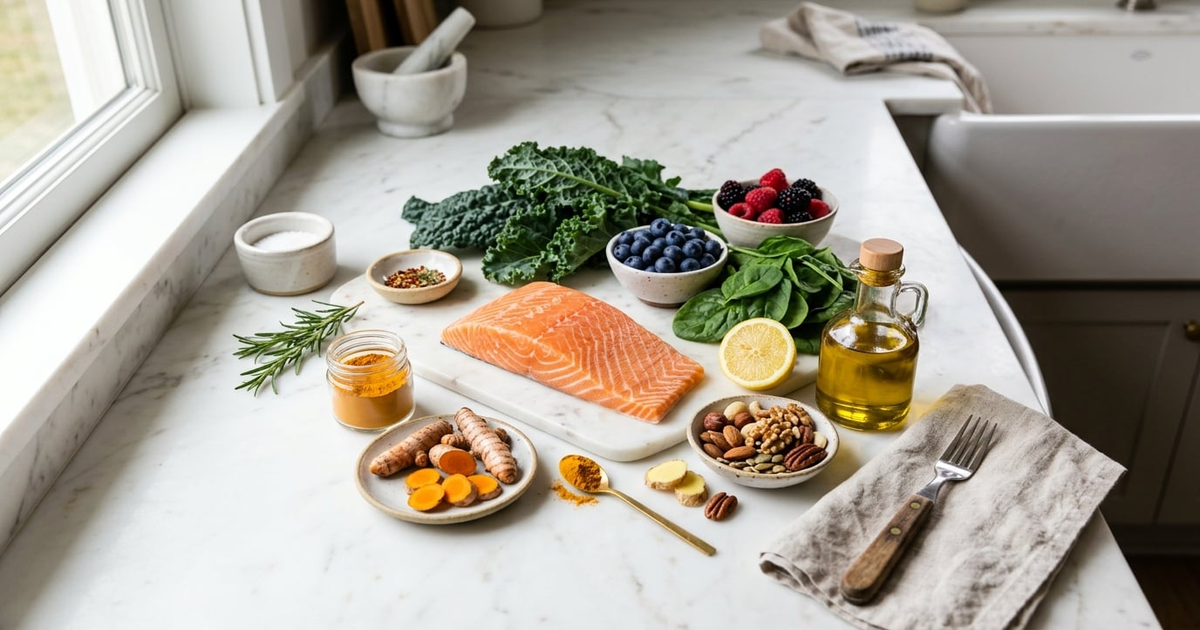
The top anti-inflammatory foods to eat daily:
- Fatty fish (salmon, sardines, mackerel) — rich in omega-3 fatty acids, which directly lower the inflammatory markers CRP and IL-6
- Berries (blueberries, strawberries, raspberries) — packed with anthocyanins, powerful antioxidants that neutralise inflammation
- Leafy greens (spinach, kale, rocket) — high in vitamins C, E, and K, all of which have anti-inflammatory properties
- Extra virgin olive oil — contains oleocanthal, a compound that works similarly to ibuprofen
- Turmeric — curcumin, its active compound, is one of the most studied anti-inflammatory agents in the world
- Nuts (almonds, walnuts) — provide healthy fats and polyphenols that reduce oxidative stress
What to do: Aim to include at least 3–4 anti-inflammatory foods at every meal. A simple breakfast might be Greek yoghurt with berries and walnuts. Lunch could be a big salad with leafy greens, salmon, olive oil, and avocado. Add turmeric to soups, smoothies, or scrambled eggs.
2. Cut Back on Inflammatory Foods
Adding anti-inflammatory foods is only half the equation. You also need to reduce the foods that actively trigger inflammation in your body.
The biggest inflammatory offenders are:
- Refined sugar and high-fructose corn syrup — trigger the release of inflammatory cytokines. A study in the American Journal of Clinical Nutrition found that just one sugary drink per day increases CRP (a key inflammation marker) by 87%
- Ultra-processed foods — chips, biscuits, fast food, packaged snacks. These are loaded with inflammatory seed oils, preservatives, and additives
- Refined carbohydrates — white bread, pasta, pastries. These spike blood sugar rapidly, triggering an inflammatory response
- Excessive alcohol — more than one standard drink per day increases inflammation and disrupts gut bacteria
- Trans fats and seed oils — found in margarine, deep-fried foods, and many processed products
What to do: You don't need to be perfect — the goal is progress, not perfection. Start by swapping one inflammatory food per week for a better alternative. Replace sugary snacks with fruit and nuts. Swap white bread for sourdough or wholegrain. Cook with olive oil instead of vegetable oil. Reduce alcohol to 2–3 nights per week maximum.
3. Move Your Body Every Day (But Don't Overdo It)
Regular moderate exercise is one of the most potent anti-inflammatory medicines available — and it's completely free. When you exercise, your muscles release anti-inflammatory molecules called myokines that actively reduce systemic inflammation.
A study published in Brain, Behavior, and Immunity found that just 20 minutes of moderate walking produces a measurable anti-inflammatory response in the body. Regular exercisers have significantly lower levels of CRP, TNF-alpha, and IL-6 — three of the most important inflammatory markers.
However, there's an important caveat for women over 50: too much intense exercise without adequate recovery can actually increase inflammation. Overtraining triggers chronic cortisol elevation, which drives inflammation rather than reducing it.
The ideal anti-inflammatory exercise routine:
- Walk daily — 30–45 minutes of brisk walking is highly anti-inflammatory
- Strength train 2–3 times per week — building muscle reduces inflammation long-term
- Include gentle movement — yoga, tai chi, swimming, and stretching all reduce inflammatory markers
- Rest and recover — take at least 1–2 full rest days per week
- Listen to your body — if you're exhausted, sore, or run-down, choose gentle movement over intense exercise
What to do: Aim for 150 minutes of moderate activity per week (about 30 minutes, five days a week) plus 2–3 strength training sessions. Include at least one yoga or stretching session weekly. The key is consistency over intensity — daily movement beats occasional intense workouts every time.
4. Prioritise Quality Sleep
Get your FREE 7-Day Beginner Workout Plan
A gentle, progressive week of strength, cardio, flexibility and balance — designed just for women over 50. Pop in your details and I'll send it straight away. 💪
Sleep is when your body performs its deepest repair and anti-inflammatory work. During deep sleep, your immune system releases anti-inflammatory cytokines that help heal tissue damage and fight infection. Cut that sleep short, and inflammation skyrockets.
Research from the Journal of the American Heart Association shows that adults who sleep fewer than 6 hours per night have CRP levels up to 25% higher than those who sleep 7–8 hours. Even one night of poor sleep significantly increases inflammatory markers the next day.
For women over 50, sleep quality often declines due to hormonal changes, hot flushes, and increased stress. This creates a vicious cycle: inflammation disrupts sleep, and poor sleep increases inflammation.
How to improve your sleep for lower inflammation:
- Keep a consistent sleep schedule — go to bed and wake up at the same time every day, even on weekends
- Create a cool, dark environment — keep your bedroom at 16–18°C and use blackout curtains
- Avoid screens 60 minutes before bed — blue light suppresses melatonin production
- Limit caffeine after midday — caffeine has a half-life of 5–6 hours and disrupts deep sleep even if you fall asleep easily
- Consider magnesium glycinate — 300–400mg before bed can improve sleep quality and reduce inflammation simultaneously
- Try a relaxation routine — deep breathing, gentle stretching, or reading can signal your body it's time to wind down
What to do: Aim for 7–8 hours of quality sleep every night. Track your sleep for a week to identify patterns. If you consistently wake during the night or feel unrested despite sleeping enough hours, speak with your doctor about underlying causes like sleep apnoea.
5. Manage Stress Actively
Chronic stress is one of the most overlooked drivers of inflammation after 50. When you're stressed, your body pumps out cortisol — the "fight or flight" hormone. Short bursts of cortisol are normal and healthy, but chronic stress keeps cortisol elevated for weeks or months, and this has a devastating effect on inflammation.
Chronically elevated cortisol:
- Increases inflammatory markers throughout the body
- Weakens the immune system, making you more susceptible to illness
- Promotes belly fat storage (visceral fat is itself highly inflammatory)
- Disrupts gut bacteria, further fuelling inflammation
- Impairs sleep quality, creating a compounding cycle
- Accelerates cellular ageing by shortening telomeres
A landmark study from Carnegie Mellon University found that people with chronic stress have cells that are less responsive to cortisol's anti-inflammatory signals, meaning their bodies lose the ability to "switch off" inflammation naturally.
Proven stress-reduction strategies:
- Daily breathwork — just 5 minutes of slow, deep breathing (inhale for 4 counts, hold for 4, exhale for 6) activates your parasympathetic nervous system and lowers cortisol
- Time in nature — research shows that 20 minutes outdoors reduces cortisol by 20%
- Social connection — meaningful relationships buffer the inflammatory effects of stress
- Journaling — writing about stressful experiences has been shown to reduce inflammatory markers
- Setting boundaries — learning to say no protects your energy and reduces chronic stress load
- Mindfulness or meditation — even 10 minutes daily reduces cortisol and improves inflammatory markers over time
What to do: Choose one or two stress-management practices and commit to them daily. Start with 5 minutes of breathwork each morning — it's free, fast, and remarkably effective. Add a daily walk in nature if possible. Most importantly, identify your biggest sources of chronic stress and take one step toward addressing them this week.
The Bottom Line
Chronic inflammation is not an inevitable part of ageing. While some inflammatory changes occur naturally as we get older, the level of chronic inflammation in your body is largely determined by your daily habits.
The five strategies above — eating anti-inflammatory foods, reducing inflammatory foods, moving daily, sleeping well, and managing stress — work synergistically. Each one reduces inflammation on its own, but together they create a powerful anti-inflammatory lifestyle that can transform how you look, feel, and age.
You don't need to overhaul everything overnight. Start with one change this week. Add turmeric to your morning eggs. Take a 20-minute walk after dinner. Go to bed 30 minutes earlier. Small, consistent changes add up to extraordinary results over time.
Your body has an incredible ability to heal and reduce inflammation at any age. Give it the right tools, and it will do the rest. 💛
Get your FREE 7-Day Beginner Workout Plan
A gentle, progressive week of strength, cardio, flexibility and balance — designed just for women over 50. Pop in your details and I'll send it straight away. 💪