Your gut is often called your "second brain" — and for good reason. It houses roughly 70% of your immune system, produces over 90% of your serotonin (the "happy hormone"), and directly influences everything from digestion and energy levels to skin health, mood, and even how well you sleep.
After 50, gut health becomes even more critical. Hormonal changes during menopause, years of medication use (especially antibiotics and anti-inflammatories), increased stress, and natural changes in digestive function can all disrupt the delicate balance of bacteria in your gut — a community known as your microbiome.
The result? Bloating, constipation, fatigue, brain fog, weakened immunity, weight gain, skin issues, and increased inflammation. Sound familiar?
The good news is that your gut microbiome is remarkably responsive to change. Research shows that dietary and lifestyle shifts can begin reshaping your gut bacteria in as little as 24–48 hours. Here are six evidence-based tips to heal and strengthen your gut after 50.
1. Eat More Fermented Foods
Fermented foods are nature's most powerful probiotics — they contain live beneficial bacteria that directly colonise your gut and support a healthy microbiome. A landmark 2021 study from Stanford University found that people who ate six or more servings of fermented foods per day for 10 weeks had significantly increased microbiome diversity and reduced inflammatory markers.
For women over 50, this is particularly important because microbiome diversity naturally declines with age, and lower diversity is linked to higher inflammation, weaker immunity, and increased disease risk.
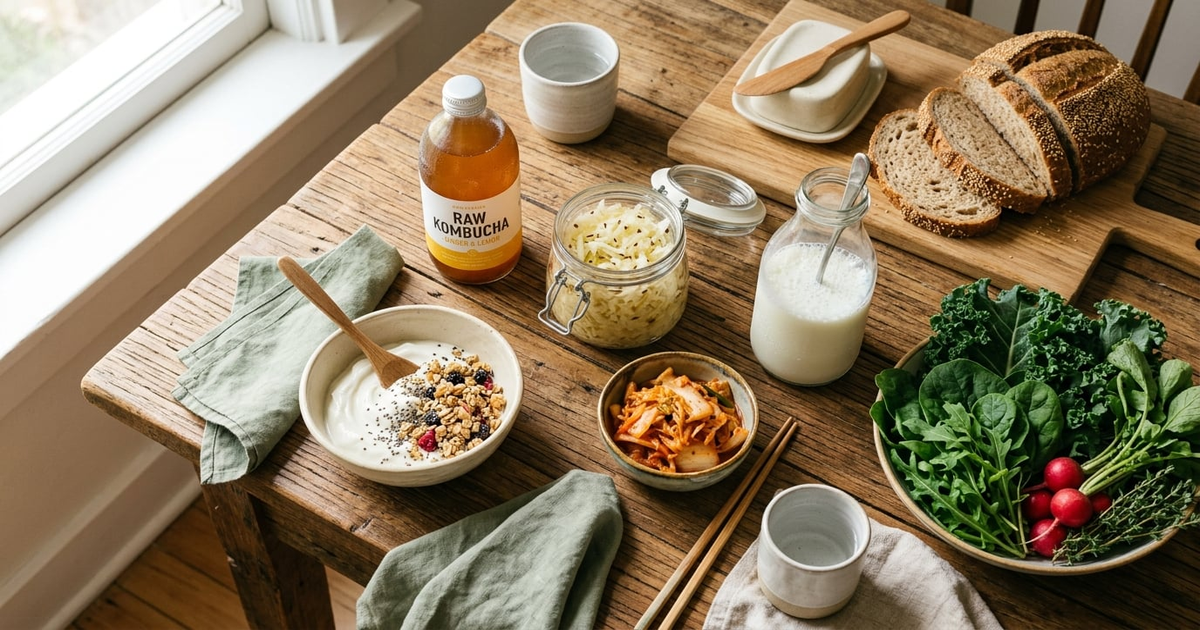
The best fermented foods to include daily:
- Natural yoghurt — choose full-fat, unsweetened varieties with live cultures (check the label for "Lactobacillus" or "Bifidobacterium")
- Kefir — a fermented milk drink with even more probiotic strains than yoghurt
- Sauerkraut — raw, unpasteurised sauerkraut from the refrigerator section (not the shelf-stable kind)
- Kimchi — Korean fermented vegetables, rich in diverse Lactobacillus strains
- Kombucha — fermented tea with beneficial bacteria and organic acids (choose low-sugar varieties)
- Miso — fermented soybean paste, perfect in soups and dressings
What to do: Aim for 2–3 servings of fermented foods daily. Start with a small serve of yoghurt at breakfast and a forkful of sauerkraut or kimchi with lunch or dinner. Build up gradually — too much too fast can cause temporary bloating as your gut adjusts.
2. Feed Your Good Bacteria with Prebiotic Fibre
Probiotics get all the attention, but prebiotics are equally important. Prebiotics are types of dietary fibre that your good gut bacteria feed on. Without them, even the best probiotic supplements won't thrive — it's like planting seeds in soil with no nutrients.
When your gut bacteria ferment prebiotic fibre, they produce short-chain fatty acids (SCFAs) — particularly butyrate — which are incredibly beneficial. SCFAs strengthen your gut lining, reduce inflammation, improve insulin sensitivity, and even support brain health.
The best prebiotic foods:
- Garlic and onions — rich in inulin and fructo-oligosaccharides (FOS)
- Leeks and asparagus — excellent sources of prebiotic fibre
- Bananas (especially slightly green ones) — contain resistant starch that feeds beneficial bacteria
- Oats — contain beta-glucan, a prebiotic fibre that supports Bifidobacterium growth
- Legumes (chickpeas, lentils, beans) — high in resistant starch and various prebiotic fibres
- Jerusalem artichokes — one of the richest sources of inulin available
What to do: Aim for 25–30 grams of fibre daily from a variety of plant sources. Most Australian women over 50 get less than 20 grams. Add an extra serve of vegetables at each meal, snack on fruit and nuts, and include legumes 3–4 times per week. Increase fibre gradually to avoid digestive discomfort.
3. Reduce Ultra-Processed Foods
Ultra-processed foods are arguably the single biggest enemy of gut health. These foods — packaged snacks, soft drinks, fast food, commercial baked goods, and many breakfast cereals — contain emulsifiers, artificial sweeteners, preservatives, and refined ingredients that actively damage your gut lining and reduce microbial diversity.
Research published in the British Medical Journal found that people who consumed the most ultra-processed foods had significantly less diverse gut microbiomes and higher levels of harmful bacteria associated with inflammation and metabolic disease.
Two specific additives are particularly harmful:
- Emulsifiers (found in ice cream, margarine, sauces, and dressings) — studies show they erode the protective mucus layer lining your gut, increasing intestinal permeability ("leaky gut")
- Artificial sweeteners (aspartame, sucralose, saccharin) — alter gut bacteria composition and can impair glucose tolerance, even at small doses
What to do: Follow the 80/20 rule — aim for 80% whole, minimally processed foods and allow 20% flexibility. Read ingredient lists: if a product contains ingredients you wouldn't find in a home kitchen, consider a whole-food alternative. Cook more meals from scratch — even simple ones like scrambled eggs on toast or a stir-fry with rice count as whole food meals.
4. Stay Hydrated and Limit Gut Irritants
Get your FREE 7-Day Beginner Workout Plan
A gentle, progressive week of strength, cardio, flexibility and balance — designed just for women over 50. Pop in your details and I'll send it straight away. 💪
Water is essential for every aspect of digestive function. It helps break down food, dissolve nutrients for absorption, soften stool for regular bowel movements, and maintain the mucus lining that protects your gut wall. Dehydration — which becomes more common after 50 as thirst signals weaken — can lead to constipation, bloating, and impaired nutrient absorption.
At the same time, certain common substances can irritate your gut lining and disrupt your microbiome:
- Excessive alcohol — disrupts gut bacteria balance, increases intestinal permeability, and promotes inflammation. Research shows even moderate drinking (more than one standard drink daily) can negatively affect gut health
- Excessive caffeine — while moderate coffee consumption (1–2 cups) may actually benefit gut bacteria, more than 3–4 cups can increase stomach acid and irritate the gut lining
- NSAIDs (ibuprofen, aspirin) — regular use damages the gut lining and reduces microbial diversity. If you need pain relief frequently, speak with your doctor about gut-friendly alternatives
What to do: Drink 2–2.5 litres of water daily. Start each morning with a large glass of water before anything else. Limit alcohol to 2–3 nights per week maximum. Keep coffee to 1–2 cups before midday. If you regularly take NSAIDs, discuss alternatives with your healthcare provider.
5. Manage Stress for a Healthier Gut
The connection between your brain and your gut — the gut-brain axis — is one of the most fascinating areas of modern health research. Your gut and brain communicate constantly through the vagus nerve, hormones, and immune signals. When you're stressed, your brain sends alarm signals directly to your gut, and the effects are immediate and measurable.
Chronic stress:
- Reduces beneficial bacteria (particularly Lactobacillus and Bifidobacterium species)
- Increases intestinal permeability ("leaky gut"), allowing toxins and undigested food particles to enter the bloodstream
- Slows digestion, leading to bloating, constipation, or alternating bowel habits
- Increases inflammation throughout the digestive tract
- Alters gut motility — some people experience diarrhoea under stress, others constipation
A 2019 study in Psychosomatic Medicine found that mindfulness-based stress reduction significantly improved gut symptoms and increased beneficial gut bacteria in participants with irritable bowel syndrome.
What to do: Practise daily stress management — even 5–10 minutes makes a difference. Deep breathing exercises activate the vagus nerve and directly calm the gut. Gentle yoga, walking in nature, and journaling are all proven to reduce the gut-damaging effects of chronic stress. Prioritise activities that bring you genuine joy and relaxation.
6. Eat a Diverse Range of Plants
One of the simplest and most impactful things you can do for your gut is to eat as many different plant foods as possible. The American Gut Project — the largest microbiome study ever conducted — found that people who ate 30 or more different plant foods per week had significantly more diverse gut microbiomes than those who ate 10 or fewer.
Why does diversity matter so much? Each type of plant food feeds different species of gut bacteria. The more diverse your diet, the more diverse your microbiome — and greater diversity is consistently linked to better health outcomes, stronger immunity, lower inflammation, and reduced risk of chronic disease.
"Plant foods" includes much more than just vegetables:
- Vegetables — aim for a rainbow of colours each week
- Fruits — berries, apples, citrus, bananas, kiwifruit
- Whole grains — oats, brown rice, quinoa, barley, buckwheat
- Legumes — chickpeas, lentils, black beans, kidney beans
- Nuts and seeds — almonds, walnuts, chia seeds, flaxseeds, pumpkin seeds
- Herbs and spices — turmeric, ginger, cinnamon, rosemary, oregano (these all count!)
What to do: Challenge yourself to eat 30 different plant foods this week. Keep a simple tally — you'll be surprised how quickly they add up when you include herbs, spices, nuts, and seeds. Add mixed seeds to your morning yoghurt. Use three different vegetables in your stir-fry instead of one. Try one new fruit or vegetable each week.
The Bottom Line
Your gut health is one of the most important foundations of overall wellbeing after 50. A healthy, diverse microbiome supports your immune system, reduces inflammation, improves mood and energy, aids weight management, and protects against chronic disease.
The six strategies above — eating fermented foods, feeding good bacteria with prebiotic fibre, reducing processed foods, staying hydrated, managing stress, and eating diverse plant foods — work together to create an environment where your gut can thrive.
You don't need expensive supplements or complicated protocols. Start with one change today — add a serve of yoghurt to your breakfast, swap one processed snack for fruit and nuts, or try a new vegetable you haven't eaten before. Your gut will thank you for it. 💛
Get your FREE 7-Day Beginner Workout Plan
A gentle, progressive week of strength, cardio, flexibility and balance — designed just for women over 50. Pop in your details and I'll send it straight away. 💪