Do your joints feel a little stiffer than they used to? Notice more aches after a big day, or a puffiness that seems to come and go? 💛 You're not imagining it — and you're certainly not alone. After 50, our bodies become more prone to chronic, low-grade inflammation, and it can quietly show up as sore joints, low energy, brain fog and that general feeling of being a bit 'off'.
The wonderful news is that one of the most powerful tools for calming inflammation is sitting right in your kitchen. What you eat has a genuine, measurable effect on how inflamed — or how soothed — your body feels. Certain foods actively fight inflammation, while others quietly fuel it. Today, let's focus on the good ones. 🥗
What Is Inflammation — and Why It Matters More After 50
Inflammation isn't all bad. Short-term (acute) inflammation is your body's brilliant healing response — it's what rushes to a cut or a sprained ankle to repair the damage. The problem is chronic inflammation: a persistent, simmering response that never quite switches off.
As our hormones shift through and after menopause, oestrogen — which has a natural anti-inflammatory effect — declines. This leaves many women more vulnerable to inflammation, which researchers now link to joint pain, heart disease, type 2 diabetes and cognitive decline. Eating to lower inflammation is one of the kindest, most protective things you can do for your future self.
1. Fatty Fish 🐟
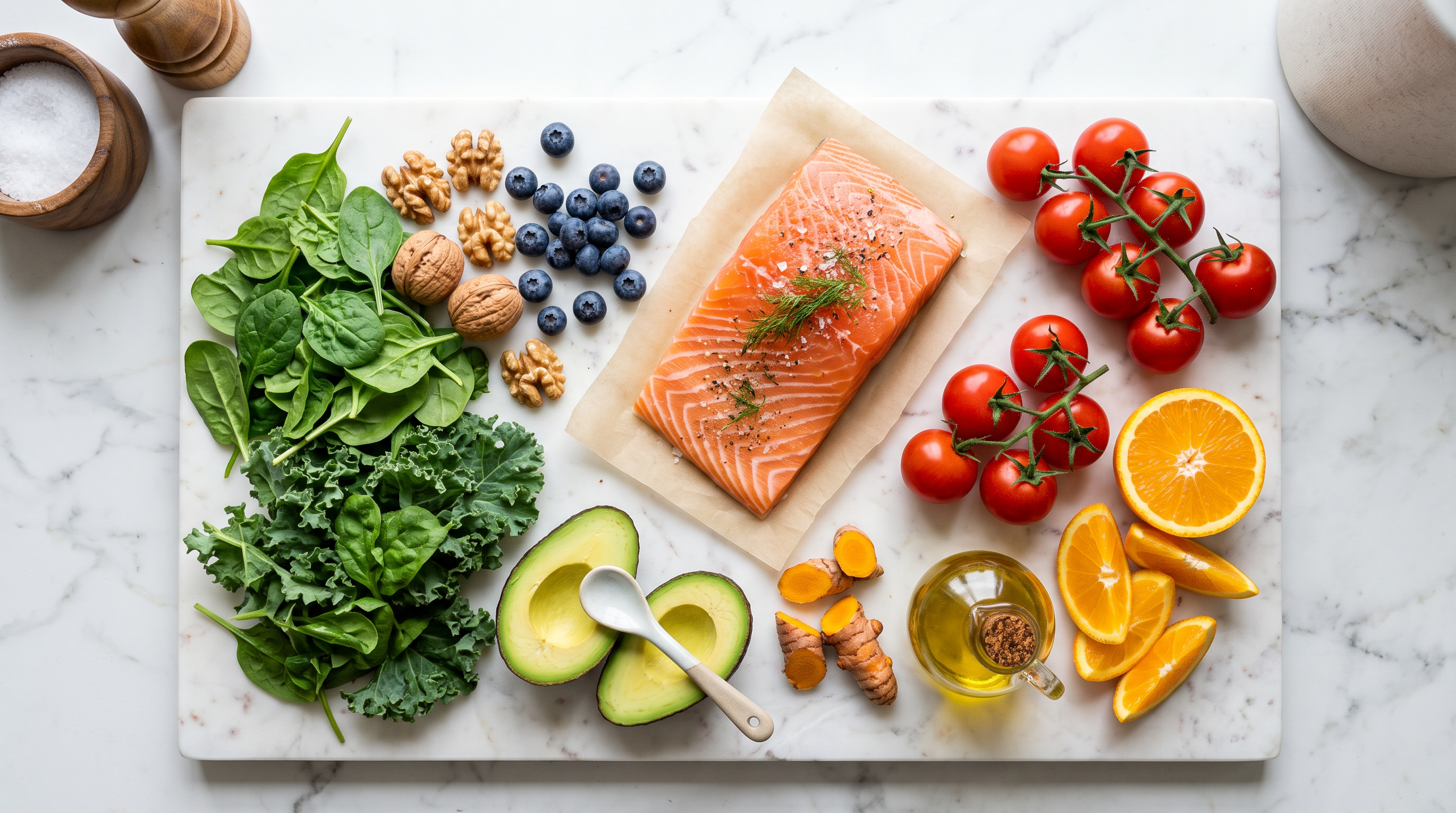
Salmon, sardines, mackerel and trout are rich in omega-3 fatty acids, some of the most potent anti-inflammatory compounds we know of. Omega-3s help reduce the production of molecules and substances linked to inflammation, and studies consistently connect them with less joint stiffness and better heart health.
- Aim for 2-3 servings of oily fish per week
- Tinned salmon and sardines are affordable and every bit as beneficial
- Not keen on fish? A quality omega-3 supplement is a sensible backup
2. Leafy Green Vegetables 🥬
Spinach, kale, rocket and silverbeet are packed with antioxidants and vitamins — particularly vitamin K, which plays a key role in regulating inflammation. Their deep green colour signals a wealth of protective plant compounds that help neutralise the oxidative stress that drives ageing.
- Add a handful of spinach to smoothies, soups and omelettes
- Build a big colourful salad as a base for lunch most days
- Lightly sauté greens with garlic and olive oil for a simple side
3. Berries 🫐
Blueberries, strawberries, raspberries and blackberries are little anti-inflammatory powerhouses. They're rich in anthocyanins — the antioxidants responsible for their vibrant colour — which have been shown to lower inflammatory markers and support both brain and heart health.
- Add a handful to your morning yoghurt, oats or smoothie
- Frozen berries are just as nutritious as fresh — and far cheaper
- Enjoy a small bowl as a naturally sweet dessert
4. Extra Virgin Olive Oil 🫒
Get your FREE 7-Day Beginner Workout Plan
A gentle, progressive week of strength, cardio, flexibility and balance — designed just for women over 50. Pop in your details and I'll send it straight away. 💪
A cornerstone of the Mediterranean diet, extra virgin olive oil contains a natural compound called oleocanthal, which has been found to work in a similar way to anti-inflammatory medication (in a gentle, food-based sense). It's also loaded with heart-healthy monounsaturated fats and antioxidants.
- Use it as your main cooking oil and salad dressing base
- Drizzle over vegetables, soups and wholegrain toast
- Choose 'extra virgin' for the highest antioxidant content
5. Turmeric 🧡
This golden spice contains curcumin, one of the most studied anti-inflammatory compounds in the natural world. Research suggests curcumin can help ease joint pain and stiffness. One handy tip: pair it with a pinch of black pepper, which dramatically boosts how well your body absorbs it.
- Stir into soups, curries, scrambled eggs and roasted vegetables
- Make a soothing golden latte with warm milk and honey
- Always add a pinch of black pepper to improve absorption
6. Nuts and Seeds 🌰
Walnuts, almonds, flaxseeds and chia seeds provide healthy fats, fibre, vitamin E and plant-based omega-3s — a lovely combination for keeping inflammation in check. They're also brilliant for steady energy and heart health.
- Enjoy a small handful (about 30g) as a snack
- Sprinkle seeds over porridge, salads and yoghurt
- Choose unsalted, unroasted varieties where possible
7. Tomatoes 🍅
Tomatoes are a rich source of lycopene, an antioxidant linked to reduced inflammation and better heart health. Interestingly, cooking tomatoes actually increases their lycopene content, and eating them with a little olive oil helps your body absorb it.
- Add to salads, soups, sauces and casseroles
- Roast cherry tomatoes with olive oil for a sweet, jammy side
- Enjoy a rich homemade tomato sauce over wholegrain pasta
8. Avocado 🥑
Creamy, satisfying avocado is full of monounsaturated fats, fibre and antioxidants that help fight inflammation. It also helps your body absorb the fat-soluble nutrients in the other vegetables on your plate — a wonderful team player.
- Spread on wholegrain toast with a squeeze of lemon
- Add slices to salads, wraps and grain bowls
- Blend into smoothies for a lovely creamy texture
A Simple Anti-Inflammatory Day
You don't need to overhaul everything at once. The magic is in consistency and colour. Here's what a soothing day might look like:
- Breakfast: Porridge topped with berries, walnuts and a sprinkle of chia seeds
- Lunch: Big leafy green salad with tinned salmon, avocado, tomatoes and an olive oil dressing
- Snack: A small handful of almonds and a piece of fruit
- Dinner: Grilled fish with roasted vegetables and a turmeric-spiced grain
- Throughout: Plenty of water and a cup or two of green tea
The Bottom Line
Eating to reduce inflammation doesn't mean strict rules or joyless meals. It's about filling your plate with real, colourful, delicious food more often than not — and letting those small choices add up over time. Your joints, your heart and your energy levels will thank you for it.
Start with just one or two changes this week, lovely, and build gently from there. Your body is listening, and it's never too late to feel better. 💛
Get your FREE 7-Day Beginner Workout Plan
A gentle, progressive week of strength, cardio, flexibility and balance — designed just for women over 50. Pop in your details and I'll send it straight away. 💪