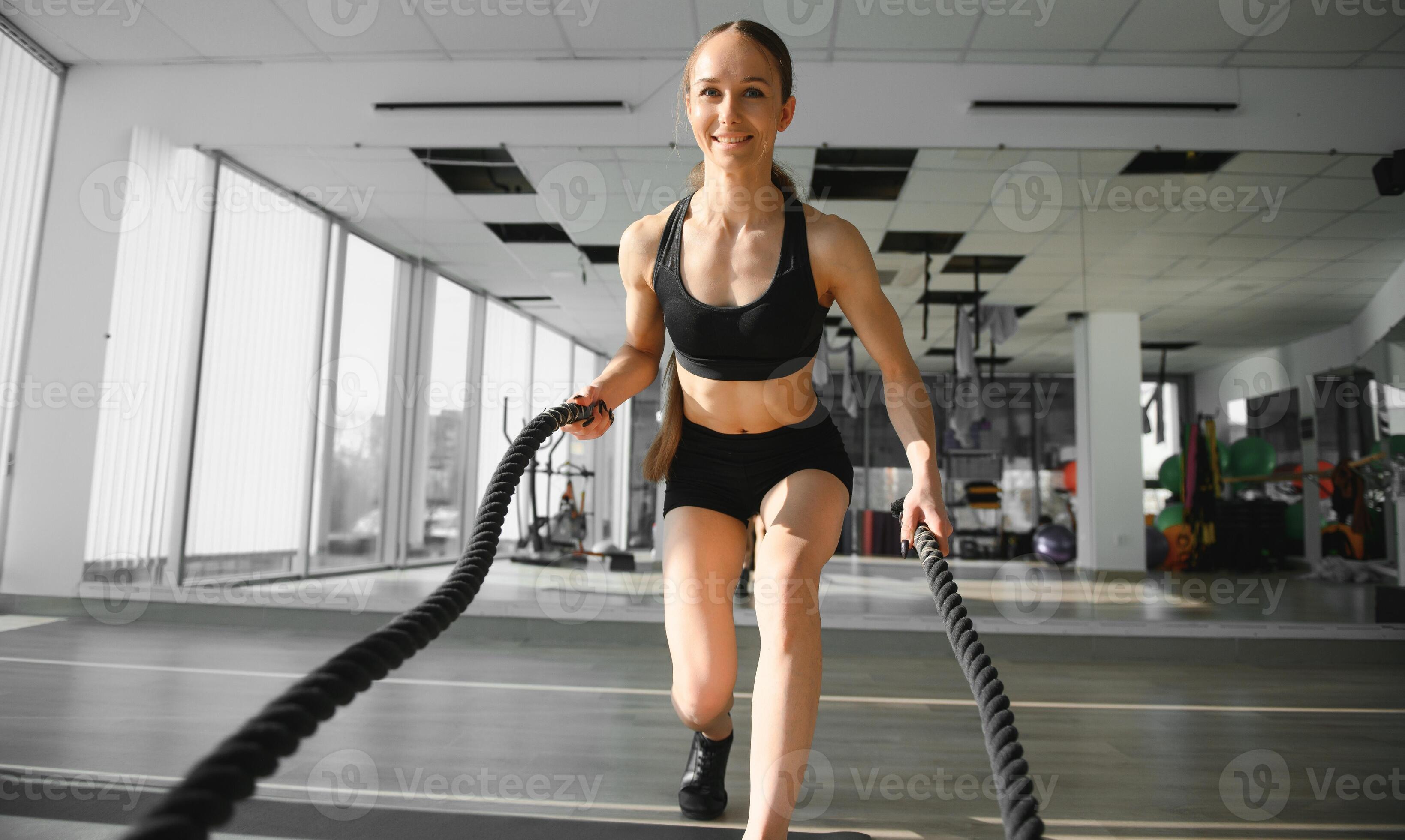
If you've ever walked past someone swinging heavy ropes in the gym and thought "that looks intense" — you're right. Battle ropes are one of the most effective full-body exercises you can do, and they're secretly perfect for women over 50.
Yes, really. Despite looking like something reserved for CrossFit athletes and professional sportspeople, battle ropes are actually low impact, highly adaptable, and incredibly efficient. In just 10–15 minutes, you can get a workout that builds strength, burns calories, improves cardiovascular fitness, and challenges your core — all without putting stress on your joints.
Let's break down everything you need to know about adding battle ropes to your fitness routine after 50.
What Are Battle Ropes?
Battle ropes (also called heavy ropes or training ropes) are thick, heavy ropes — usually 9 to 15 metres long — that are anchored to a fixed point. You hold one end in each hand and create waves, slams, or spirals by moving your arms in different patterns.
The ropes typically weigh between 5 and 15 kilograms total, and they come in different thicknesses (usually 38mm or 50mm). Most gyms have at least one set, and they're often tucked away in a corner just waiting to be used.
Why Battle Ropes Are Brilliant for Women Over 50
1. Low Impact, High Reward
Unlike running, jumping, or high-impact cardio, battle ropes keep your feet planted on the ground. There's no jarring impact on your knees, hips, or ankles. The resistance comes from the weight and movement of the rope itself, making it one of the most joint-friendly cardio options available.
2. Full-Body Workout in Minutes
Battle ropes engage your shoulders, arms, back, core, glutes, and legs — all at once. You're not just waving your arms around; your entire body has to stabilise and generate power. It's a genuine head-to-toe workout condensed into a fraction of the time.
3. Builds Functional Upper Body Strength
Many women over 50 focus on lower body exercises (squats, lunges, walking) but neglect upper body strength. Battle ropes specifically target your shoulders, arms, and grip strength — all areas that become increasingly important as we age. Strong grip strength is actually one of the best predictors of longevity!
4. Cardiovascular Fitness Without Running
If running isn't your thing (and that's totally fine), battle ropes offer an excellent alternative for getting your heart rate up. Studies show that just 10 minutes of battle rope training can elevate your heart rate to the same level as running, but with far less impact on your body.
5. Improves Core Stability
Every single battle rope movement requires your core to work overtime to keep you balanced and stable. You're building a stronger, more functional core without doing a single crunch or plank.
6. It's Actually Fun
Let's be honest — sometimes fitness gets boring. There's something deeply satisfying about slamming heavy ropes into the ground or creating massive waves. It's a stress-reliever and a workout rolled into one.
6 Battle Rope Exercises for Beginners
Start with these movements and build from there. Focus on maintaining good posture throughout — soft knees, engaged core, shoulders back.
1. Alternating Waves
The classic battle rope movement. Stand in a half-squat position, holding one rope end in each hand. Alternate raising and lowering each arm to create a wave pattern in the rope.
- What it works: Shoulders, arms, core
- Duration: 20 seconds on, 20 seconds rest × 5 rounds
- Tip: Keep the waves smooth and consistent. Smaller, faster waves are harder than big, slow ones.
2. Double Waves
Same position, but this time move both arms up and down together in unison. This creates a bigger, more powerful wave pattern.
- What it works: Shoulders, upper back, core
- Duration: 15 seconds on, 25 seconds rest × 5 rounds
- Tip: Use your legs to generate power — push through your heels as you drive the ropes up.
3. Rope Slams
Lift both ropes overhead and slam them down to the ground with force. This is the most powerful (and most satisfying) battle rope exercise.
- What it works: Full body — shoulders, back, core, legs
- Duration: 10 slams, rest 30 seconds × 4 rounds
- Tip: Rise up onto your toes as you lift, then drop into a squat as you slam. Let your whole body work.
4. Side-to-Side Waves
Instead of moving the ropes up and down, sweep both ropes side to side together, creating a snake-like pattern on the ground.
- What it works: Obliques, core rotation, shoulders
- Duration: 20 seconds on, 20 seconds rest × 4 rounds
- Tip: Rotate from your hips and core, not just your arms. This is a brilliant oblique exercise.
5. Circles (Outward)
Move each arm in an outward circular motion, as if you're drawing circles in the air. Both arms move simultaneously but in opposite directions.
- What it works: Shoulders (rotator cuff), mobility, coordination
- Duration: 15 seconds on, 25 seconds rest × 4 rounds
- Tip: Start with small circles and gradually make them bigger as your shoulders warm up.
6. Seated Waves (Modified)
Sit on a bench or sturdy chair and perform alternating waves from a seated position. This takes the lower body out of the equation and isolates the upper body and core.
- What it works: Shoulders, arms, seated core stability
- Duration: 20 seconds on, 20 seconds rest × 4 rounds
- Tip: This is a brilliant option if you have knee or hip issues, or if you're just getting started.
A Beginner Battle Ropes Workout (15 Minutes)
Get your FREE 7-Day Beginner Workout Plan
A gentle, progressive week of strength, cardio, flexibility and balance — designed just for women over 50. Pop in your details and I'll send it straight away. 💪
Ready to give it a go? Here's a complete beginner-friendly workout:
- Warm-up: 2 minutes of gentle alternating waves (easy pace)
- Round 1: Alternating waves — 20 sec work / 20 sec rest × 3
- Round 2: Double waves — 15 sec work / 25 sec rest × 3
- Round 3: Rope slams — 8 slams / 30 sec rest × 3
- Round 4: Side-to-side waves — 15 sec work / 25 sec rest × 3
- Cool-down: 2 minutes of very gentle waves + shoulder stretches
Total time: ~15 minutes. That's it. You'll feel it, trust me.
Tips for Getting Started
- Start with lighter/thinner ropes — A 38mm (1.5 inch) rope is much more manageable than a 50mm (2 inch) rope. Most gyms have both — ask a trainer which ones are lighter.
- Stand closer to the anchor point — The further you stand from where the rope is attached, the heavier it feels. Start closer and move back as you get stronger.
- Keep your core engaged — Brace your abs throughout. This protects your lower back and gives you more power.
- Breathe! — Don't hold your breath. Exhale on the effort (the slam or the wave) and inhale during the recovery.
- Wear gloves if needed — Battle ropes can be rough on your hands at first. Lightweight training gloves or even gardening gloves can help until your grip toughens up.
- Start short — 10 minutes is more than enough for your first session. Your shoulders will thank you the next day.
How to Progress Over Time
Once the beginner workout starts feeling comfortable (give it 2–3 weeks), here's how to level up:
- Increase work intervals — Go from 15–20 seconds to 30 seconds
- Decrease rest intervals — Go from 25–30 seconds to 15 seconds
- Move further from the anchor — This increases the rope's resistance
- Try a thicker rope — Step up from 38mm to 50mm
- Add movement — Try alternating waves while doing lateral shuffles or lunges
- Combine with other exercises — Do 20 seconds of waves, immediately followed by 10 squats. Rest. Repeat.
Who Should Be Careful?
Battle ropes are safe for most people, but you should check with your GP or physiotherapist first if you have:
- Shoulder injuries or rotator cuff issues (the seated version may be a good starting point)
- Carpal tunnel syndrome or significant wrist problems
- Uncontrolled high blood pressure (battle ropes can spike your heart rate quickly)
- Acute back pain (wait until it settles before trying ropes)
If you've been given the all-clear, start light, start slow, and listen to your body.
The Bottom Line
Battle ropes are one of those exercises that look intimidating from the outside but are actually incredibly accessible, adaptable, and effective for women over 50. They build strength, torch calories, improve heart health, and challenge your entire body — all in 10–15 minutes with zero impact on your joints.
Next time you're at the gym, walk past the treadmill and pick up those ropes. You might just find your new favourite exercise. 🔥
Get your FREE 7-Day Beginner Workout Plan
A gentle, progressive week of strength, cardio, flexibility and balance — designed just for women over 50. Pop in your details and I'll send it straight away. 💪