Do you ever walk into a room and forget why you went in? Or find yourself grasping for a word that's right on the tip of your tongue? 💛 If so, you're in very good company — and the good news is that these little "senior moments" are not an inevitable part of getting older that you simply have to accept.
Your brain is a living, changing organ, and what you put on your plate has a profound impact on how sharp, focused and clear-headed you feel. In fact, research increasingly shows that the right foods can help protect your memory, improve concentration, and even reduce your risk of cognitive decline as you age.
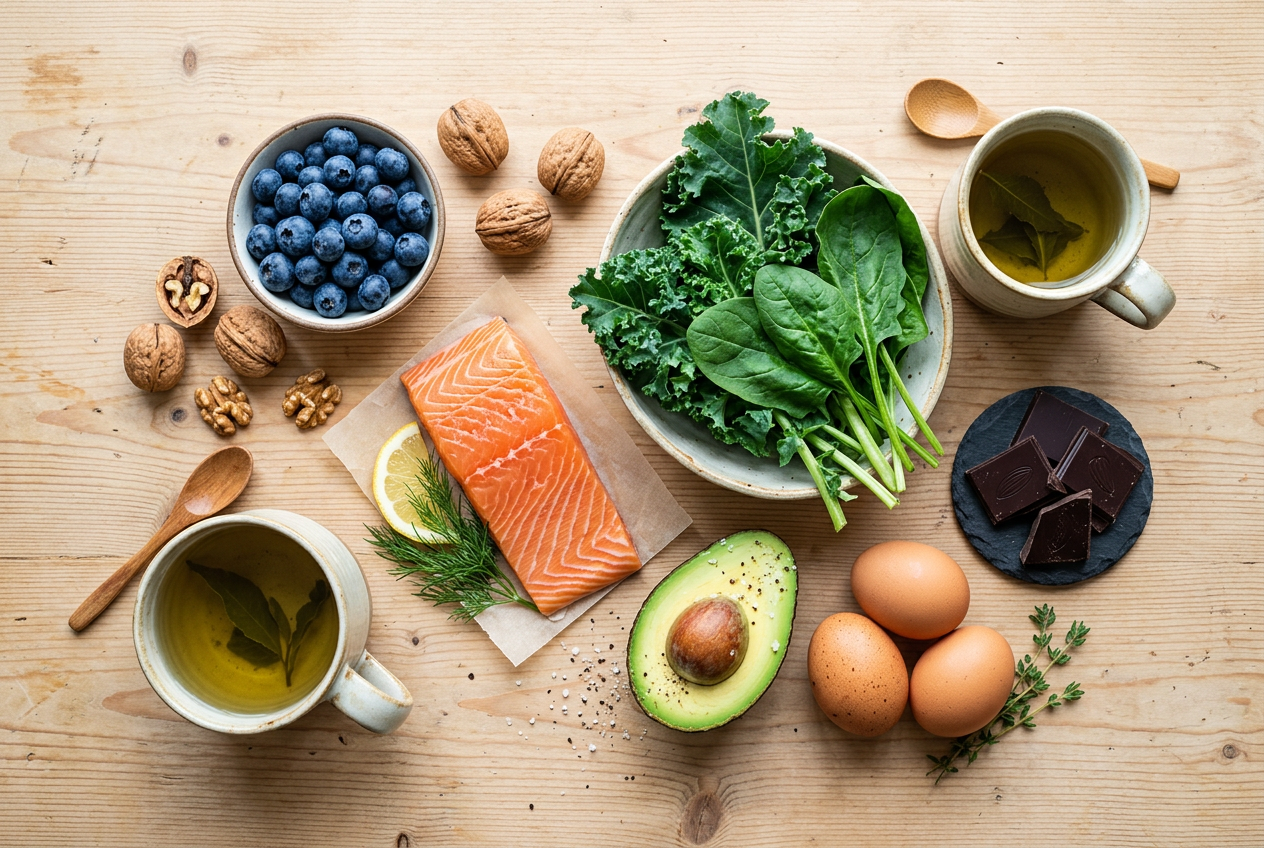
After 50, your brain becomes more vulnerable to inflammation and oxidative stress — the two biggest drivers of age-related memory changes. The foods below are little powerhouses that fight back on both fronts. Let's dig in. 🧠
1. Fatty Fish (Salmon, Sardines, Mackerel)
If there's one food group to prioritise for your brain, it's oily fish. Around 60% of your brain is made of fat, and a large portion of that is omega-3 fatty acids — particularly DHA. These healthy fats are essential building blocks for brain cells and play a crucial role in memory and learning.
Studies consistently link higher omega-3 intake with slower age-related mental decline and a lower risk of Alzheimer's disease. One study even found that people with higher DHA levels had larger brain volume — the equivalent of being several years younger, brain-wise.
How to Enjoy It
- Aim for 2-3 servings of oily fish per week (salmon, sardines, mackerel, trout, herring)
- Tinned sardines and salmon are affordable, convenient and just as beneficial
- Not a fish fan? A high-quality omega-3 supplement is a worthwhile backup
2. Blueberries (and Other Berries)
Blueberries are one of the most powerful brain foods on the planet. Their deep blue-purple colour comes from anthocyanins — antioxidant compounds that reduce inflammation and oxidative stress, both of which contribute to brain ageing.
Research from Harvard found that women who ate the most blueberries and strawberries had slower rates of cognitive decline — by as much as two and a half years. Berries have also been shown to improve communication between brain cells and boost memory.
How to Enjoy It
- Add a handful to your morning yoghurt, oats or smoothie
- Frozen berries are just as nutritious as fresh — and far cheaper
- Mix it up: blueberries, strawberries, raspberries and blackberries all count
3. Leafy Green Vegetables
Spinach, kale, rocket and silverbeet are absolutely brimming with brain-protective nutrients — vitamin K, lutein, folate and beta-carotene. Research suggests that eating just one serving of leafy greens per day can slow cognitive ageing significantly.
In one well-known study, older adults who ate the most leafy greens had the cognitive ability of someone 11 years younger compared to those who ate the least. That's an extraordinary difference from such a simple habit.
How to Enjoy It
- Add a handful of spinach to smoothies, soups, omelettes and pasta sauces
- Build a big colourful salad as a base for lunch most days
- Lightly sauté greens with garlic and olive oil as a simple side
4. Walnuts and Other Nuts
Nuts — especially walnuts — are fantastic for brain health. They're rich in healthy fats, antioxidants, vitamin E and (in the case of walnuts) plant-based omega-3s. Vitamin E in particular helps protect brain cells from oxidative damage, and higher intake is linked with better cognition as we age.
Walnuts even look a little like a brain — nature's helpful reminder! A handful a day has been associated with improved memory and concentration.
How to Enjoy It
- Enjoy a small handful (about 30g) of walnuts, almonds or hazelnuts as a snack
- Sprinkle over porridge, salads or yoghurt for crunch
- Choose unsalted, unroasted varieties where possible
5. Eggs
Get your FREE 7-Day Beginner Workout Plan
A gentle, progressive week of strength, cardio, flexibility and balance — designed just for women over 50. Pop in your details and I'll send it straight away. 💪
Humble, affordable and endlessly versatile, eggs are a genuine brain superfood. They're one of the best dietary sources of choline — a nutrient your body uses to produce acetylcholine, a neurotransmitter essential for memory and mood regulation.
Eggs also provide B vitamins (B6, B12 and folate) which have been shown to slow age-related mental decline and may help lower levels of homocysteine, an amino acid associated with cognitive impairment.
How to Enjoy It
- Enjoy 1-2 eggs at breakfast a few times a week — poached, scrambled or boiled
- Add a boiled egg to salads for a protein and choline boost
- Don't skip the yolk — that's where the choline lives
6. Extra Virgin Olive Oil
A cornerstone of the Mediterranean diet — widely regarded as the best eating pattern for brain health — extra virgin olive oil is packed with antioxidants and healthy monounsaturated fats. It contains compounds that help reduce inflammation and protect the brain from oxidative stress.
Studies have found that diets rich in olive oil are associated with better memory and a reduced risk of cognitive decline. It also helps your body absorb the fat-soluble vitamins in your vegetables.
How to Enjoy It
- Use it as your main cooking oil and salad dressing base
- Drizzle over vegetables, soups and wholegrain toast
- Choose "extra virgin" for the highest antioxidant content
7. Dark Chocolate (Yes, Really!)
Here's the treat you've been waiting for. 🍫 Good-quality dark chocolate (70% cocoa or higher) is rich in flavonoids, caffeine and antioxidants. Cocoa flavonoids have been shown to improve blood flow to the brain, enhance memory, and boost mood.
One study found that regular consumption of cocoa flavonoids improved cognitive function in older adults — particularly attention and processing speed. Just remember: quality and moderation matter.
How to Enjoy It
- Enjoy a small square or two of 70%+ dark chocolate a few times a week
- Look for higher cocoa content and lower sugar
- Pair with a few berries for a genuinely brain-boosting dessert
Bonus: Don't Forget to Hydrate ☕
Your brain is around 75% water, and even mild dehydration can impair concentration, memory and mood. After 50, our thirst signals become less reliable, so make a conscious effort to sip water throughout the day. Green tea is a lovely bonus — it contains L-theanine and antioxidants that support calm, focused alertness.
Putting It All Together
You don't need to overhaul your entire diet overnight. The magic is in consistency and variety. Here's what a brain-friendly day might look like:
- Breakfast: Scrambled eggs on wholegrain toast with a handful of blueberries
- Lunch: Big leafy green salad with tinned salmon, walnuts and an olive oil dressing
- Snack: A small handful of nuts and a square of dark chocolate
- Dinner: Grilled fish with sautéed greens and roasted vegetables in olive oil
- Throughout: Plenty of water and a cup or two of green tea
The Bottom Line
Caring for your brain doesn't require expensive supplements or complicated rules — just real, colourful, nourishing food eaten consistently over time. These seven foods are delicious, accessible and genuinely powerful allies for keeping your mind sharp, your memory strong and your focus clear well into your later decades.
Start with one or two changes this week, and build from there. Your brilliant brain deserves it, lovely. 🧠💛
Get your FREE 7-Day Beginner Workout Plan
A gentle, progressive week of strength, cardio, flexibility and balance — designed just for women over 50. Pop in your details and I'll send it straight away. 💪