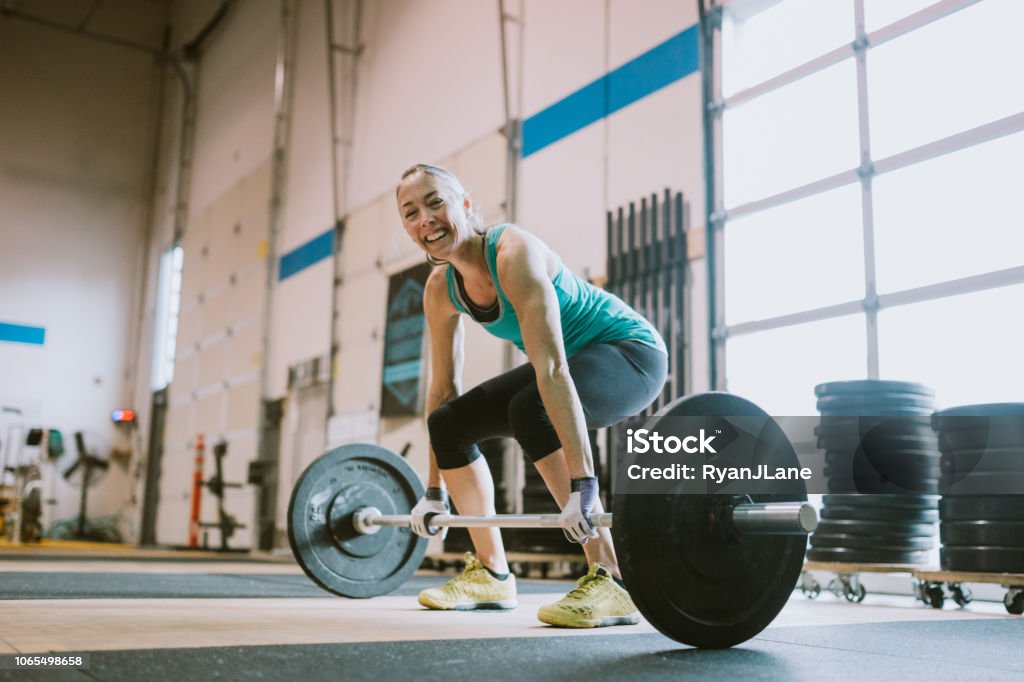
If there's one exercise that gets an unfair reputation, it's the deadlift. It sounds intimidating, it looks heavy, and most women over 50 assume it's "not for them." But here's the truth: the deadlift is one of the most important exercises you can do as you age.
Think about it — every time you pick up a shopping bag, lift a grandchild, grab something off the floor, or carry a suitcase, you're performing a deadlift movement. The question isn't whether you deadlift. It's whether you're strong enough to do it safely.
Let's break down everything you need to know about deadlifting after 50 — why it matters, how to do it properly, and how to build up confidently, even if you've never touched a barbell.
Why Deadlifts Are a Game-Changer After 50
The deadlift isn't just a gym exercise — it's a functional movement pattern that directly translates to everyday life. Here's why it matters more as you age:
1. It Builds Total-Body Strength
Unlike many exercises that isolate a single muscle, the deadlift works almost everything at once — your glutes, hamstrings, quads, core, back, grip, and shoulders all work together. That's exactly how your body moves in real life, which makes deadlifts one of the most efficient exercises you can do.
2. It Protects Your Bones
After 50, women lose bone density at an accelerated rate, especially post-menopause. Weight-bearing exercises like deadlifts place healthy stress on your bones, stimulating them to grow stronger. Research consistently shows that resistance training is one of the most effective ways to prevent and even reverse osteoporosis.
3. It Prevents Back Pain
This one surprises people. Many women avoid deadlifts because they're worried about their back — but done correctly, deadlifts actually strengthen the muscles that protect your spine. A strong posterior chain (the muscles along the back of your body) is your best defence against lower back pain.
4. It Keeps You Independent
Being able to bend down, pick things up, and carry heavy loads is a fundamental part of independent living. Training the deadlift pattern ensures you can keep doing these things confidently for decades to come.
5. It Boosts Metabolism
Because the deadlift recruits so many large muscle groups, it's one of the most metabolically demanding exercises. This means more calories burned, more muscle built, and a faster metabolism — all of which become increasingly important after 50.
"But Won't Deadlifts Hurt My Back?"
This is the number one concern, and it's completely valid. But here's what the research actually says: deadlifts, performed with proper form and appropriate weight, are safe for adults of all ages.
The key phrase there is "proper form and appropriate weight." You don't need to lift 100kg. You don't need to use a barbell. You just need to learn the movement pattern correctly and progress gradually.
In fact, physiotherapists regularly prescribe deadlift variations to rehabilitate back injuries. The movement strengthens exactly the muscles that protect your spine — your erector spinae, multifidus, glutes, and core.
The deadlift doesn't hurt your back. Bad form and too much weight too soon hurt your back.
Deadlift Variations: From Beginner to Advanced
There's no one-size-fits-all deadlift. Here are the best variations, ordered from easiest to most challenging:
1. Kettlebell Deadlift (Best Starting Point)
Stand with feet hip-width apart, kettlebell between your feet. Push your hips back, bend your knees slightly, grip the handle with both hands, and stand up by driving through your heels. This is the perfect beginner variation because the weight is centred and close to your body.
- Start with: 8–12kg kettlebell
- Sets/Reps: 3 sets of 10–12 reps
- Focus on: Hinging at the hips, keeping your back flat, and squeezing your glutes at the top
2. Dumbbell Romanian Deadlift (RDL)
Hold a dumbbell in each hand in front of your thighs. Keep a slight bend in your knees as you hinge forward at the hips, lowering the dumbbells along your legs until you feel a stretch in your hamstrings. Drive your hips forward to return to standing.
- Start with: 5–8kg dumbbells
- Sets/Reps: 3 sets of 10 reps
- Focus on: Keeping the dumbbells close to your body and feeling the stretch in your hamstrings
3. Trap Bar (Hex Bar) Deadlift
If your gym has a trap bar (the hexagonal bar you stand inside), this is arguably the best deadlift variation for women over 50. The handles are at your sides rather than in front, which puts less stress on your lower back and makes the movement feel more natural.
- Start with: Just the bar (usually 15–20kg)
- Sets/Reps: 3 sets of 8–10 reps
- Focus on: Standing tall at the top, pushing the floor away with your feet
4. Sumo Deadlift
A wider stance deadlift that's often more comfortable for women because it allows for a more upright torso position. Stand with feet wider than shoulder-width, toes pointed out slightly, and grip the bar or dumbbells between your legs.
- Start with: Light dumbbells or kettlebell
- Sets/Reps: 3 sets of 8–10 reps
- Focus on: Pushing your knees out over your toes and keeping your chest up
5. Conventional Barbell Deadlift
The classic. Stand with feet hip-width, grip the barbell just outside your legs, and lift by driving through your heels and extending your hips and knees together. This is the most challenging variation and one to work towards over time.
- Start with: Just the bar (20kg) or lighter fixed barbells
- Sets/Reps: 3 sets of 6–8 reps
- Focus on: Keeping the bar close to your body and maintaining a neutral spine throughout
Proper Deadlift Form: The Non-Negotiables
Get your FREE 7-Day Beginner Workout Plan
A gentle, progressive week of strength, cardio, flexibility and balance — designed just for women over 50. Pop in your details and I'll send it straight away. 💪
Regardless of which variation you choose, these form cues apply to every deadlift:
- Neutral spine — Your back should be flat, not rounded. Imagine a broomstick along your spine — it should touch your head, upper back, and tailbone throughout the movement.
- Hinge at the hips — The deadlift is a hip hinge, not a squat. Push your hips BACK, don't just bend your knees.
- Engage your core — Brace your abs as if someone is about to poke you in the stomach. This creates a natural "weight belt" that protects your spine.
- Drive through your heels — Your weight should be in the middle to back of your foot, not on your toes.
- Squeeze your glutes at the top — Stand tall and lock out with a glute squeeze. Don't hyperextend your back.
- Keep the weight close — Whether it's a barbell, dumbbell, or kettlebell, it should travel close to your body throughout the movement.
A 4-Week Deadlift Progression for Beginners
If you're brand new to deadlifting, here's a simple progression to build confidence and strength safely:
Week 1–2: Learn the Hip Hinge
- Practice the hip hinge with no weight — stand facing a wall about a foot away and push your hips back until your glutes touch the wall
- Kettlebell deadlifts: 3 sets of 12 reps, light weight
- 2–3 sessions per week
Week 3–4: Add Load
- Progress to heavier kettlebell or dumbbell RDLs
- 3 sets of 10 reps
- Focus on feeling the hamstrings and glutes working
- Consider trying the trap bar if available
Week 5–6: Build Volume
- 3–4 sets of 8–10 reps with your chosen variation
- Increase weight by 1–2kg when 10 reps feels comfortable
- Add a second deadlift variation to your routine
Week 7–8: Get Stronger
- 4 sets of 6–8 reps with heavier weight
- Focus on progressive overload (adding small amounts of weight each week)
- You should feel confident and strong in the movement by now!
Common Mistakes to Avoid
- Rounding your back — This is the most common and most dangerous mistake. If you can't keep your back flat, the weight is too heavy. Reduce it and focus on form.
- Starting too heavy — There's no rush. Start light, learn the pattern, and add weight gradually. Your ego is not worth an injury.
- Ignoring the eccentric (lowering) phase — Don't just drop the weight. Control it on the way down. This is where a huge amount of muscle-building happens.
- Not breathing properly — Take a deep breath at the top, brace your core, lift, then exhale at the top. Don't hold your breath for the entire set.
- Wearing the wrong shoes — Avoid thick, cushioned running shoes. Flat, stable shoes (or even socks) give you a better connection to the floor. Chuck Taylors are a classic gym shoe for deadlifts.
- Skipping the warm-up — Always warm up with lighter sets before your working weight. Your joints and muscles need time to prepare.
How Often Should You Deadlift?
For most women over 50, 1–2 times per week is the sweet spot. The deadlift is a demanding exercise that requires adequate recovery time. Here's a simple approach:
- Option A: One heavy deadlift day + one lighter Romanian deadlift day
- Option B: One deadlift session per week as part of a full-body or lower-body workout
Always allow at least 48 hours of recovery between deadlift sessions. Your muscles grow stronger during rest, not during the workout itself.
The Bottom Line
The deadlift isn't scary, it isn't dangerous, and it absolutely isn't "too advanced" for women over 50. It's one of the most practical, empowering, and effective exercises you can do at any age.
Start with a kettlebell deadlift. Focus on form. Progress gradually. And before you know it, you'll be lifting weights you never thought possible — and feeling stronger than you have in years.
Your body was built to lift. It's time to remind it how. 💪
Get your FREE 7-Day Beginner Workout Plan
A gentle, progressive week of strength, cardio, flexibility and balance — designed just for women over 50. Pop in your details and I'll send it straight away. 💪