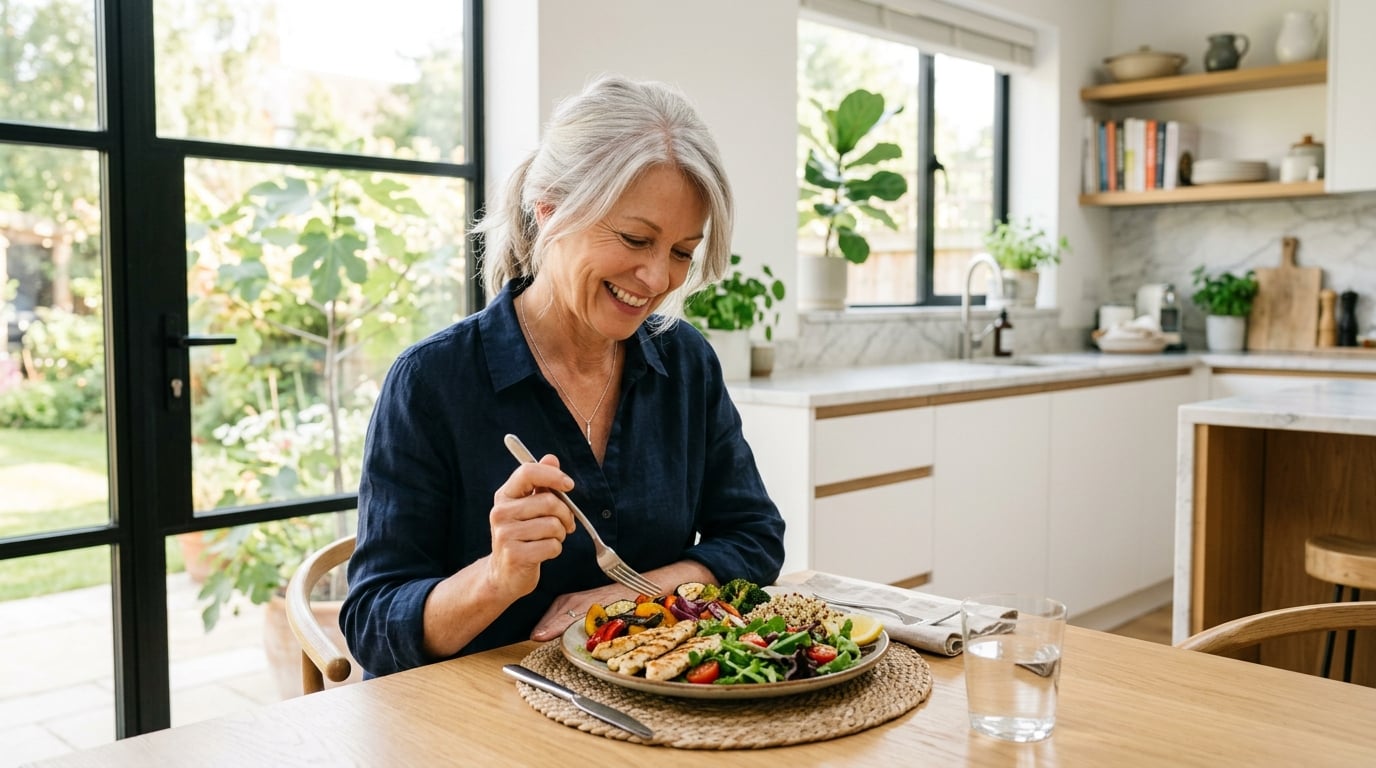
If there's one thing I wish every woman over 50 knew, it's this: protein is the single most important nutrient for weight loss after 50. Not cutting carbs. Not avoiding fat. Not eating less. Eating more protein.
Here's why that matters: after 50, we lose muscle mass at a rate of about 1–2% per year. Less muscle means a slower metabolism, which means your body burns fewer calories at rest. It's a vicious cycle — and it's the main reason weight loss feels so much harder now than it did at 30.
But increasing your protein intake can reverse this trend, preserve your lean muscle, boost your metabolism, and help you lose fat — particularly that stubborn belly fat. Let's dive into exactly how.
How Much Protein Do Women Over 50 Actually Need?
The standard recommendation of 0.8g per kilogram of body weight is far too low for women over 50. Current research suggests we need significantly more:
- For general health: 1.0–1.2g per kg of body weight
- For weight loss: 1.2–1.6g per kg of body weight
- For active women: 1.4–2.0g per kg of body weight
For a 70kg woman trying to lose weight, that's roughly 84–112g of protein per day. That's significantly more than most women are currently eating — studies show the average Australian woman over 50 consumes just 60–70g daily.
Why Protein Is Your Weight Loss Secret Weapon
1. It Keeps You Full for Hours
Protein is the most satiating macronutrient. It triggers the release of fullness hormones (like GLP-1 and PYY) and suppresses the hunger hormone ghrelin. A high-protein breakfast can reduce snacking by up to 60% compared to a high-carb breakfast.
2. It Burns More Calories to Digest
The thermic effect of protein is 20–30% — meaning your body uses 20–30% of the calories in protein just to digest it. Compare that to carbs (5–10%) and fat (0–3%). Eating more protein literally increases your daily calorie burn.
3. It Protects Your Muscle Mass
When you lose weight, you don't just lose fat — you also lose muscle. But adequate protein intake (combined with resistance training) can preserve up to 90% of your lean muscle mass during weight loss. This keeps your metabolism running strong.
4. It Reduces Belly Fat Specifically
Higher protein diets have been shown to preferentially reduce visceral fat — the dangerous fat that wraps around your organs and drives inflammation. This is especially important after menopause.
The Best High-Protein Foods for Women Over 50
Not all protein is created equal. Here are the best sources, ranked by protein density and nutrient quality:
- Eggs (whole): 6g protein each — plus choline for brain health. Have 2–3 for breakfast.
- Greek yoghurt: 15–20g per serve — choose plain, full-fat varieties for better satiety
- Chicken breast: 31g per 100g — lean, versatile, and affordable
- Salmon: 25g per 100g — plus omega-3s for heart and brain health
- Lean beef/lamb: 26g per 100g — excellent source of iron and B12
- Cottage cheese: 12g per 100g — high in casein protein for sustained release
- Lentils: 9g per 100g (cooked) — great plant-based option with fibre
- Protein powder: 20–30g per scoop — convenient for smoothies and snacks
- Tinned tuna: 25g per 100g — cheap, convenient, shelf-stable
- Tofu: 8g per 100g — complete plant protein with bone-supporting isoflavones
A Sample High-Protein Day for Weight Loss
Get your FREE 7-Day Beginner Workout Plan
A gentle, progressive week of strength, cardio, flexibility and balance — designed just for women over 50. Pop in your details and I'll send it straight away. 💪
Here's what a high-protein weight loss day looks like — notice how filling and satisfying every meal is:
- Breakfast: Egg white veggie frittata with capsicum, spinach, and tomatoes (280 cal, 28g protein)
- Morning snack: Berry protein smoothie with almond milk (220 cal, 25g protein)
- Lunch: Grilled chicken and quinoa power bowl with roasted vegetables (340 cal, 35g protein)
- Afternoon snack: Cottage cheese with cucumber and everything bagel seasoning (160 cal, 18g protein)
- Dinner: Herb-crusted salmon with asparagus and sweet potato (340 cal, 32g protein)
Daily total: ~1,340 calories, 138g protein — high protein, calorie-controlled, and genuinely delicious.
5 Tips for Eating More Protein After 50
1. Front-Load Your Protein
Aim for at least 25–30g of protein at breakfast. This sets the tone for the entire day, reduces cravings, and stabilises blood sugar. Eggs, Greek yoghurt, or a protein smoothie are your best friends.
2. Add Protein to Every Meal and Snack
Never eat carbs alone. Pair apple slices with nut butter. Add chicken to your salad. Top your oats with Greek yoghurt. This simple habit dramatically increases your daily intake.
3. Keep Protein Convenient
Hard-boil eggs on Sunday. Buy pre-cooked chicken strips. Keep tinned tuna and salmon in the pantry. Stock protein bars (look for 15g+ protein, under 5g sugar). Convenience is key to consistency.
4. Don't Fear Protein Powder
A quality whey or plant-based protein powder is one of the easiest ways to hit your daily target. Blend it into smoothies, stir it into yoghurt, or even add it to overnight oats.
5. Spread It Throughout the Day
Your body can only absorb and utilise about 25–40g of protein per meal for muscle building. Instead of one massive serving, spread your intake across 4–5 eating occasions for maximum benefit.
Common Protein Myths After 50
"Too much protein is bad for your kidneys." Not true for healthy adults. Research consistently shows that higher protein intakes are safe for people with normal kidney function.
"You can only absorb 30g of protein per meal." This is a misunderstanding. Your body absorbs all the protein you eat — the 30g figure relates to the optimal amount for muscle protein synthesis per meal.
"Plant protein is inferior." While individual plant proteins may lack certain amino acids, eating a variety of plant proteins throughout the day provides a complete amino acid profile.
Want a Complete High-Protein Meal Plan?
If you want to take the guesswork out of high-protein eating, we've created a complete 7-day plan specifically for women over 50 who want to lose weight.
Our 7-Day High-Protein Weight Loss Meal Plan includes 35 protein-packed recipes with full ingredients, step-by-step instructions, calorie and protein counts for every meal (1,230–1,420 cal/day), complete shopping lists, and weight loss tips — all designed to maximise fat loss while preserving lean muscle.
Every recipe takes 15 minutes or less to prepare. Real food, real results, zero guesswork.
Get your FREE 7-Day Beginner Workout Plan
A gentle, progressive week of strength, cardio, flexibility and balance — designed just for women over 50. Pop in your details and I'll send it straight away. 💪