Why Protein Matters More After 50
Here's something most women don't realise: after 50, your body becomes less efficient at using protein to build and maintain muscle. Scientists call this anabolic resistance — and it means you actually need more protein than you did in your 30s and 40s, not less.
Without enough protein, you lose muscle mass faster (a condition called sarcopenia), your bones weaken, your metabolism slows, and recovery from exercise takes longer. The good news? Eating the right amount of protein at each meal can counteract all of this.
This cheat sheet gives you a quick-reference guide to the best protein sources, their serving sizes, and exactly how many grams of protein you're getting. Save it, print it, stick it on the fridge — whatever works for you.
How Much Protein Do You Actually Need?
The current Australian recommendation for women over 50 is 0.75g per kilogram of body weight per day. But here's the thing — most researchers specialising in ageing now say that's too low. The updated recommendation from the International Society of Sports Nutrition is:
- 1.2–1.6g of protein per kg of body weight per day for active women over 50
- For a 70kg woman, that's 84–112g of protein per day
- Spread across 3 meals, that's roughly 25–35g per meal
The key is spreading your protein intake evenly across the day rather than loading it all into dinner (which is what most of us tend to do).
Best Protein Sources: Meat & Fish
Animal proteins are "complete" proteins, meaning they contain all nine essential amino acids your body needs. They're also the richest sources of leucine — the amino acid that triggers muscle building.
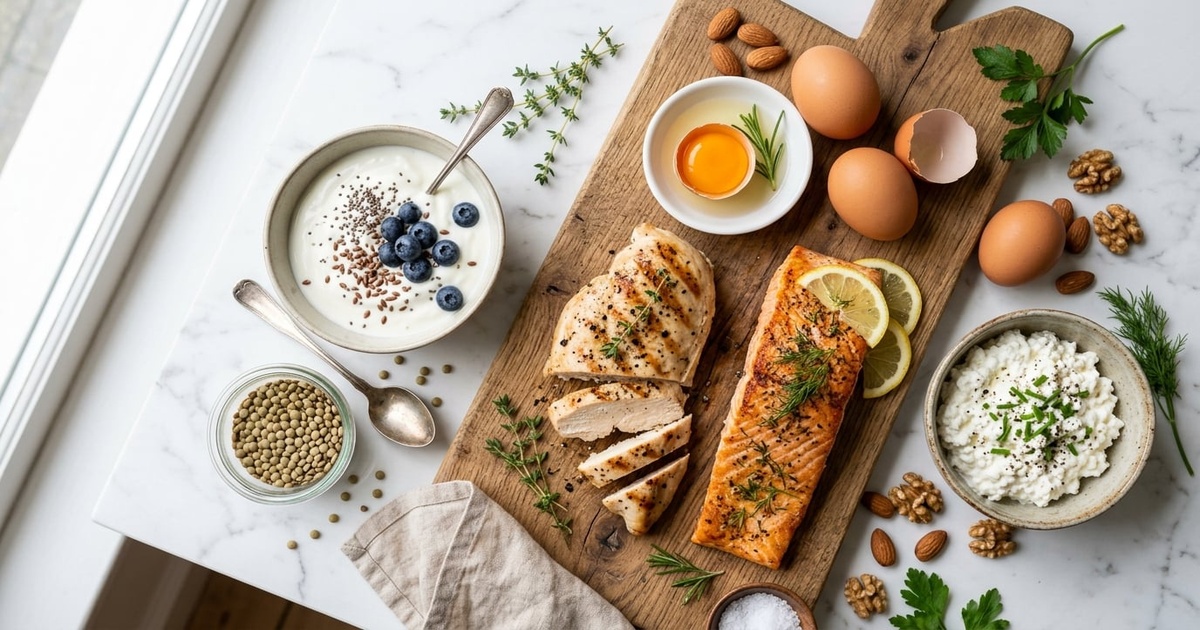
- Chicken breast (150g cooked) — 46g protein. The classic lean protein. Grill, bake, or air-fry for a quick meal.
- Lean beef (150g cooked) — 42g protein. Also rich in iron and B12, which many women over 50 are low in.
- Salmon fillet (150g cooked) — 38g protein. Double win — you get protein plus omega-3 fatty acids for heart and brain health.
- Prawns (150g cooked) — 36g protein. Low in calories, high in protein, and incredibly versatile.
- Tinned tuna (1 can, 95g drained) — 20g protein. A quick, affordable option for lunch. Go for tuna in springwater over oil.
- Turkey mince (150g cooked) — 40g protein. A leaner alternative to beef mince for bolognese, meatballs, or stir-fries.
Best Protein Sources: Dairy & Eggs
Dairy proteins are particularly effective for muscle building because they're rich in both whey and casein protein. Bonus: they also provide calcium for bone health.
- Greek yoghurt (200g tub) — 20g protein. Choose plain, full-fat or low-fat — both are great. Add berries and a drizzle of honey for a perfect snack.
- Cottage cheese (1 cup / 226g) — 28g protein. An underrated powerhouse. Pair with crackers, use in salads, or blend into smoothies.
- Eggs (2 large) — 12g protein. Affordable, versatile, and packed with nutrients. Don't skip the yolks — they contain most of the vitamins.
- Milk (250ml glass) — 9g protein. An easy way to boost your intake. Great in smoothies or with breakfast cereal.
- Cheddar cheese (30g slice) — 7g protein. Small amounts add up. Add to salads, omelettes, or wraps.
Best Protein Sources: Plant-Based
Get your FREE 7-Day Beginner Workout Plan
A gentle, progressive week of strength, cardio, flexibility and balance — designed just for women over 50. Pop in your details and I'll send it straight away. 💪
Plant proteins are important even if you're not vegetarian — they come packed with fibre, antioxidants, and other nutrients that animal proteins don't provide. For the best results, combine different plant proteins throughout the day.
- Lentils (1 cup cooked) — 18g protein. Plus 15g of fibre. Perfect in soups, salads, and curries.
- Tofu, firm (150g) — 18g protein. Press, marinate, and pan-fry for the best texture and flavour.
- Chickpeas (1 cup cooked) — 15g protein. Roast them for a crunchy snack, or blend into hummus.
- Edamame (1 cup) — 17g protein. A brilliant snack straight from the freezer. Season with sea salt.
- Almonds (30g handful) — 6g protein. A convenient on-the-go snack that also provides healthy fats and vitamin E.
- Quinoa (1 cup cooked) — 8g protein. One of the few plant foods that's a complete protein. Use as a base for salads or instead of rice.
Quick Protein-Boosting Hacks
Sometimes you don't need to overhaul your entire diet — you just need a few clever swaps and additions to boost your protein without thinking too hard about it:
- Add Greek yoghurt to smoothies, overnight oats, or as a sour cream substitute
- Stir collagen powder (10g protein per scoop) into your morning coffee or tea
- Swap regular bread for high-protein bread (some brands have 10g+ per slice)
- Keep tinned fish in the pantry — tuna, salmon, and sardines are instant protein
- Add an extra egg to your scramble or omelette
- Snack on cottage cheese instead of crackers alone
- Sprinkle seeds (hemp, chia, pumpkin) onto salads and yoghurt bowls
Sample High-Protein Day
Here's what a day of eating 100g+ of protein could look like — without any protein shakes or supplements:
- Breakfast: 2 eggs on sourdough with avocado + a glass of milk = ~25g protein
- Morning snack: Greek yoghurt with berries and almonds = ~24g protein
- Lunch: Chicken and chickpea salad with feta = ~35g protein
- Afternoon snack: Cottage cheese on crackers = ~15g protein
- Dinner: Salmon fillet with quinoa and vegetables = ~42g protein
Total: approximately 141g of protein — well above the recommended range, from whole foods alone.
The Bottom Line
Getting enough protein after 50 doesn't have to be complicated. It's not about counting every gram obsessively — it's about making smart choices at each meal and being intentional about including a protein source every time you eat.
Save this cheat sheet, keep it handy, and use it as a quick reference when you're planning meals or doing the weekly shop. Your muscles, bones, and energy levels will thank you. 💪
Get your FREE 7-Day Beginner Workout Plan
A gentle, progressive week of strength, cardio, flexibility and balance — designed just for women over 50. Pop in your details and I'll send it straight away. 💪