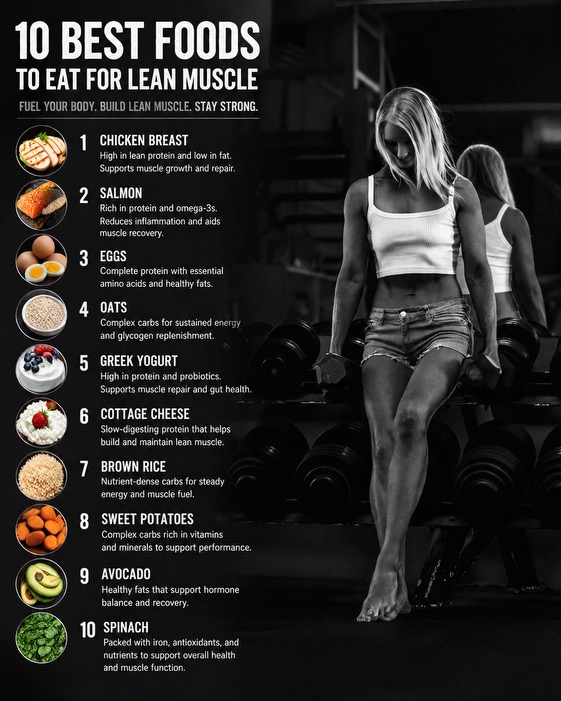
Building and maintaining lean muscle after 50 isn't just about looking good — it's one of the most important things you can do for your metabolism, bone density, balance, and long-term independence. And what you eat matters just as much as how you train.
Whether you're strength training regularly or just getting started, these 10 foods will fuel your body, support muscle growth and repair, and help you stay strong for decades to come.
Why Lean Muscle Matters After 50
From your mid-30s onwards, you naturally lose 3–5% of muscle mass per decade — a process called sarcopenia. After 50, this accelerates, especially in women post-menopause. Losing muscle means:
- Slower metabolism → easier weight gain
- Weaker bones → higher fracture risk
- Reduced balance → more falls
- Less energy and endurance
- Joint pain and stiffness
The solution? Strength training + the right nutrition. Your muscles need specific nutrients to repair, grow, and stay strong. Here are the 10 best foods to make that happen.
The 10 Best Foods for Lean Muscle
1. Chicken Breast 🍗
The undisputed champion of lean protein. Chicken breast is high in protein and low in fat, making it ideal for muscle growth and repair without excess calories. A single 150g serve delivers around 46g of protein.
How to eat it: Grilled, baked, or poached — add to salads, wraps, stir-fries, or meal prep for the week. Season with herbs and lemon for flavour without the fat.
2. Salmon 🐟
Rich in protein and omega-3 fatty acids, salmon is a powerhouse for muscle recovery. Omega-3s reduce exercise-induced inflammation and may even enhance muscle protein synthesis — especially important after 50.
How to eat it: Baked, pan-seared, or tinned (budget-friendly!). Aim for 2–3 serves of oily fish per week.
3. Eggs 🥚
Eggs are a complete protein — meaning they contain all essential amino acids your muscles need. They're also packed with healthy fats, B vitamins, and choline for brain health.
How to eat it: Scrambled, poached, boiled, or in omelettes. Don't skip the yolk — that's where most of the nutrients live.
4. Oats 🥣
Oats provide complex carbohydrates for sustained energy and glycogen replenishment after workouts. They also deliver fibre, iron, and B vitamins — all critical for active women over 50.
How to eat it: Porridge with berries and nuts, overnight oats, or blended into smoothies. Choose rolled or steel-cut over instant for more fibre.
5. Greek Yogurt 🥛
High in protein and probiotics, Greek yogurt supports both muscle repair and gut health. A 200g serve can pack 15–20g of protein — nearly double that of regular yogurt.
How to eat it: As a snack with fruit and seeds, in smoothies, or as a base for dressings and dips. Choose plain, full-fat varieties to avoid added sugars.
6. Cottage Cheese 🧀
Cottage cheese contains casein protein — a slow-digesting protein that helps build and maintain lean muscle over extended periods. It's perfect as an evening snack to support overnight muscle repair.
How to eat it: On its own, with fruit, on toast, or mixed into pasta sauces for a protein boost.
7. Brown Rice 🍚
Nutrient-dense complex carbohydrates for steady energy and muscle fuel. Brown rice provides more fibre, magnesium, and B vitamins than white rice, supporting sustained energy for workouts.
How to eat it: As a base for stir-fries, in grain bowls, or as a side dish. Cook in bulk for easy meal prep throughout the week.
8. Sweet Potatoes 🍠
Sweet potatoes are complex carbs rich in vitamins and minerals — particularly vitamin A, potassium, and manganese — that support muscle performance and recovery.
How to eat it: Baked, roasted, mashed, or in soups. They're naturally sweet, so they need minimal seasoning.
9. Avocado 🥑
Packed with healthy monounsaturated fats that support hormone balance and recovery. Avocados also deliver potassium (more than bananas!), which helps prevent muscle cramps during exercise.
How to eat it: On toast, in salads, blended into smoothies, or simply with a squeeze of lemon and sea salt.
10. Spinach 🥬
Packed with iron, antioxidants, and nutrients to support overall health and muscle function. Spinach is also rich in nitrates, which may improve exercise efficiency and muscle contraction.
How to eat it: Raw in salads, wilted into eggs and pasta, blended into smoothies, or as a steamed side dish.
How Much Protein Do You Actually Need?
Get your FREE 7-Day Beginner Workout Plan
A gentle, progressive week of strength, cardio, flexibility and balance — designed just for women over 50. Pop in your details and I'll send it straight away. 💪
After 50, your protein needs increase. Current research recommends:
- 1.2–1.6g of protein per kg of body weight per day for active adults over 50
- For a 70kg woman, that's 84–112g of protein daily
- Spread protein across 3–4 meals (25–35g per meal) for optimal absorption
Your body can only use so much protein at once, so spreading it throughout the day is more effective than loading up at dinner.
A Sample Muscle-Building Day
- Breakfast: Scrambled eggs (2) on sourdough with spinach and avocado
- Snack: Greek yogurt with berries and a handful of almonds
- Lunch: Grilled chicken breast with brown rice, roasted sweet potato, and steamed broccoli
- Snack: Cottage cheese with sliced banana
- Dinner: Baked salmon with quinoa, spinach salad, and olive oil dressing
- Evening: Small serve of oats with cinnamon and walnuts
The Bottom Line
Fuel your body. Build lean muscle. Stay strong.
You don't need expensive supplements or complicated meal plans. These 10 whole foods — eaten consistently alongside regular strength training — will give your muscles everything they need to grow, repair, and keep you feeling powerful after 50.
Small choices, made daily, create extraordinary results. Start adding one of these foods to every meal today. 🌊✨
What's Next?
Ready to put these foods to work? Check out our 5 Strength Exercises guide for the perfect training companion, or browse our Shop for complete workout and nutrition plans designed for women over 50.
Get your FREE 7-Day Beginner Workout Plan
A gentle, progressive week of strength, cardio, flexibility and balance — designed just for women over 50. Pop in your details and I'll send it straight away. 💪