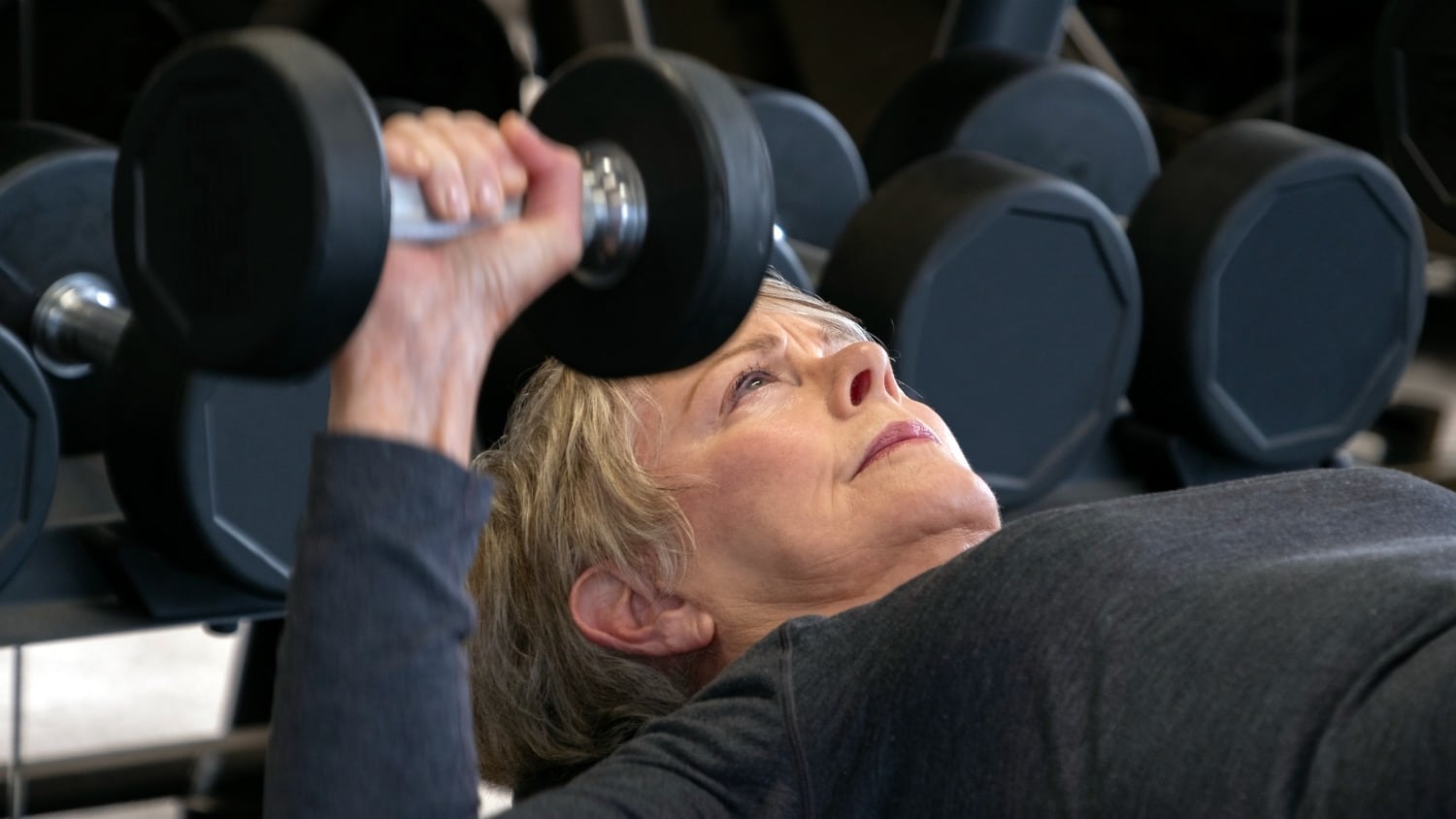
5 Strength Exercises You Can Start Today
The full guide from my Instagram post — every exercise explained, with reps, modifications and a simple 3x/week routine. No gym needed.
Welcome — and thank you for landing here from Instagram. 💗
These are the exact 5 strength exercises I recommend every woman over 50 start with, whether you’re brand new to exercise, returning after a long break, or rebuilding after injury. They train every major muscle group, they’re joint-friendly, and you can do all of them at home with nothing more than a wall, a step and a resistance band.
Do them 2–3 times a week and the changes show up fast — stronger legs, better posture, a firmer core, and the kind of everyday confidence that comes from a body you can count on.
Why Strength Training Matters After 50
Protects muscle
Without strength training, you lose 3–8% of muscle per decade after 30 — and it accelerates after menopause.
Builds bone
Loading your bones through resistance work is one of the few proven ways to fight osteoporosis.
Boosts metabolism
Every kilo of muscle you build burns more calories at rest — muscle is your metabolic engine.
Prevents falls
Strong legs plus balance work dramatically reduces fall risk — the #1 preventable injury cause for Aussies over 65.
How to do this routine
2–3x per week
Never on back-to-back days.
15–20 minutes
Including warm-up and cooldown.
2 sets each
10–12 reps, 60 seconds rest.
Warm up with 3–5 minutes of easy movement — marching in place, arm circles, gentle torso twists. Cool down with light stretches for your hips, chest and shoulders.
The 5 Exercises
Each exercise is explained top to bottom — how to do it, the common mistake to avoid, and how to make it easier or harder as you progress.
Squats
The king of lower-body strength.
Muscles worked
Quads, glutes, hamstrings, core
Every time you stand up from a chair, get in and out of a car, or climb stairs — that’s a squat. This is the single most functional lower-body exercise you can do.
How to do it
- Stand with feet shoulder-width apart, toes slightly turned out.
- Engage your core and keep your chest proud.
- Push your hips back and bend your knees as if sitting into a chair.
- Lower until thighs are parallel to the floor (or as deep as feels strong).
- Drive through your heels to stand, squeezing your glutes at the top.
↓ Make it easier
Sit-to-stand from a sturdy chair. Use your hands on the armrests if needed, then work up to going hands-free.
↑ Make it harder
Hold dumbbells at your sides or goblet position at your chest. Add a 2-second pause at the bottom.
Common mistake
Knees collapsing inward or heels lifting off the floor — focus on pushing the floor apart with your feet.
Wall Push-Ups
Upper-body strength without the floor.
Muscles worked
Chest, shoulders, triceps, core
Floor push-ups can feel brutal on wrists and shoulders after 50. Wall push-ups build the exact same muscles with zero joint stress — perfect for beginners and anyone easing back into training.
How to do it
- Stand about an arm's length from a wall.
- Place palms flat on the wall at shoulder height, slightly wider than shoulders.
- Engage your core — your body should stay in one straight line.
- Bend your elbows and lean your body toward the wall in a controlled motion.
- Push firmly back to the start. That’s one rep.
↓ Make it easier
Stand closer to the wall to make it easier. The more upright you are, the lighter the load.
↑ Make it harder
Move to an incline push-up on a sturdy bench or kitchen counter. Eventually progress to knee or full push-ups.
Common mistake
Hips sagging or piking up — brace your core as if someone were about to tap your stomach.
Resistance Band Rows
The posture-fixer your back has been begging for.
Muscles worked
Upper back, rear shoulders, biceps, core
After years of desks and phones, most women over 50 are locked into a forward-rounded posture. Rows strengthen the exact muscles that pull you back into alignment — it's one of the fastest ways to look and feel taller.
How to do it
- Anchor a resistance band at waist height (in a door anchor, around a sturdy post, or under your foot if seated).
- Hold a handle in each hand and step back until there is tension in the band.
- Stand tall, arms extended, shoulders relaxed down and back.
- Pull the handles toward your ribcage, driving your elbows back and squeezing your shoulder blades together.
- Slowly control the return — don’t let the band snap back.
↓ Make it easier
Sit on a chair, anchor the band under your feet, and row from a seated position with a lighter band.
↑ Make it harder
Step further back for more tension, use a heavier band, or switch to one-arm rows to challenge your core.
Common mistake
Shrugging your shoulders up to your ears — keep them relaxed and pull with your back, not your neck.
Step-Ups
Real-world strength that pays off every day.
Muscles worked
Quads, glutes, hamstrings, balance
Step-ups train one leg at a time — which is how you actually move through life. They build the leg strength and balance that makes stairs, hills, and getting up off the floor effortless.
How to do it
- Stand facing a sturdy step, low bench or staircase.
- Place your right foot fully on the step.
- Drive through your right heel to lift your body up, bringing your left foot to meet it.
- Step back down with the same leading leg, controlled.
- Complete all reps on one side, then switch. Or alternate every rep.
↓ Make it easier
Use a lower step and hold a wall, chair or bannister for balance. Take your time — slow and controlled beats fast and wobbly.
↑ Make it harder
Use a higher step, hold dumbbells at your sides, or add a knee drive at the top to challenge balance.
Common mistake
Pushing off the bottom foot instead of driving through the top heel — make the working leg do the work.
Plank
The whole-body core exercise.
Muscles worked
Deep core, shoulders, glutes, back
Planks don't just build ab muscles — they train your entire core to stabilise your spine. A strong plank protects your back, improves posture, and supports every other exercise you do.
How to do it
- Lower onto your forearms and toes (or knees — see modification).
- Align your elbows directly under your shoulders.
- Squeeze your glutes, brace your core, and keep your body in one straight line from head to heels.
- Look at a spot on the floor just in front of your hands to keep your neck long.
- Breathe steadily. Hold for time — don’t sag or pike up.
↓ Make it easier
Drop to your knees, or do a standing plank with forearms on a wall or counter. Both still train the same core muscles.
↑ Make it harder
Add shoulder taps, leg lifts, or progress to side planks. Quality always beats quantity — a strong 30-second plank is better than a sagging 60.
Common mistake
Letting the hips sag or pike up, or holding your breath — keep a straight line and breathe.
Before you start
If you’re new to exercise, returning after a long break, or have any existing conditions (heart, joints, back, blood pressure), please clear these movements with your GP first. Form beats reps every single time — slow down, breathe, and stop if anything feels sharp or wrong.
Ready to go further?
Get the full 7-Day Beginner Workout Plan
Loved these 5 exercises? The 7-Day Beginner Plan gives you a complete day-by-day structured program — morning mobility, strength sessions, recovery days, printable tracker, and progression tips. Everything you need to build a real routine in your first week.
Get the 7-Day PlanInstant PDF download • Printable • No gym required
Keep Going — Related Reads
Why Every Woman Over 50 Should Be Lifting Weights
The full case for strength training — bones, metabolism, confidence and more.
Read moreBeginner Gym Routine for Over 50s
When you’re ready to progress to a gym, this is the week-by-week guide.
Read moreHow to Lose Belly Fat After 50
The honest, science-backed plan — strength, protein, sleep and stress.
Read more