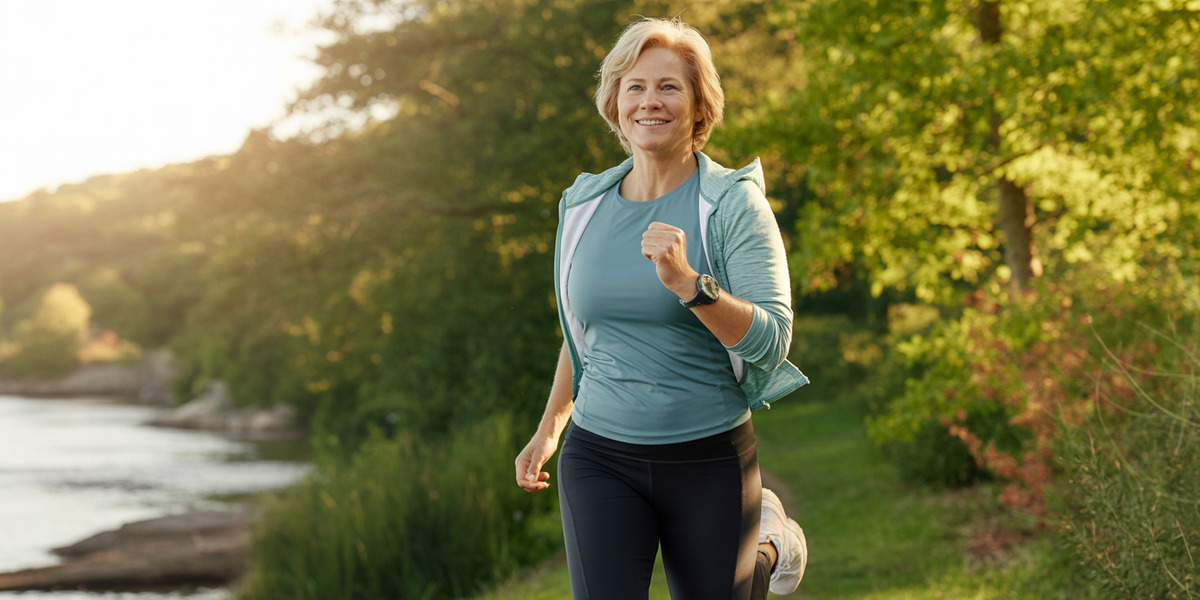
If there's one exercise that deserves the crown for best all-rounder after 50, it's walking. It's free, it's low-impact, it requires zero equipment, and the science behind its benefits is staggering.
But here's the thing — most women over 50 aren't walking enough, aren't walking fast enough, or aren't walking strategically enough to get the full benefits. A casual stroll to the letterbox doesn't quite cut it.
This guide covers everything you need to know to turn walking into a genuine fitness tool — from proper form and speed targets to building a progressive routine that actually delivers results.
Why Walking Is the Perfect Exercise After 50
Let's start with why walking deserves more respect than it gets:
- Protects your heart — brisk walking reduces the risk of heart disease by up to 35% (Harvard Medical School)
- Strengthens bones — weight-bearing walking helps maintain bone density, reducing osteoporosis risk
- Supports joint health — low-impact movement lubricates joints and reduces stiffness without the pounding of running
- Burns calories and belly fat — a brisk 30-minute walk burns 150–200 calories, and regular walking is linked to reduced visceral fat
- Boosts mental health — walking outdoors reduces cortisol, improves mood, and lowers anxiety and depression risk by up to 26%
- Improves sleep — regular walkers fall asleep faster and enjoy deeper, more restorative sleep
- Enhances brain health — walking increases blood flow to the brain and is linked to a 40% lower risk of dementia
- Builds social connection — walking with a friend or group adds accountability and reduces loneliness
And unlike many exercises, walking is sustainable for life. You can do it at 55, at 70, and well beyond.
The Difference Between a Walk and a Fitness Walk
Not all walks are created equal. There's a big difference between a leisurely wander and a walk that genuinely improves your fitness.
Casual Walk
- Speed: Under 4.5 km/h
- Heart rate: Barely elevated
- Benefits: Stress relief, fresh air, light movement
- Verdict: Great for mental health, but won't significantly improve cardiovascular fitness
Brisk Walk (The Sweet Spot)
- Speed: 5–6.5 km/h
- Heart rate: 50–70% of maximum (you can talk but not sing)
- Benefits: Improved cardiovascular fitness, calorie burn, bone strengthening
- Verdict: This is where the magic happens for women over 50
Power Walk
- Speed: 6.5–8 km/h
- Heart rate: 70–85% of maximum
- Benefits: Significant calorie burn, improved VO2 max, faster results
- Verdict: Excellent if you're already fit — work up to this gradually
The talk test is the simplest way to gauge intensity: if you can hold a conversation but couldn't sing a song, you're in the brisk zone.
Proper Walking Form: It Matters More Than You Think
Good form prevents injury, reduces fatigue, and helps you walk faster with less effort. Here's your checklist:
Head and Shoulders
- Look forward, not down at your feet
- Keep your chin parallel to the ground
- Relax your shoulders — drop them away from your ears
- Keep your chest open and lifted
Arms
- Bend your elbows to roughly 90 degrees
- Swing your arms naturally — opposite arm to opposite leg
- Keep your hands relaxed (no clenched fists)
- Don't cross your arms past your body's midline
Core and Hips
- Engage your core gently — imagine pulling your belly button toward your spine
- Keep your hips level and facing forward
- Let your hips rotate naturally with each stride
Feet
- Strike with your heel first, then roll through to your toes
- Push off with your toes for each step
- Keep your steps a natural length — overstriding slows you down and strains your shins
Your 8-Week Walking for Fitness Plan
Whether you're starting from scratch or upgrading your current walking routine, this progressive plan will take you from casual walker to confident fitness walker.
Weeks 1–2: Build the Habit
- Frequency: 4 days per week
- Duration: 20 minutes per walk
- Intensity: Comfortable pace — focus on showing up consistently
- Goal: Make walking a non-negotiable part of your week
Weeks 3–4: Pick Up the Pace
- Frequency: 4–5 days per week
- Duration: 25 minutes per walk
- Intensity: Brisk pace — you should be slightly out of breath
- Add intervals: Walk briskly for 3 minutes, then moderate for 2 minutes. Repeat.
Weeks 5–6: Increase Duration
- Frequency: 5 days per week
- Duration: 30–35 minutes per walk
- Intensity: Sustained brisk pace for most of the walk
- Add hills: Incorporate at least one route with gentle inclines
Weeks 7–8: Level Up
- Frequency: 5–6 days per week
- Duration: 35–45 minutes per walk
- Intensity: Mix of brisk walking and power walking intervals
- Challenge: Try one longer walk per week (45–60 minutes) at a moderate pace
By week 8, you'll be fitter, stronger, and sleeping better. Most women notice a difference in energy and mood by week 3.
How to Track Your Progress
Get your FREE 7-Day Beginner Workout Plan
A gentle, progressive week of strength, cardio, flexibility and balance — designed just for women over 50. Pop in your details and I'll send it straight away. 💪
You don't need fancy tech, but tracking your walks helps you stay motivated and see improvement.
- Step count: Aim for 7,000–10,000 steps per day (studies show 7,000 steps significantly reduces mortality risk in adults over 50)
- Distance: Track how far you walk — apps like Google Fit, Apple Health, or Strava work perfectly
- Pace: Monitor your minutes per kilometre — a brisk pace is roughly 9–12 minutes per km
- Heart rate: A basic fitness tracker can show you're hitting the brisk zone (50–70% of max heart rate)
- How you feel: Keep a simple journal — rate your energy, mood, and sleep quality each week
Pro tip: Don't obsess over 10,000 steps. That number was originally a marketing campaign, not a scientific recommendation. Consistency at 7,000+ steps is more than enough for excellent health benefits.
Walking Gear: What You Actually Need
You don't need to spend a fortune, but a few basics make a big difference:
Shoes (The Non-Negotiable)
Invest in a proper pair of walking shoes. They should have:
- Good arch support
- Cushioning in the heel and forefoot
- A flexible sole that bends where your foot naturally bends
- A snug fit with room for your toes to wiggle
Replace your walking shoes every 500–800 km (roughly every 6–12 months if you walk regularly).
Clothing
- Moisture-wicking fabric — avoid cotton, which holds sweat
- Layers — especially in cooler months (a light jacket you can tie around your waist)
- Reflective elements — if you walk early morning or in the evening
- A good sports bra — yes, even for walking. Support matters at every pace.
Extras Worth Considering
- Hat and sunscreen — essential in Australia (slip, slop, slap!)
- Water bottle — stay hydrated, especially in warmer months
- Podcast or playlist — makes time fly and adds enjoyment
- Walking poles — great for hills and adding an upper body workout
Common Walking Mistakes to Avoid
- Walking too slowly — if you're not slightly out of breath, pick up the pace
- Same route, same pace, every day — your body adapts. Mix up your routes, terrain, and intensity
- Skipping the warm-up — start the first 3–5 minutes at an easy pace before pushing to brisk
- Looking at your phone — it wrecks your posture and slows you down. Save it for rest breaks
- Wearing old or unsupportive shoes — this is the #1 cause of shin splints and knee pain in walkers
- Not stretching afterwards — 5 minutes of calf, hamstring, and hip flexor stretches prevents tightness
Walking for Specific Health Goals
For Weight Loss
Walk briskly for at least 30 minutes, 5 days a week. Add intervals (2 minutes fast, 1 minute moderate) to boost calorie burn by up to 20%. Hills and inclines increase intensity without increasing impact.
For Heart Health
Aim for 150 minutes of brisk walking per week (the WHO recommendation). Consistency matters more than speed — five 30-minute walks beat two 75-minute sessions.
For Bone Health
Walking is weight-bearing, which helps maintain bone density. Add stair climbing or walking on uneven terrain for extra bone-building stimulus. Consider walking with a light backpack (2–3 kg) for added load.
For Mental Health
Walk outdoors in nature whenever possible — green spaces amplify the mood-boosting effects. Morning walks are especially powerful for resetting your circadian rhythm and improving sleep.
The Bottom Line
Walking is the most accessible, sustainable, and effective form of exercise for women over 50. It protects your heart, strengthens your bones, burns fat, boosts your mood, and keeps your brain sharp — all without a gym membership or a single piece of equipment.
The key is walking with purpose. Pick up the pace, build a routine, track your progress, and stay consistent. That's it.
Your body was designed to move. So lace up and go. 🚶♀️💛
Get your FREE 7-Day Beginner Workout Plan
A gentle, progressive week of strength, cardio, flexibility and balance — designed just for women over 50. Pop in your details and I'll send it straight away. 💪