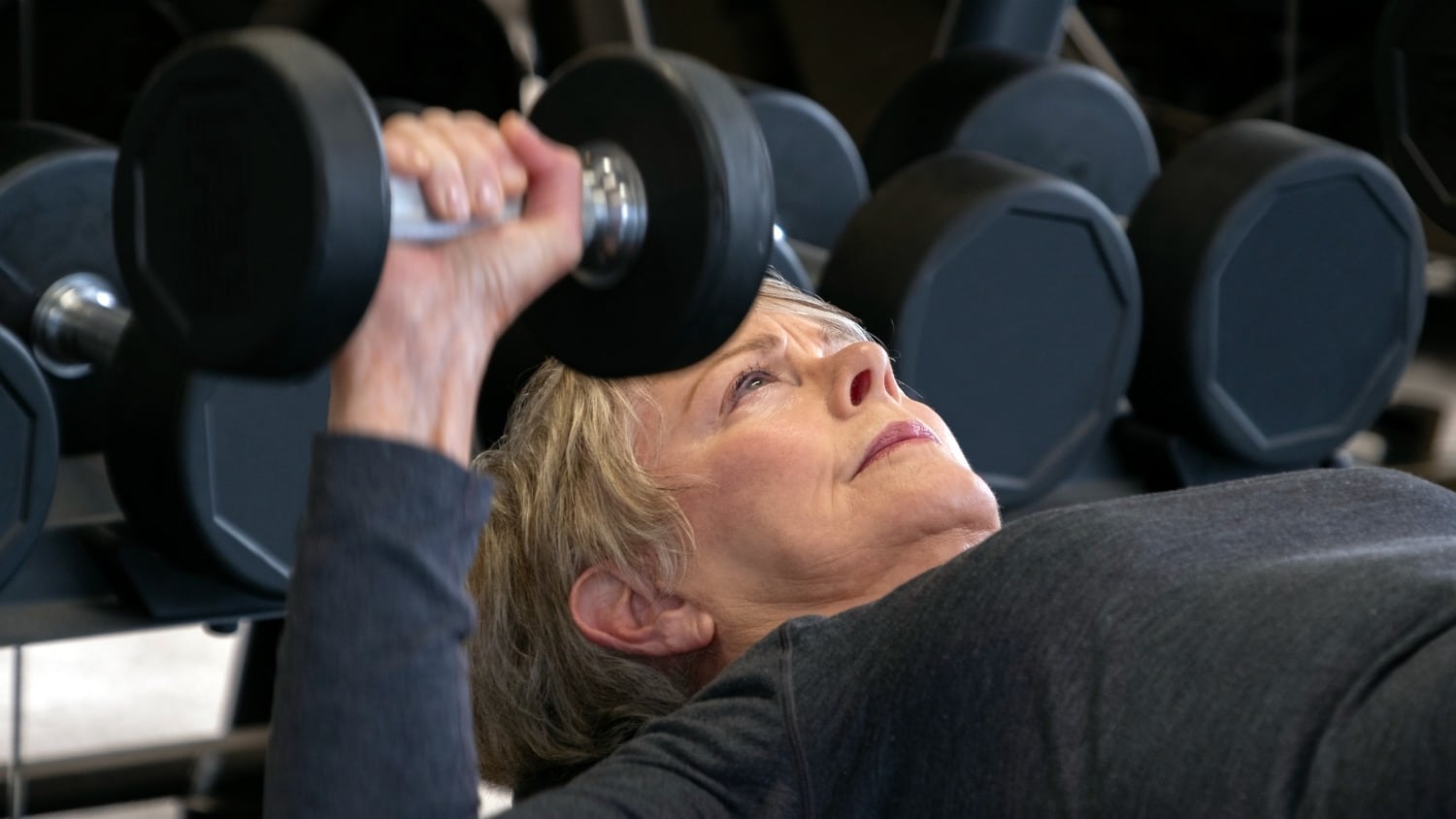
If you think lifting weights is only for young gym-goers or bodybuilders, it's time to rethink that. Strength training is arguably the single most important form of exercise for women over 50 — and it's never too late to start.
As someone who took up competitive fitness modelling after 50, I can tell you firsthand: picking up those weights changed everything for me. Not just my body — my mindset, my energy, and my belief in what I could achieve.
This guide covers everything you need to know — from why it matters so much after 50 to exactly how to get started, what to lift, and how to keep progressing safely.
Why Strength Training Matters More After 50
After the age of 30, we lose approximately 3–5% of muscle mass per decade. After menopause, this accelerates dramatically. This muscle loss — called sarcopenia — leads to:
- Slower metabolism and easier weight gain — muscle burns more calories at rest than fat. Less muscle = fewer calories burned daily
- Weaker bones and higher fracture risk — bone density drops significantly after menopause without resistance training
- Reduced balance and increased fall risk — falls are the leading cause of injury for Australians over 65
- Loss of functional independence — struggling with jars, groceries, stairs, getting off the floor
- Lower energy and mood — muscle loss is directly linked to fatigue and depression
Strength training directly combats every single one of these. It's not vanity — it's preventative medicine.
The Science-Backed Benefits
1. Stronger Bones 🦴
Osteoporosis affects 1 in 3 women over 50 in Australia. Weight-bearing exercise stimulates bone-forming cells (osteoblasts) and can actually increase bone density, even in postmenopausal women. Research from the LIFTMOR trial at Griffith University showed that high-intensity resistance training significantly improved bone density in women with low bone mass — more effectively than walking or swimming.
2. Faster Metabolism 🔥
Every kilogram of muscle burns roughly 50–70 calories per day at rest. Add just 2 kg of muscle through consistent training and you'll burn an extra 100–140 calories daily — without changing anything else. Over a year, that's the equivalent of burning 5–6 kg of fat. This is why strength training is far more effective for long-term weight management than cardio alone.
3. Better Blood Sugar Control 📊
Muscle is your body's largest glucose storage site. More muscle means better insulin sensitivity, which lowers your risk of type 2 diabetes — a condition that becomes increasingly common after 50. Studies show that just 12 weeks of resistance training can improve insulin sensitivity by up to 46%.
4. Improved Mental Health 🧠
Strength training has been shown to reduce symptoms of depression by up to 50% and anxiety by up to 20%. The sense of achievement from lifting heavier, the endorphin release, and the growing confidence create a powerful mental health boost that goes far beyond the physical.
5. Reduced Joint Pain 🤸
Counterintuitive but true — strengthening the muscles around a joint actually reduces pain and stiffness. Women with knee osteoarthritis who do regular resistance training report less pain, better mobility, and reduced need for medication.
6. Better Posture and Back Health 🧍♀️
Weak back and core muscles are the primary cause of poor posture and chronic back pain. Strengthening your posterior chain (back, glutes, hamstrings) counteracts the forward hunch that develops from years of sitting and device use.
But Won't I Get Bulky?
This is the most common myth I hear. The short answer: absolutely not.
Women don't have enough testosterone to build large muscles easily. What you will get is:
- A toned, defined physique
- Better posture (you'll stand taller and look leaner)
- More confidence in how you look and move
- A strong, capable body that can handle whatever life throws at you
The women you see who look "bulky" are typically professional bodybuilders who train for hours daily, follow extremely specific diets, and sometimes use supplements to achieve that look. Normal strength training 2–3 times a week will give you a strong, lean, feminine physique. Promise.
Getting Started: Your First 4 Weeks
You don't need to jump straight into heavy deadlifts. Here's a sensible, progressive approach:
Week 1–2: Learn the Movements
Focus on bodyweight exercises to build proper movement patterns:
- Bodyweight squats — 3 sets of 10 (use a chair behind you for confidence)
- Wall push-ups — 3 sets of 8–10
- Glute bridges — 3 sets of 12
- Seated rows with resistance band — 3 sets of 10
- Standing calf raises — 3 sets of 15
Do this routine 2–3 times per week. Focus on form, not speed.
Week 3–4: Add Light Weights
Progress to light dumbbells (2–5 kg) once you're comfortable with the movements:
- Goblet squats — 3 sets of 10 (hold one dumbbell at your chest)
- Dumbbell rows — 3 sets of 10 each arm
- Dumbbell shoulder press — 3 sets of 8
- Dumbbell deadlifts — 3 sets of 10 (light weight, focus on hip hinge)
- Glute bridges with weight — 3 sets of 12 (dumbbell on hips)
The 5 Essential Exercises Every Woman Over 50 Should Master
Get your FREE 7-Day Beginner Workout Plan
A gentle, progressive week of strength, cardio, flexibility and balance — designed just for women over 50. Pop in your details and I'll send it straight away. 💪
If you could only do five exercises for the rest of your life, these would be them:
1. Squat 🏋️♀️
Why: Strengthens quads, glutes, and core. Essential for sitting, standing, and climbing stairs.
How: Stand with feet hip-width apart. Push your hips back and bend your knees like you're sitting in a chair. Keep your chest up and weight in your heels. Lower until your thighs are parallel to the floor (or as low as comfortable), then drive back up.
2. Deadlift (Hip Hinge) 💪
Why: Strengthens your entire posterior chain — back, glutes, hamstrings. Prevents back injuries and improves posture.
How: Hold dumbbells in front of your thighs. Hinge at the hips, pushing them back while keeping your back straight. Lower the weights to just below your knees, then squeeze your glutes to stand back up. Think "close the car door with your bum."
3. Row (Pull) 🚣
Why: Strengthens upper back, biceps, and rear shoulders. Counteracts rounded posture from sitting and phone use.
How: Bend forward at the hips with a flat back. Pull dumbbells toward your ribs, squeezing your shoulder blades together. Lower with control. You can also do these seated with a resistance band.
4. Push-Up or Chest Press 🤸
Why: Strengthens chest, shoulders, and triceps. Important for pushing movements in daily life.
How: Start with wall push-ups, progress to incline push-ups (hands on a bench), then full push-ups. For chest press, lie on your back and press dumbbells up from your chest.
5. Plank (Core) 🧘
Why: Strengthens your entire core — the foundation for everything else. Protects your spine and improves balance.
How: Start on your forearms and knees (modified plank). Keep your body in a straight line from head to knees. Hold for 15–30 seconds and build up. Progress to full plank on your toes when ready.
How Often Should You Lift?
- Beginners: 2 sessions per week (with at least 1 day rest between)
- Intermediate: 3 sessions per week
- Each session: 30–45 minutes is plenty
- Rest between sets: 60–90 seconds
- Progressive overload: Increase weight by 0.5–1 kg when you can comfortably complete all reps with good form
Important: Muscles need 48 hours to recover and rebuild. Never train the same muscle group on consecutive days.
Common Mistakes to Avoid
- Lifting too light — those 1 kg pink dumbbells won't cut it. You need to feel challenged by the last 2–3 reps
- Only doing cardio — cardio is great for heart health but it won't build muscle or bone density
- Skipping protein — aim for 1.2–1.6g per kg of bodyweight daily. Without adequate protein, you can't build muscle
- Neglecting the lower body — your legs and glutes are your largest muscle groups. Don't just train arms!
- Going too heavy too fast — ego lifting leads to injury. Master form first, then gradually increase weight
- Not warming up — 5 minutes of light cardio + dynamic stretches before lifting prevents injuries
Equipment You Need
You can start with minimal equipment:
- At home: A set of adjustable dumbbells (2–10 kg), a resistance band, and a sturdy chair
- At the gym: Access to dumbbells, cable machines, and a bench is all you need
- Nice to have: A yoga mat for floor exercises, wrist wraps for grip support
Don't feel you need a full home gym to start. A pair of dumbbells and your own bodyweight are more than enough.
What I Wish I'd Known Earlier
When I started training seriously, I was in my late 40s. I wish I'd started sooner, but I'm grateful I started at all. The gym became my therapy, my community, and my proving ground. Every personal best reminded me that age is not a limit — it's a starting point.
I went from someone who'd never lifted a barbell to competing on stage at over 50. I'm not saying you need to compete — but I am saying that you're capable of far more than you think.
The confidence that comes from lifting something heavy? There's nothing quite like it.
The Bottom Line
Strength training isn't optional after 50 — it's essential. It protects your bones, boosts your metabolism, improves your mood, and builds the functional strength you need to live independently and confidently for decades to come.
You don't need to be fit to start. You just need to start to get fit.
So pick up those weights. Your body — and your future self — will thank you. 💛
Get your FREE 7-Day Beginner Workout Plan
A gentle, progressive week of strength, cardio, flexibility and balance — designed just for women over 50. Pop in your details and I'll send it straight away. 💪