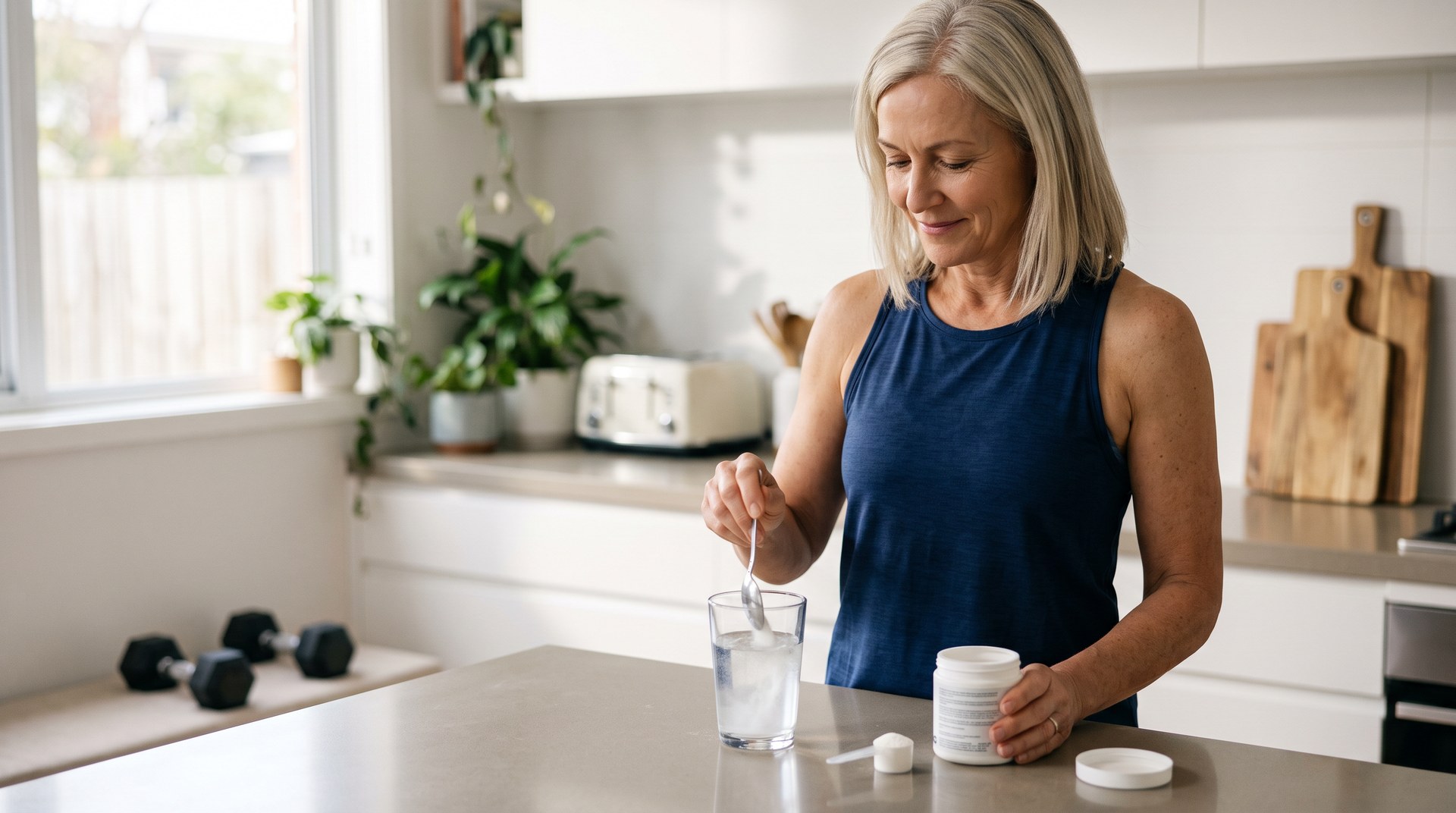
If you picture creatine as something only young bodybuilders stir into their shakes, you're not alone. 💪 But some of the most exciting research on creatine right now is about women in midlife and beyond. As oestrogen drops and we naturally lose muscle with age, creatine is emerging as a simple, affordable helper for strength, energy and even brain health.
Here's what creatine actually is, what the science says it can (and can't) do for women over 50, and exactly how to take it safely. 🌿
What Is Creatine?
Creatine is a natural compound made from amino acids. Your liver, kidneys and pancreas make about a gram a day, and you get a little more from red meat and seafood. Around 95% of it is stored in your muscles, where it helps recycle ATP, the energy your muscles use for short, powerful efforts like lifting, climbing stairs or getting up off the floor.
Women tend to have lower creatine stores than men, and those stores can fall further after menopause, especially if you eat little meat. That's one reason researchers believe women may benefit more than we once thought.
Why Creatine Matters More After 50
From our 30s we gradually lose muscle (called sarcopenia), and the loss speeds up around menopause as oestrogen declines. Less muscle means less strength, a slower metabolism, poorer balance and a higher risk of falls. Strength training is the number one way to fight back (see our guide to strength training for women over 50), and creatine can help you get more out of every session.
5 Potential Benefits of Creatine for Women Over 50
1. More Muscle and Strength (With Training) 🏋️♀️
This is where the evidence is strongest. Studies in older adults show that creatine combined with resistance training leads to greater gains in muscle and strength than training alone. It lets you squeeze out an extra rep or two, and over weeks and months that adds up.
The key word is "with". Creatine on its own, without exercise, does very little. Think of it as a training partner, not a magic powder.
2. Support for Bone Health 🦴
Some research in postmenopausal women suggests creatine plus strength training may help slow bone loss at certain sites, possibly because stronger muscles put healthy load on bones. The results are mixed so far, so creatine is not a replacement for calcium, vitamin D or any treatment your doctor recommends. But it's a promising extra. Pair it with our best exercises for bone density.
3. Brain Energy, Memory and Mood 🧠
Your brain uses creatine too. Early studies suggest it may help with mental tiredness, short-term memory and focus, particularly when you're sleep-deprived or stressed (hello, menopause night sweats!). There's also early research into mood. It's an exciting area, but still developing, so treat this as a possible bonus rather than a promise.
4. Better Recovery and Less Fatigue ⚡
Many women notice they recover a little faster between sets and feel less flat after workouts. That makes it easier to stay consistent, which is what really drives results.
5. Easier Everyday Movement 🛍️
Carrying the shopping, lifting the grandkids, getting up from a low couch: these everyday tasks rely on quick bursts of muscle power, which is exactly what creatine supports. More strength means more independence as the years roll on.
How Much Creatine Should You Take?
Get your FREE 7-Day Beginner Workout Plan
A gentle, progressive week of strength, cardio, flexibility and balance — designed just for women over 50. Pop in your details and I'll send it straight away. 💪
- 3–5 grams a day is the standard, well-researched dose (roughly one level teaspoon)
- No need to "load". Taking 20 g a day for a week fills your muscles faster but can cause bloating. A steady 3–5 g fills them within 3–4 weeks
- Timing doesn't matter much. Take it whenever you'll remember, ideally every day, including rest days
- Mix it with anything: water, a smoothie, your morning yoghurt or a protein shake
Which Type of Creatine Is Best?
Keep it simple: creatine monohydrate. It's the most studied, most effective and usually the cheapest form. Fancy versions (HCl, buffered, liquid) cost more without proven extra benefit.
When shopping, look for:
- Pure creatine monohydrate with no added sugar or fillers
- Third-party testing (such as Informed Sport or similar), so you know what's in the tub
- Unflavoured powder, which is the most versatile and best value
Is Creatine Safe for Women Over 50?
Creatine is one of the most researched supplements in the world, and at normal doses it has a strong safety record in healthy adults. A few things to know:
- A little water weight: some people gain about 0.5–1 kg in the first weeks as muscles hold more water. That's water inside the muscle, not fat, and not the puffy bloating many of us fear
- Tummy upset: usually only with large doses. Splitting your dose or taking it with food helps
- Drink enough water: a good habit anyway. Here are the signs you're not drinking enough
- Kidneys: creatine doesn't harm healthy kidneys, but it can raise a blood marker (creatinine) used to check kidney function. Tell your GP you're taking it before a blood test
Please check with your doctor first if you have kidney or liver disease, diabetes, take medication that affects the kidneys, or are managing any chronic condition.
How to Get the Most From Creatine
- Lift 2–3 times a week: resistance training is non-negotiable for results. Our 5 best dumbbell exercises are a great start
- Eat enough protein: aim for a palm-sized serve at each meal. See how much protein you need after 50
- Be consistent: creatine works by topping up your stores, so daily use matters more than timing
- Give it time: assess how you feel after 8–12 weeks of steady training
The Bottom Line
Creatine isn't a miracle, but for women over 50 who are strength training, it's one of the best-supported, most affordable supplements around. A daily teaspoon of plain creatine monohydrate, paired with regular lifting and plenty of protein, may help you build strength, protect your muscles and feel more energised.
As always, chat with your GP before starting any new supplement, then pick up those weights, lovely. Your stronger self is waiting! 💜
Get your FREE 7-Day Beginner Workout Plan
A gentle, progressive week of strength, cardio, flexibility and balance — designed just for women over 50. Pop in your details and I'll send it straight away. 💪