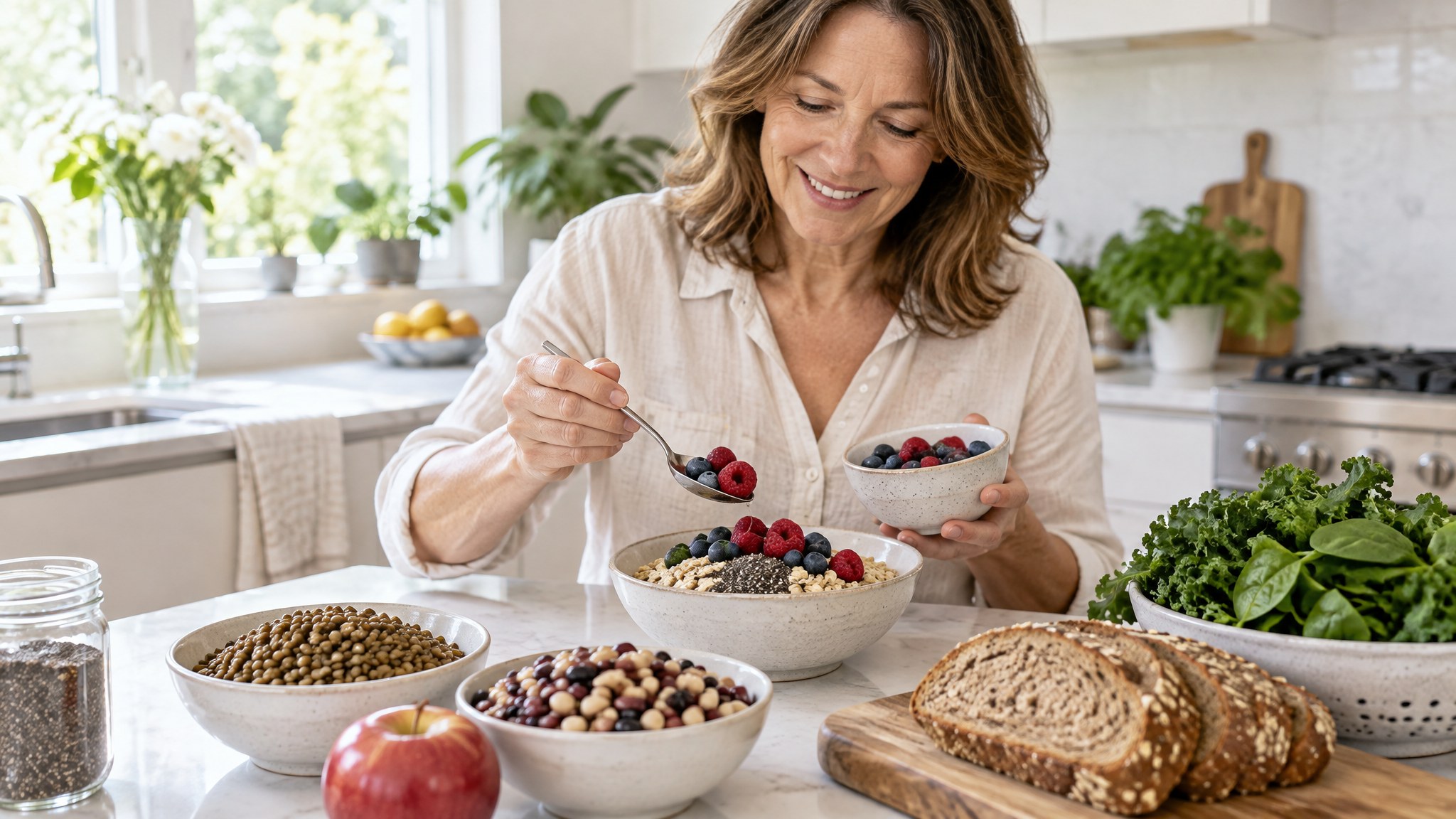
Protein gets all the attention these days, but there's another nutrient quietly doing a huge amount of work for women over 50, and most of us aren't getting nearly enough of it: fibre. 🥣
Fibre helps keep you regular, supports your heart, steadies your blood sugar and keeps you feeling full. Yet surveys in Australia, the US and the UK consistently show most adults fall well short of the recommended amount.
How Much Fibre Do You Need After 50?
General guidelines vary a little by country, but a good everyday target for women over 50 is around 25 grams of fibre a day (Australian guidelines suggest 25 g for women; US guidelines suggest about 21–22 g for women over 50). Many health experts suggest that a little more, closer to 28–30 g, can offer extra benefits for heart health and blood sugar.
Many of us are only getting around 15–20 g, so even small changes add up.
Why Fibre Matters So Much After 50
- Happy digestion: fibre keeps things moving, and constipation becomes more common as we age
- Heart health: soluble fibre (found in oats, beans and apples) can help lower LDL cholesterol, which tends to rise after menopause
- Steadier blood sugar: fibre slows how quickly sugar enters your bloodstream, helping avoid energy crashes
- Weight management: high-fibre foods are filling, so you naturally feel satisfied with less
- A thriving gut: some fibres feed your good gut bacteria, which support immunity and mood
The Two Types of Fibre (You Need Both)
Soluble fibre dissolves in water to form a gel. It helps with cholesterol and blood sugar. Find it in oats, barley, beans, lentils, apples, citrus fruit, carrots, chia seeds and psyllium.
Insoluble fibre adds bulk and keeps you regular. Find it in wholegrain bread, brown rice, nuts, seeds, the skins of fruit and vegetables, and leafy greens.
The easiest way to get both? Eat a wide variety of plant foods. A fun goal many nutrition experts love is aiming for 30 different plants a week (herbs, spices, nuts and seeds all count!).
10 High-Fibre Foods to Add to Your Shopping List
Fibre amounts are approximate and vary by brand and serving size.
- Lentils (1 cup cooked): about 15 g
- Chickpeas or black beans (1 cup cooked): about 12–15 g
- Chia seeds (2 tablespoons): about 8–10 g
- Raspberries (1 cup): about 8 g
- Pear with skin (1 medium): about 5–6 g
- Rolled oats (½ cup dry): about 4–5 g
- Broccoli (1 cup cooked): about 5 g
- Apple with skin (1 medium): about 4 g
- Almonds (a small handful, 30 g): about 3–4 g
- Wholegrain or seeded bread (2 slices): about 4–6 g
A Simple 30-Gram Fibre Day
Get your FREE 7-Day Beginner Workout Plan
A gentle, progressive week of strength, cardio, flexibility and balance — designed just for women over 50. Pop in your details and I'll send it straight away. 💪
- Breakfast: oats with a tablespoon of chia seeds and a handful of raspberries (about 14 g)
- Lunch: wholegrain sandwich with salad, or a lentil soup (about 8 g)
- Snack: an apple with a small handful of almonds (about 7 g)
- Dinner: stir-fry with broccoli and a few spoonfuls of chickpeas or brown rice (about 6 g)
That's comfortably over 30 g, with no fancy products needed. 🙌
8 Easy Swaps to Boost Your Fibre
- White bread → wholegrain or seeded bread
- White rice → brown rice, barley or quinoa
- Juice → a whole piece of fruit
- Peeled veggies → leave the skins on potatoes, carrots and cucumbers
- Crisps → a handful of nuts or air-popped popcorn
- Plain yoghurt → yoghurt topped with berries and a sprinkle of seeds
- Half the mince in a bolognese → swap for lentils
- Sugary cereal → oats or a high-fibre bran cereal
How to Add Fibre Without the Bloating
Going from low fibre to high fibre overnight can leave you feeling gassy and uncomfortable. Be kind to your tummy:
- Go slowly: add about 3–5 g more per day each week
- Drink plenty of water: fibre needs fluid to work properly (here are the 7 signs you're not drinking enough water)
- Rinse tinned beans and lentils: it helps reduce some of the gas-causing compounds
- Move your body: a daily walk helps your digestion along
- Spread it out: include some fibre at every meal rather than all at once
If you have IBS, diverticular disease, a bowel condition, or take medications that fibre supplements might interact with, chat with your GP or a dietitian before making big changes.
What About Fibre Supplements?
Supplements like psyllium husk can be handy if you're struggling to reach your target, but whole foods are best because they also bring vitamins, minerals and antioxidants. Think of supplements as a top-up, not a replacement, and take them with plenty of water.
Keep Exploring
Fibre works beautifully alongside the other gut-friendly habits in our guide to improving gut health after 50. If you're prone to a puffy tummy, see the 5 best foods to fight bloating, and pair your fibre with enough protein using our guide to how much protein you need after 50. For more inspiration, try these anti-inflammatory foods for women over 50.
The Bottom Line
Fibre is one of the simplest, cheapest upgrades you can make to your health after 50. Aim for around 25–30 g a day, build up slowly, drink your water, and fill your plate with colourful plants. Your heart, gut and energy levels will thank you, lovely! 💜
Get your FREE 7-Day Beginner Workout Plan
A gentle, progressive week of strength, cardio, flexibility and balance — designed just for women over 50. Pop in your details and I'll send it straight away. 💪