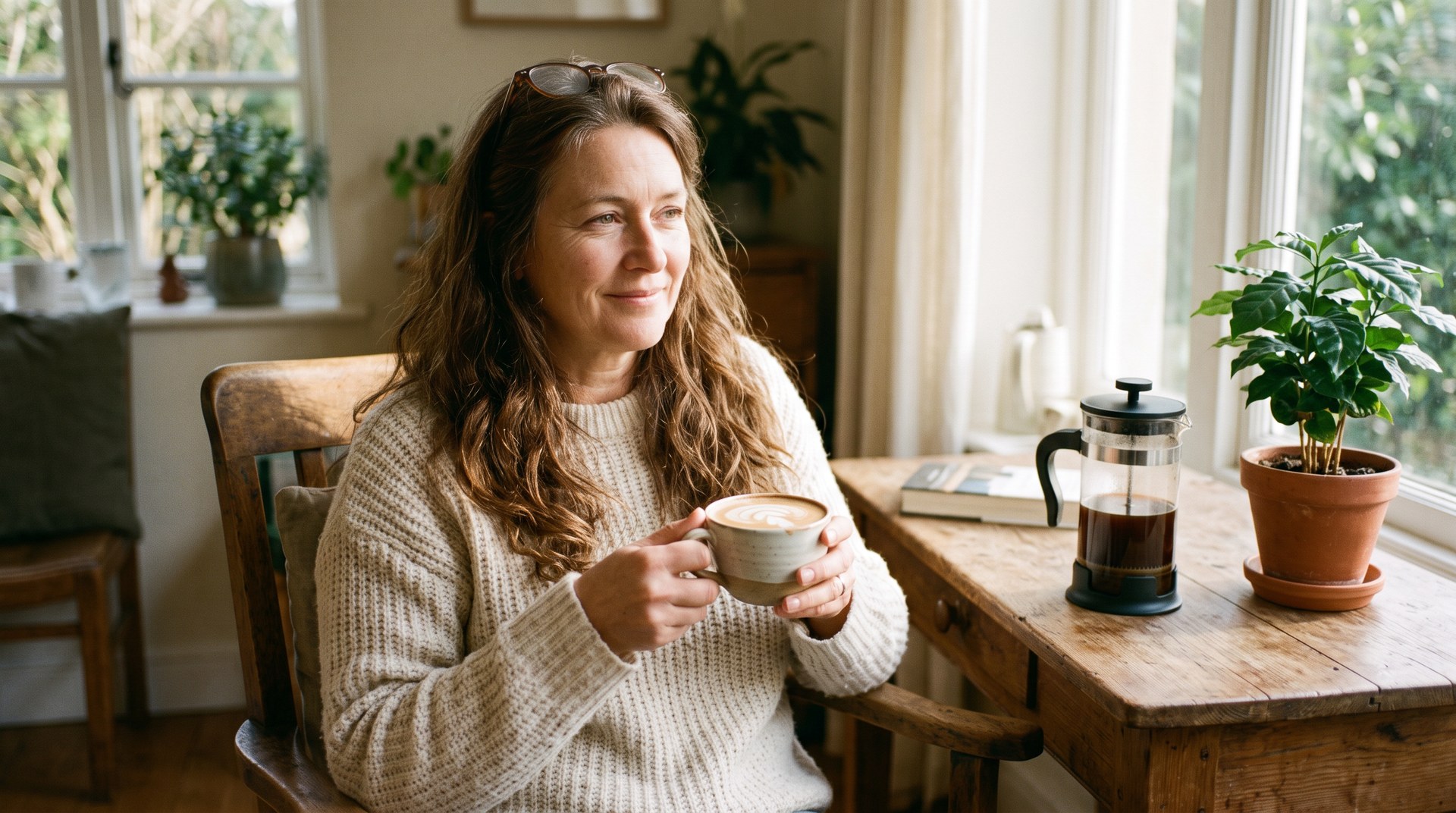
For many of us, that first coffee of the morning is a sacred little ritual. ☕ But if you've noticed you're sleeping worse, feeling jittery, or that your hot flushes seem to flare after a cuppa, you might be wondering whether caffeine affects you differently now that you're over 50.
The short answer? It can. But the good news is that coffee isn't the villain it's sometimes made out to be. Just like our look at what alcohol really does after 50, here's the honest, balanced truth about caffeine, so you can keep enjoying your brew in a way that works for your body. 🌿
Why Caffeine Can Hit Differently After 50
Caffeine is cleared by your liver, and its half-life (the time it takes your body to clear half of it) is around 5 hours on average, but it varies widely from person to person. With age, some medications and hormonal changes, many women find caffeine lingers longer than it used to. That means your 3pm coffee may still be partly in your system at bedtime.
Menopause adds another layer. Changing hormones can make you more sensitive to sleep disruption, anxiety and temperature swings, all of which caffeine can nudge.
The Good News: Benefits of Coffee After 50 💚
Research on moderate coffee drinkers is genuinely encouraging. Studies have linked regular coffee intake with:
- Lower risk of type 2 diabetes
- Liver health: coffee is associated with lower rates of liver disease
- Brain health: lower risk of Parkinson's disease, and better alertness and focus in the short term
- Antioxidants: coffee is one of the biggest sources of polyphenols in many people's diets
- Exercise performance: caffeine can make workouts feel easier and boost strength and endurance
These are associations rather than proof that coffee causes the benefits, but overall, for most healthy women, moderate coffee looks more friend than foe.
The Not-So-Good: Where Caffeine Can Cause Trouble
1. Sleep 😴
This is the big one. Caffeine blocks adenosine, the chemical that builds up during the day to make you sleepy. Even if you fall asleep fine, caffeine late in the day can make your sleep lighter and less refreshing. If you're already waking at 3am, your afternoon coffee could be part of the puzzle. Read more about why sleep is your secret weapon after 50.
2. Hot Flushes 🔥
Research, including a large Mayo Clinic study, has linked caffeine intake with more bothersome hot flushes and night sweats in postmenopausal women. Not everyone is affected, so it's worth tracking your own triggers for a couple of weeks.
3. Anxiety and Racing Heart 💓
Caffeine stimulates your nervous system and can raise cortisol. If you're prone to anxiety or palpitations (which can increase around menopause), lots of caffeine may make things worse. Our guide to reducing cortisol naturally has more calming strategies.
4. Bones 🦴
Caffeine causes a small increase in calcium loss through urine. For most women with enough calcium in their diet, moderate coffee doesn't seem to harm bone density, and adding a splash of milk more than covers it. It matters more if your calcium intake is low or you drink a lot of coffee. Boost your intake with these foods for stronger bones.
5. Bladder and Pelvic Floor 🚻
Caffeine is a known bladder irritant and can increase urgency and frequency, something many women already notice after menopause. If you're dashing to the loo, cutting back can help a lot, alongside these 5 pelvic floor exercises.
6. Blood Pressure and Tummy 🩺
Caffeine can cause a short-term rise in blood pressure, especially in people who don't drink it regularly. It can also trigger reflux or an upset tummy in some women. If you have high blood pressure, heart rhythm issues or reflux, chat with your GP about what's right for you.
How Much Caffeine Is Too Much?
Get your FREE 7-Day Beginner Workout Plan
A gentle, progressive week of strength, cardio, flexibility and balance — designed just for women over 50. Pop in your details and I'll send it straight away. 💪
For most healthy adults, up to about 400 mg of caffeine a day is considered safe. But "safe" isn't the same as "ideal for you". Many women over 50 feel best on less. As a rough guide:
- Café flat white or latte (1–2 shots): about 100–200 mg
- Instant coffee (1 tsp): about 60–80 mg
- Black or green tea: about 25–50 mg
- Energy drink (250 ml): about 80 mg
- Dark chocolate (50 g): about 20–40 mg
- Decaf coffee: about 2–6 mg
Café coffee varies hugely depending on the beans and the number of shots, so a "large" can contain much more than you think.
7 Ways to Enjoy Coffee Without the Downsides ✨
- Set a caffeine curfew: try no caffeine after midday (or 2pm at the latest) and see how your sleep responds
- Wait a little in the morning: have water and breakfast first, which many women find gentler on the stomach and energy levels
- Eat with it: coffee on an empty stomach can trigger jitters and reflux
- Add milk: a splash of dairy or calcium-fortified plant milk helps offset calcium loss
- Go half-strength: ask for a half-shot or mix regular and decaf beans at home
- Swap the afternoon cup: try decaf, herbal tea or a short walk instead
- Match it with water: have a glass of water with every coffee
Should You Quit Caffeine Altogether?
Not necessarily! If you sleep well, feel calm and your hot flushes aren't bothering you, there's no need to give up your beloved brew. But if you're struggling with sleep, anxiety, hot flushes or bladder urgency, a two-week experiment is worthwhile. Cut back gradually by halving your intake each few days to avoid headaches, then notice how you feel.
Many women are surprised by how much better they sleep, and then happily reintroduce one lovely morning coffee.
The Bottom Line
Caffeine after 50 isn't good or bad. It's personal. Enjoyed in moderation and earlier in the day, coffee can offer real benefits. But if sleep, hot flushes, anxiety or bladder issues are bothering you, your caffeine habit is one of the easiest things to tweak.
So pour that morning cuppa, savour every sip, and let your body tell you what works best, lovely. ☕💜
This article is for general information only. Please speak with your GP if you have a heart condition, high blood pressure, anxiety, or take regular medication.
Get your FREE 7-Day Beginner Workout Plan
A gentle, progressive week of strength, cardio, flexibility and balance — designed just for women over 50. Pop in your details and I'll send it straight away. 💪